Best & worst cars for depreciation: how much value will your motor lose?

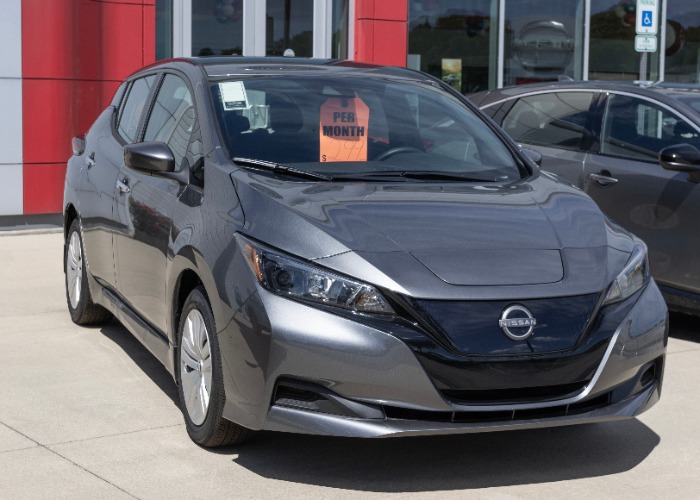
While some used cars have actually increased in value, others have seen their price plummet. Is your motor quietly costing you a fortune?
If you’re looking to sell your old motor, you’ll be hoping to get a good price.
And while the way you sell your car will have a major impact on the price you get, the biggest driver will be the car itself.
After all, while some cars do a great job of retaining their value, others will see their price fall sharply.
What’s more, some cars can see their desirability fall off drastically.
Thankfully, there are plenty of regular studies into the pricing of used cars that can give us a good indication of which are most in demand and which are seeing their value drop most sharply.
The worst used cars for depreciation
For example, a new report featured in This Is Money has revealed that a Chinese electric hatchback, the GWM Ora 03 48kWh Pure+, is the fastest-depreciating car, losing 75% of its original value after just three years.
The 10 fastest-depreciating cars
|
Rank |
Model |
Average new price |
Average part-ex value (Three years/36,000 miles) |
Average retained value (Three years/36,000 miles) |
|---|---|---|---|---|
|
1 |
GWM Ora 03 48kWh Pure+ |
£31,995 |
£8,250 |
25.8% |
|
2 |
Nissan Leaf 39kWh Acenta |
£29,290 |
£7,775 |
26.5% |
|
3 |
Jaguar I-Pace 90kWh 400 R-Dyn |
£69,995 |
£19,575 |
28% |
|
4 |
Lexus UX-e 300e 72.8kWh Takumi |
£51,145 |
£14,600 |
28.6% |
|
5 |
DS Automobiles DS3 E-Tense 54kWh |
£39,210 |
£11,325 |
28.9% |
|
6 |
DS Automobiles DS9 1.6 E-Tense |
£64,800 |
£18,725 |
28.9% |
|
7 |
Vauxhall Astra 1.6 Plug-in Hybrid |
£42,830 |
£12,525 |
29.2% |
|
8 |
Mazda MX-30 Prime-Line |
£28,005 |
£8,525 |
30.4% |
|
9 |
Fiat 500e 42kWh Giorgio Armani |
£33,985 |
£10,425 |
30.7% |
|
10 |
Audi A8 60 TFSIe |
£103,275 |
£31,750 |
30.7% |
Source: This Is Money Auto Express/CDL Vehicle Information Services data
Depreciation by vehicle type
On average, a car retains 47.7% of its original ‘on the road’ price after 36 months and 36,000 miles.
However, electric vehicles perform worst of all, typically keeping just 44.8% of their original value.
So why is this happening?
Some experts blame the Government’s Electric Car Grant – which cuts the price of certain models by up to £3,750 – and heavy manufacturer discounts aimed at meeting electric vehicle sales targets.
These incentives make new EVs cheaper to buy, but they also push down used prices, as second-hand buyers won’t pay a premium when new models are being sold at a discount.
Rapid advances in battery range and tech also make older EVs look outdated more quickly.
By contrast, hybrids hold their value best – keeping an average of 50.3% after three years.
Meanwhile, petrol cars retain 48.6% of their value, according to the data.
The slowest-depreciating cars
And which cars best hold their value?
According to analysis, the Mercedes-Benz G-Class Electric is the slowest-depreciating car on sale, holding 70.1% of its £154,870 price after three years.
Next comes the Land Rover Defender 90, keeping 69.4% of its £59,790 value.
The Porsche 911 Coupe GT3 manual ranks third, holding 69.2% of its original £149,060 price.
The 10 slowest-depreciating cars
|
Rank |
Model |
Average new price |
Average part-ex value (Three years/36,000 miles) |
Average retained value (Three years/36,000 miles) |
|---|---|---|---|---|
|
1 |
Mercedes-Benz G-Class Electric |
£154,870 |
£108,550 |
70.1% |
|
2 |
Land Rover Defender 90 |
£59,790 |
£41,475 |
69.4% |
|
3 |
Porsche 911 Coupe GT3 manual |
£149,060 |
£103,100 |
69.2% |
|
4 |
Dacia Bigster 1.8 Hybrid 155 Extreme |
£29,990 |
£19,850 |
66.2% |
|
5 |
Dacia Jogger 1.6 Hybrid Expression |
£21,270 |
£13,950 |
65.6% |
|
6 |
Porsche 718 Cayman GT4 RS |
£128,300 |
£83,675 |
65.2% |
|
7 |
Volkswagen Multivan 1.5 TSI eHybrid |
£54,525 |
£34,700 |
63.6% |
|
8 |
Toyota Land Cruiser 2.8D Invincible |
£77,845 |
£48,925 |
62.9% |
|
9 |
Kia Sorento 2.2 CRDi 2 |
£43,375 |
£26,800 |
61.8% |
|
10 |
MINI Countryman 1.5 Cooper C |
£29,100 |
£17,875 |
61.4% |
Source: This Is Money Auto Express/CDL Vehicle Information Services data
A strange time for used cars
The past few years have been unusual for the used car market. The pandemic caused major disruption to new car production, largely due to a global shortage of semiconductor chips – the components that power modern vehicles’ electronics.
That shortage slowed production dramatically, pushing buyers toward used cars instead. At one point, some second-hand models were even selling for more than their original list price.
While supply chains have since improved, the market is still adjusting, and depreciation patterns remain uneven.
Fighting back against depreciation
One of the inevitabilities of buying a new car is that it will lose value the moment you leave the dealership.
Although depreciation slows with subsequent owners, cars almost always lose value over time. Choosing one that holds its worth better can save thousands when it comes time to trade in.
Generally, reliable brands, hybrid powertrains and popular models with limited supply tend to depreciate the least, while expensive luxury cars and fast-moving EVs are more vulnerable to rapid price drops.
So, if you’re shopping for a new motor, it’s worth considering not just how much it costs to buy – but how much it will still be worth in a few years’ time.