In pictures: the world's largest factories
Mind-blowingly huge manufacturing facilities
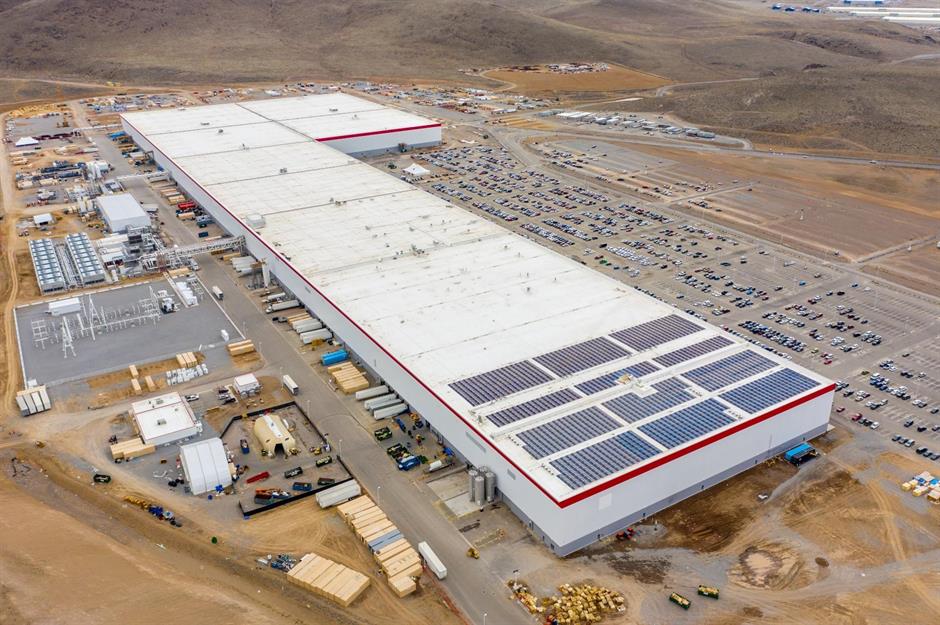
Sprawling across the equivalent of multiple football pitches, the world's largest factories are so outrageously big they operate like cities, complete with their own roads, fire stations, ports and amenities such as theatres and hospitals. Inside these industrial behemoths, thousands of workers and armies of robots toil away, churning out cars, aircraft, batteries, computer chips and other modern essentials.
From Tesla's Gigafactories to China's vast manufacturing plants, read on to discover the largest factories on the planet right now, ranked by floor area.
All dollar values in US dollars
25. Boeing Everett Factory, USA: 4.3 million sq ft (399,480 sq m)
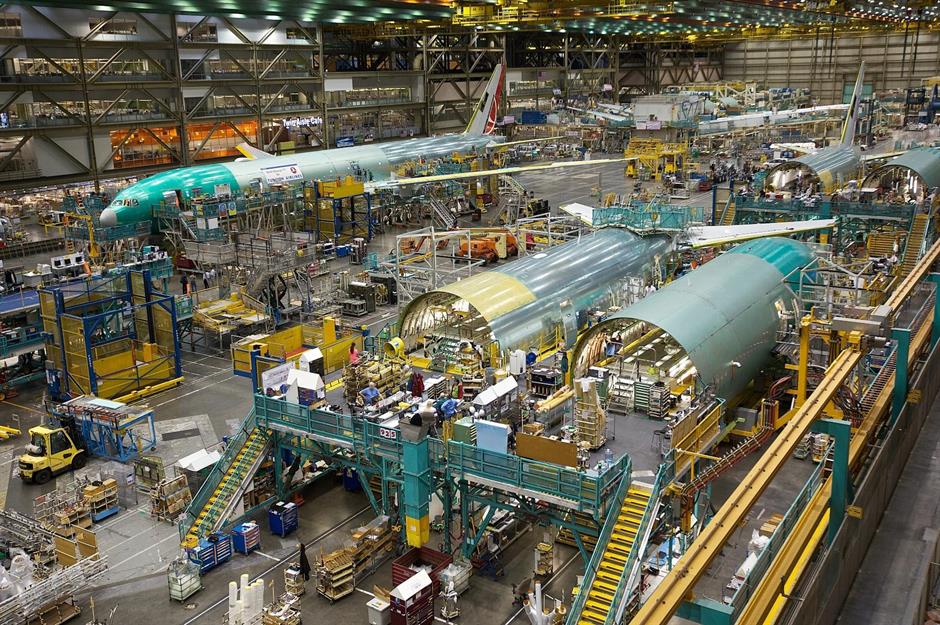
Bewilderingly big, Boeing's Everett Factory near Seattle is the world's largest building by volume, enclosing 472 million cubic feet (13.3 million cu m) of space. Built in the 1960s to assemble the revolutionary 747, the complex has since produced thousands of widebody aircraft.
Today, Everett builds 767s, KC-46 tankers and 777/777X jets, while a new 737 MAX line opened in 2026. Boasting over 30,000 workers who use bikes to get around, the factory is effectively a mini city, with its own fire department, hospital, theatre, general store and more than two miles of underground tunnels.
24. Panasonic Energy Kansas, USA: 4.7 million sq ft (440,000 sq m)
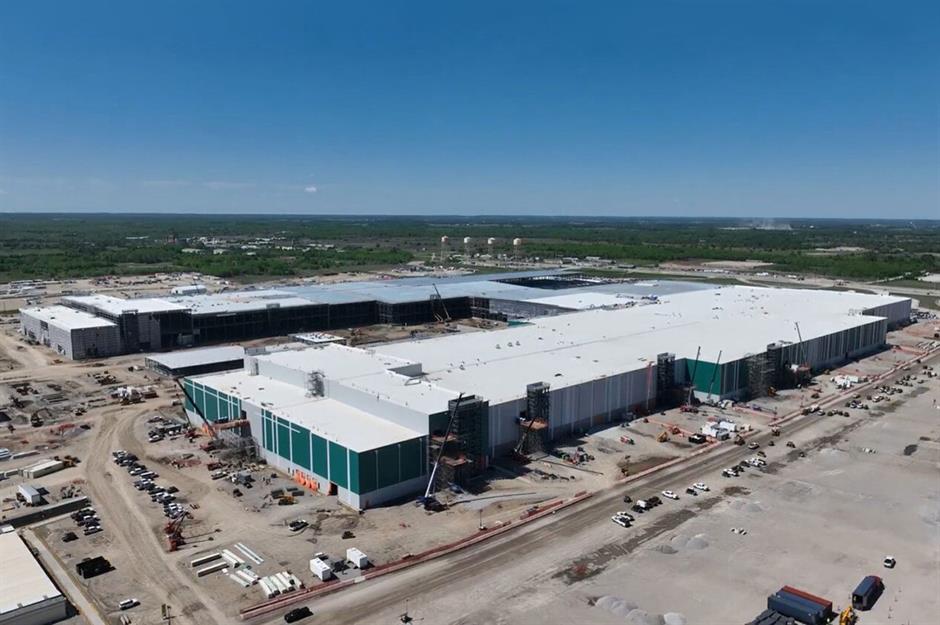
Opened last year, Panasonic Energy's vast new battery factory in De Soto, Kansas, spans 4.7 million square feet (440,000 sq m). The $4 billion (£3bn) facility produces 2170 lithium-ion cells for electric vehicles and is also pivoting to batteries for data centres.
The 300-acre complex is built on a suitably gigantic scale: the factory is nearly as long as two cruise ships, while three passenger jets could fit nose-to-tail in the central space between its two wings. Up to 4,000 people are expected to work there.
Sponsored Content
Joint 22. Tesla Fremont Factory, USA: 5.3 million sq ft (490,000 sq m)
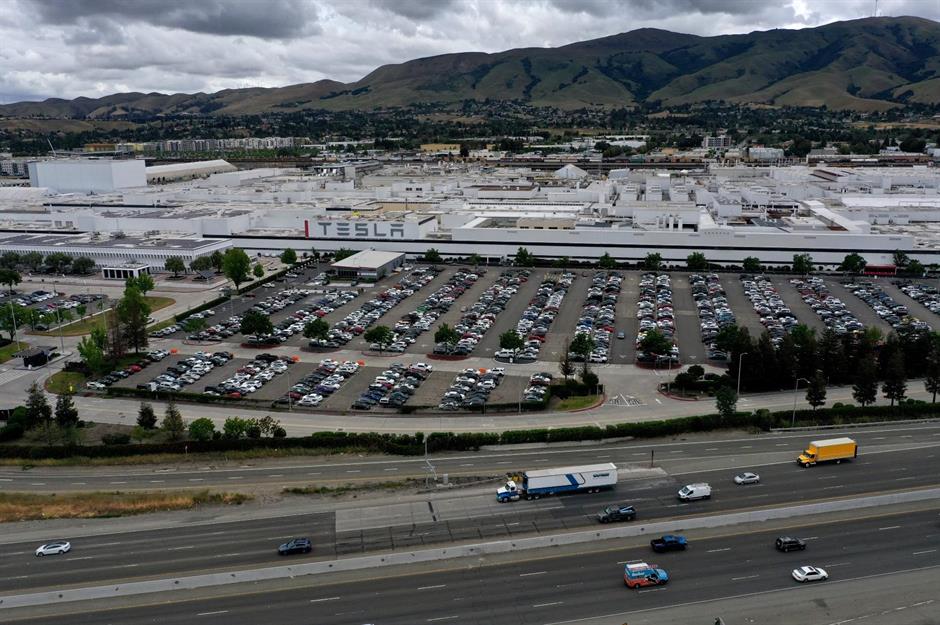
Tesla's Fremont Factory in California contains 5.3 million square feet (490,000 sq m) of manufacturing and office space, equivalent to more than 90 American football fields. The site has a long automotive history: General Motors built cars there from 1962 to 1982, before Toyota operated the plant between 1984 and 2009.
Tesla bought the factory in 2010 and spent around $3 billion (£2.2bn) modernising it. Today, Fremont produces the Model 3 and Model Y, and has just started manufacturing Tesla's Optimus humanoid robot.
Joint 22. Belvidere Assembly Plant, USA: 5.3 million sq ft (490,000 sq m)
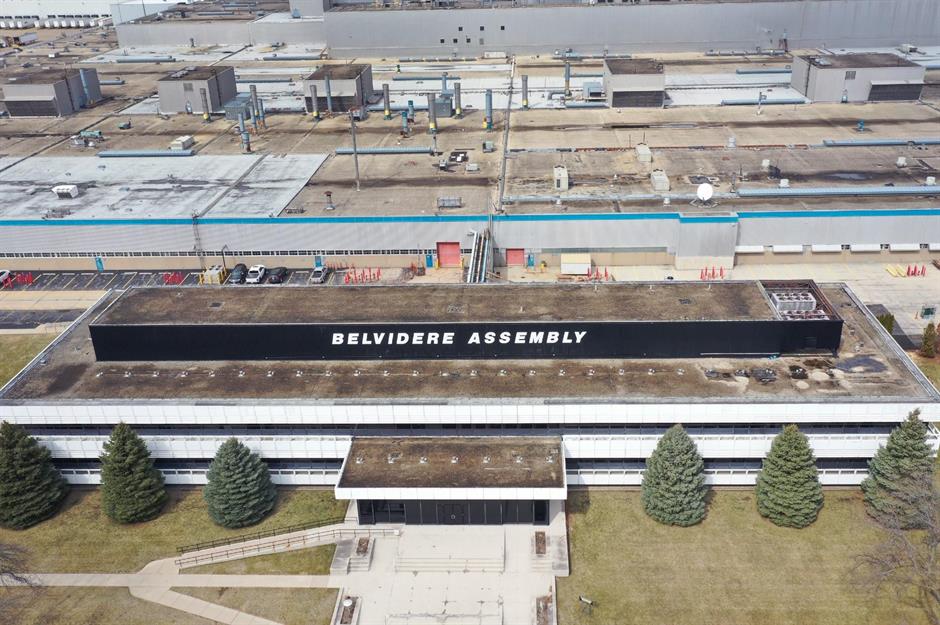
Opened in 1965, Stellantis' Belvidere Assembly Plant in Illinois has 5.3 million square feet (490,000 sq m) of floor space. In 2006, it became the first Chrysler factory with a body shop operated entirely by robots, with 780 machines able to switch tools automatically during production.
The plant was idled in 2023 when Jeep Cherokee production ended, costing around 1,350 jobs. Now Stellantis is investing more than $600 million (£449m) to reopen Belvidere in 2027 to build the Jeep Cherokee and Compass, a move expected to create around 3,300 jobs, well over double the number that were lost in 2023.
21. Tesla Gigafactory Nevada, USA: 5.4 million sq ft (502,000 sq m)
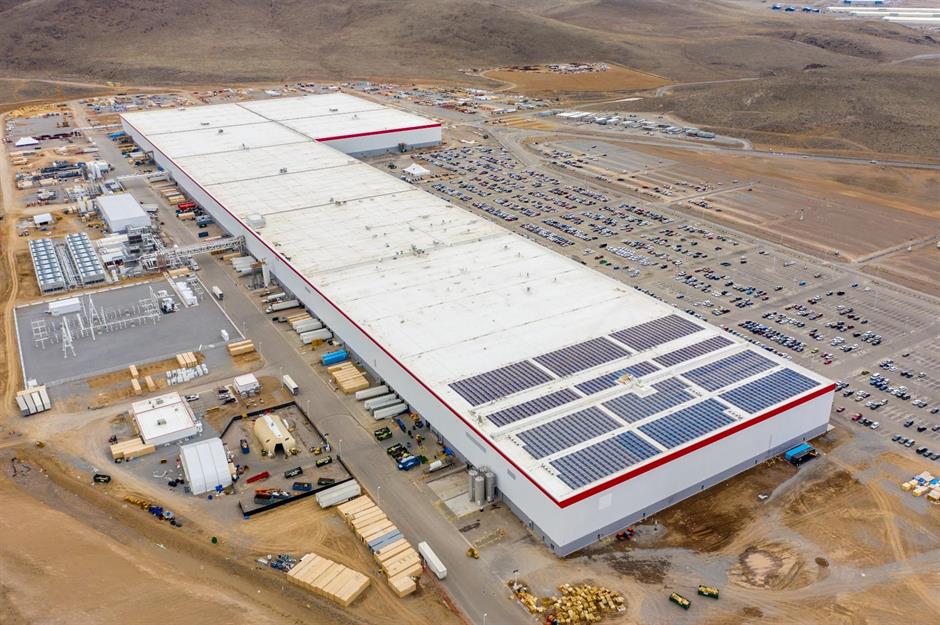
Tesla's OG Gigafactory opened in Nevada in 2014 and now covers 5.4 million square feet (502,000 sq m). The plant is one of the world's highest-volume production sites for batteries, electric motors, powertrains and energy-storage products, delivering billions of battery cells each year.
Tesla has invested billions in the site and is still expanding it. Production of lithium iron phosphate (LFP) cells began ramping up in 2026, while a separate high-volume factory for the company's electric Semi truck is also being developed at the complex. Another mini city, the site features cafeterias, medical support, training centres, free shuttle services and myriad other amenities.
Sponsored Content
20. CATL Shandong plant, China: 5.6 million sq ft (520,000 sq m)
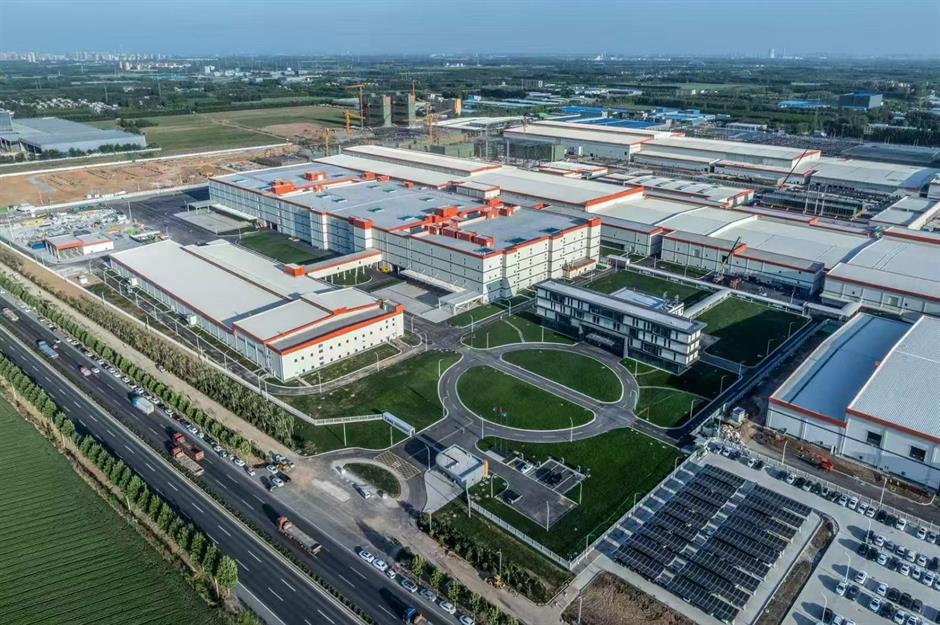
Opened in 2025, CATL's Shandong plant in Jining is the Chinese battery giant's first production base in northern China. The 5.6 million square- foot (520,000 sq m) complex uses highly automated production lines to make batteries for electric vehicles and energy-storage systems, with annual capacity of 60GWh.
Built to CATL's Lighthouse Factory + Zero-Carbon Plant standards, the site combines impressive manufacturing space with impressive employee amenities. It is the first phase of a much larger three-stage battery complex.
Joint 17. GM Arlington Assembly, USA: 6 million sq ft (557,000 sq m)
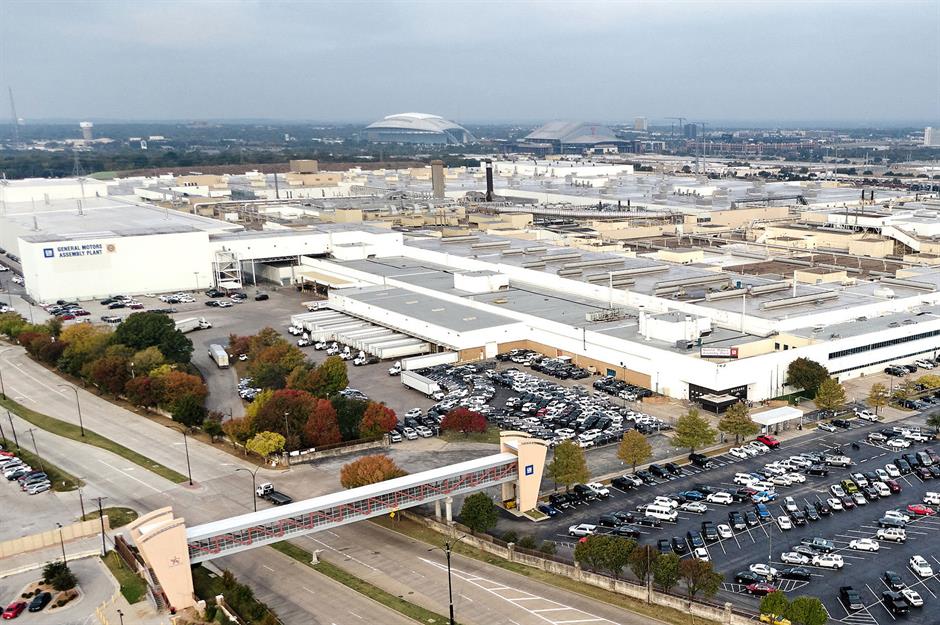
General Motors' Arlington Assembly plant in Texas has been building vehicles since 1954 and now encompasses 6 million square feet (557,000 sq m) of manufacturing space. More than 13 million vehicles have rolled off its production lines, including past American icons such as the Chevrolet Bel Air and Pontiac GTO.
Today, its 5,200 workers exclusively build GM's full-size SUVs, such as the Chevrolet Tahoe and Suburban, GMC Yukon and Cadillac Escalade. GM has invested heavily in the plant, including more than $500 million (£374m) to prepare it for the latest generation of SUVs.
Joint 17. Nissan Smyrna plant, USA: 6 million sq ft (557,000 sq m)
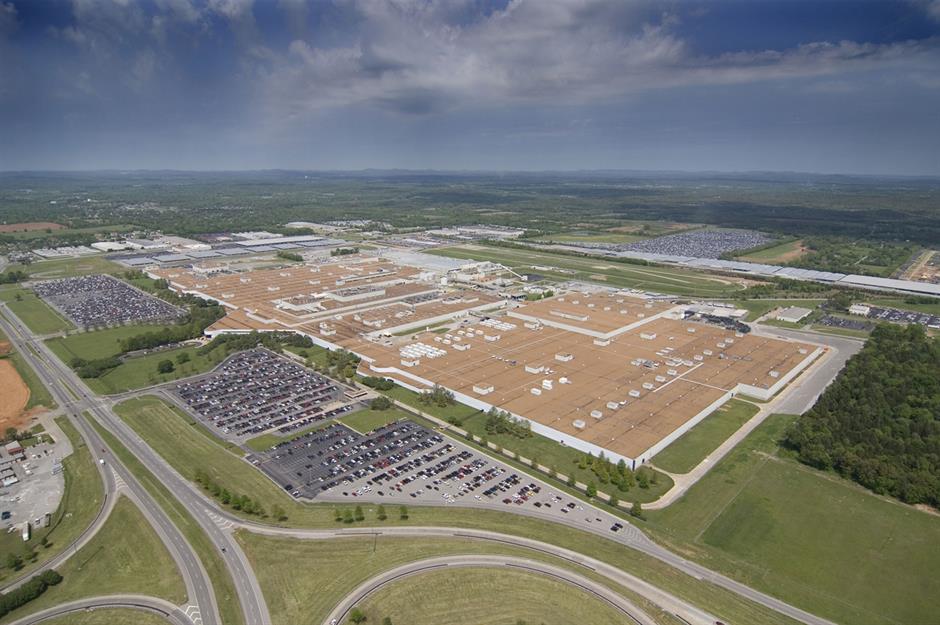
The Nissan Smyrna plant opened in 1983 and has grown into a 6 million square-foot (557,000 sq m) manufacturing complex. The Tennessee factory has capacity to build 640,000 vehicles a year and represents $9.2 billion (£6.9bn) of investment.
Today, Smyrna employs 6,550 workers, who produce the Nissan Murano, Pathfinder and Rogue, alongside Infiniti SUVs including the QX60 and QX65. The site also features a two-mile (3.2 km) test track.
Sponsored Content
Joint 17. Ford Kentucky Truck Plant, USA: 6 million sq ft (557,000 sq m)
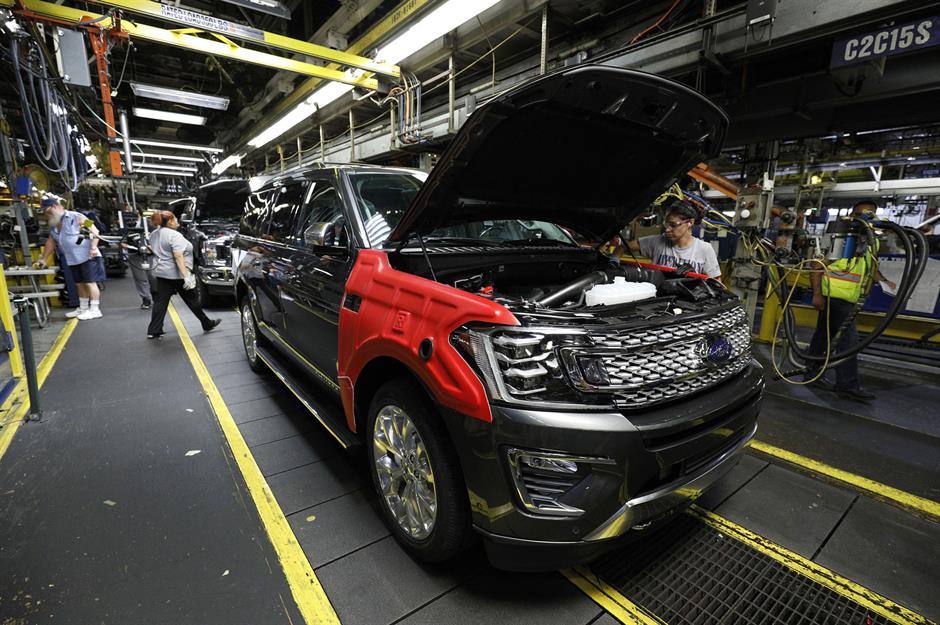
A production line stretching more than 24 miles (38.6 km) snakes through Ford's Kentucky Truck Plant in Louisville, where thousands of workers and hundreds of robots build some of America's biggest vehicles. The 6 million square-foot (557,000 sq m) factory produces F-Series Super Duty trucks, the Ford Expedition and Lincoln Navigator.
Opened in 1969, the plant now employs more than 8,900 people. Ford is also giving the veteran factory a swish upgrade, having recently announced an investment of $1 billion (£748m) in a new state-of-the-art paint shop.
16. Mercedes-Benz Tuscaloosa plant, USA: 6 million+ sq ft (557,000+ sq m)
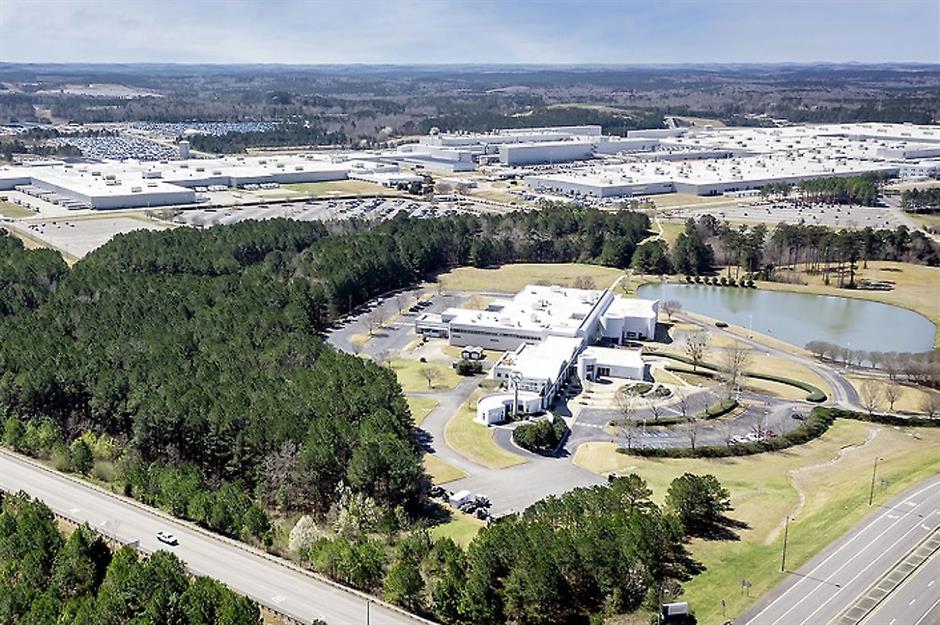
Mercedes-Benz's Tuscaloosa plant in Alabama covers more than 6 million square feet (557,000 sq m) and employs some 5,800 people. Production began in 1997 with the M-Class SUV, and in March of this year the five millionth vehicle rolled off the line.
Today, the factory builds seven luxury SUV models, including the GLE, GLS and all-electric EQE and EQS SUVs. A hefty 60% of its output is exported around the world, making the Alabama operation one of America's biggest vehicle exporters. Mercedes-Benz is now investing another $4 billion (£3bn) in Tuscaloosa as part of a major US expansion.
15. Hyundai Metaplant America, USA: 7.5 million sq ft (697,000 sq m)
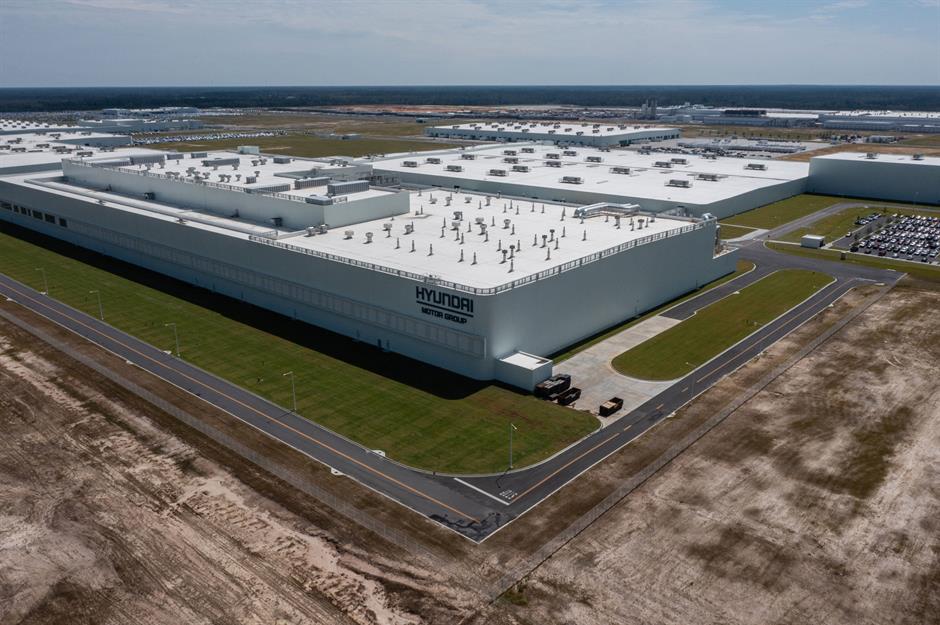
Production kicked off at Hyundai Motor Group Metaplant America near Savannah, Georgia, in 2024. Its 11 buildings comprise 7.5 million square feet (697,000 sq m) of space across a mammoth 2,900-acre site. The ultra high-tech factory builds Hyundai and Kia electric and hybrid vehicles, with capacity eventually set to reach 500,000 cars a year.
More than 8,500 people are expected to work across the megasite, which even has its own round-the-clock emergency response team and dedicated fire engine, not to mention a 41-acre eco park.
Sponsored Content
14. CATL Xiamen plant, China: 7.6 million sq ft (710,000 sq m)
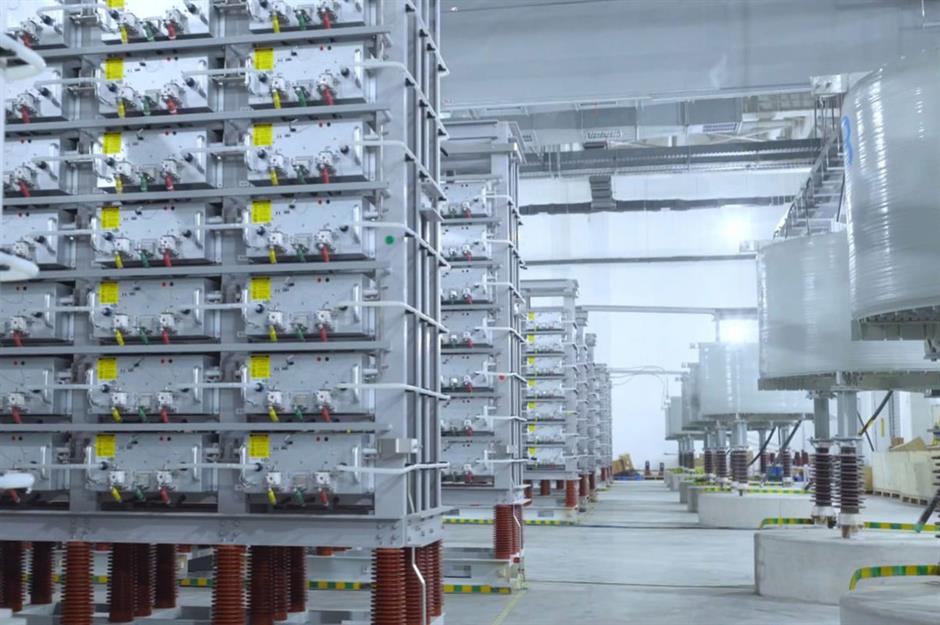
CATL's Xiamen battery plant in Fujian province covers 7.6 million square feet (710,000 sq m), making it considerably larger than the company's newer Shandong facility. The first phase broke ground in late 2021 with an investment of $1.1 billion (£823m).
The factory was conceived as a highly automated hub for lithium-ion battery production, with CATL aiming to make it a world-leading green, smart and digital plant. Xiamen has since become an increasingly important centre for the company's battery and energy-storage operations.
13. GM Spring Hill Manufacturing, USA: 7.9 million sq ft (734,000 sq m)
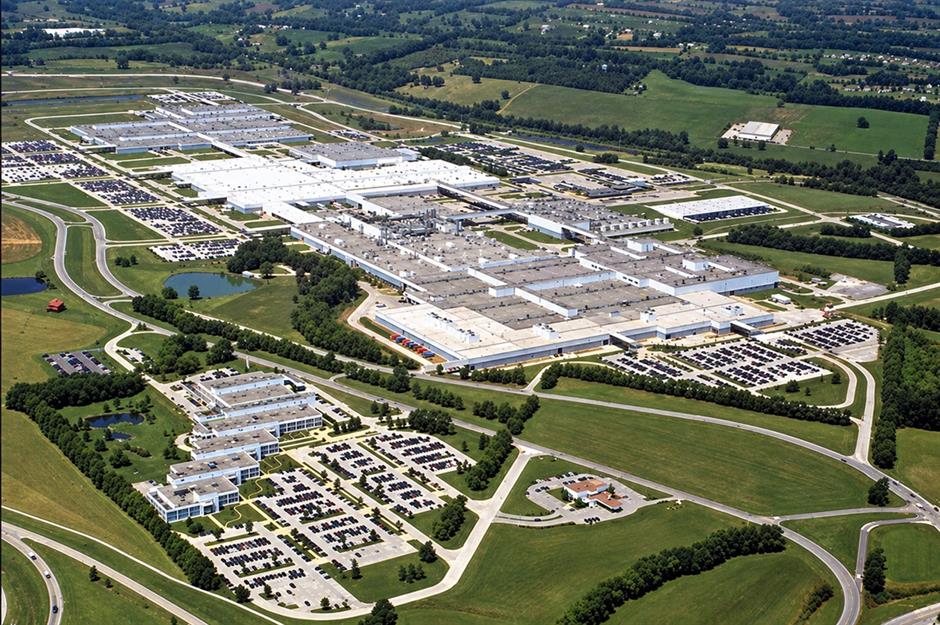
Cars aren't the only things produced at General Motors' Spring Hill complex in Tennessee. Of its 2,100-acre site, 700 acres are used for farming and another 100 acres are preserved as wildlife habitat. The factory itself contains 7.9 million square feet (734,000 sq m) of floor space.
Originally built for GM's Saturn brand, Spring Hill began production in 1990. Today, petrol-powered and electric Cadillacs are assembled side-by-side on the same production line, while the complex also handles stamping, engines and battery assembly. GM announced a further $275 million (£206m) investment in the site in June 2026.
12. BMW Plant Spartanburg, USA: 8 million sq ft (743,000 sq m)
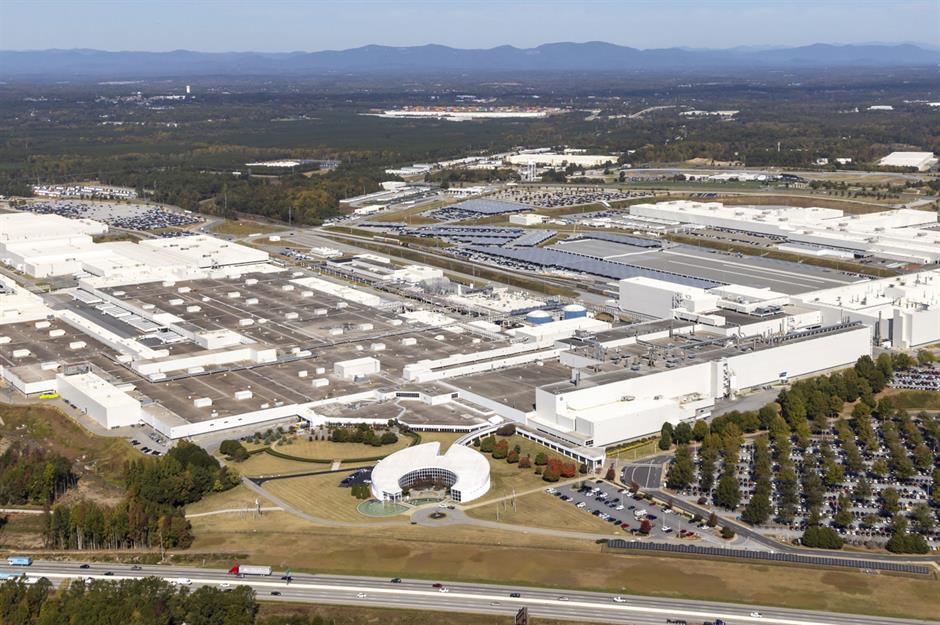
More than 2,600 robots work across BMW's 8 million square- foot (743,000 sq m) Spartanburg factory in South Carolina, the German carmaker's largest production plant worldwide. The 1,150-acre complex also has three body shops, two paint shops and two assembly halls, and employs more than 11,000 people.
Spartanburg builds various BMW X models, with nearly 200,000 vehicles exported in 2025 alone. BMW completed a $1.7 billion (£1.3bn) expansion of its South Carolina operations in June 2026, paving the way for fully electric models, starting with the iX5 later this year.
Sponsored Content
11. Toyota Motor Manufacturing Kentucky, USA: 9 million sq ft (836,000 sq m)
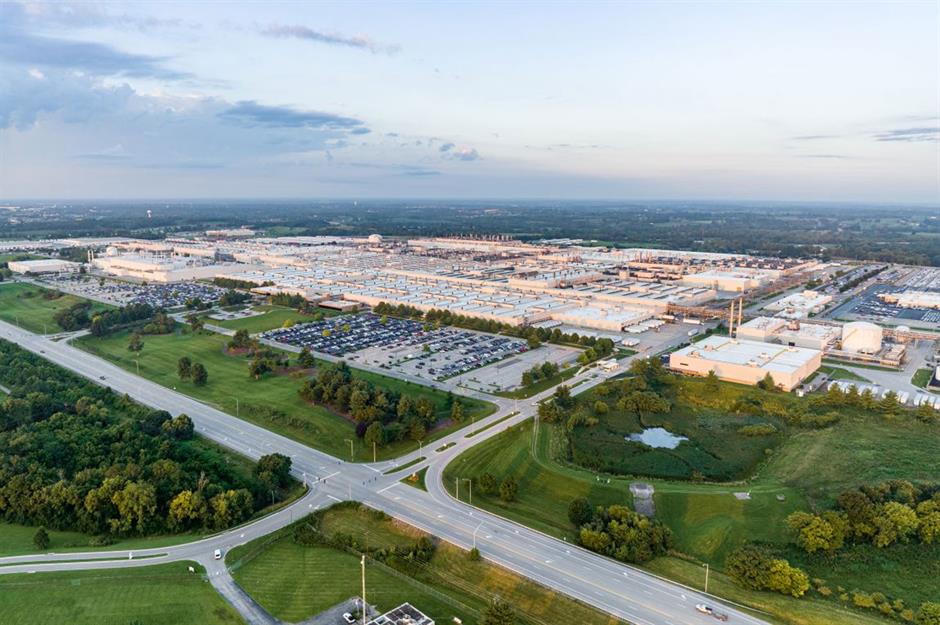
Stretching across 9 million square feet (836,000 sq m), Toyota's Georgetown factory in Kentucky is the Japanese carmaker's biggest manufacturing facility anywhere in the world. Its floor space is equivalent to roughly 156 American football fields, while the wider site covers 1,300 acres.
Production began in 1988 with the Camry, and more than 14 million vehicles have since rolled off the lines. Today, 10,000 people work there assembling Camry and RAV4 hybrids, engines and other components. Toyota began producing the latest RAV4 Hybrid there in June and is also constructing a new advanced paint facility.
10. Tesla Gigafactory Texas, USA: 10 million+ sq ft (929,000+ sq m)
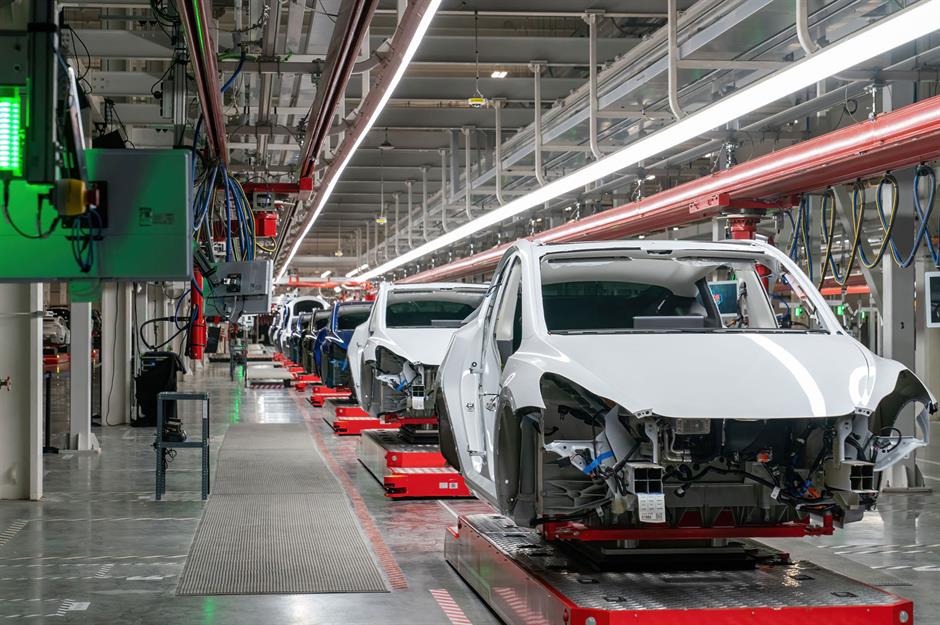
Tesla's Austin Gigafactory contains more than 10 million square feet (929,000 sq m) of factory floor within a 2,500-acre site beside the Colorado River. Opened in 2022, the complex also serves as Tesla's global headquarters.
The plant builds the Model Y and angular stainless-steel Cybertruck, while also producing Tesla's 4680 battery cells on site. Manufacturing capacity continues to expand as the company adds new production facilities, making Giga Texas a key hub for Tesla's increasingly vertically integrated approach to building its vehicles and batteries in the same complex.
9. TSMC Fab 18, Taiwan: 10.2 million sq ft (950,000 sq m)
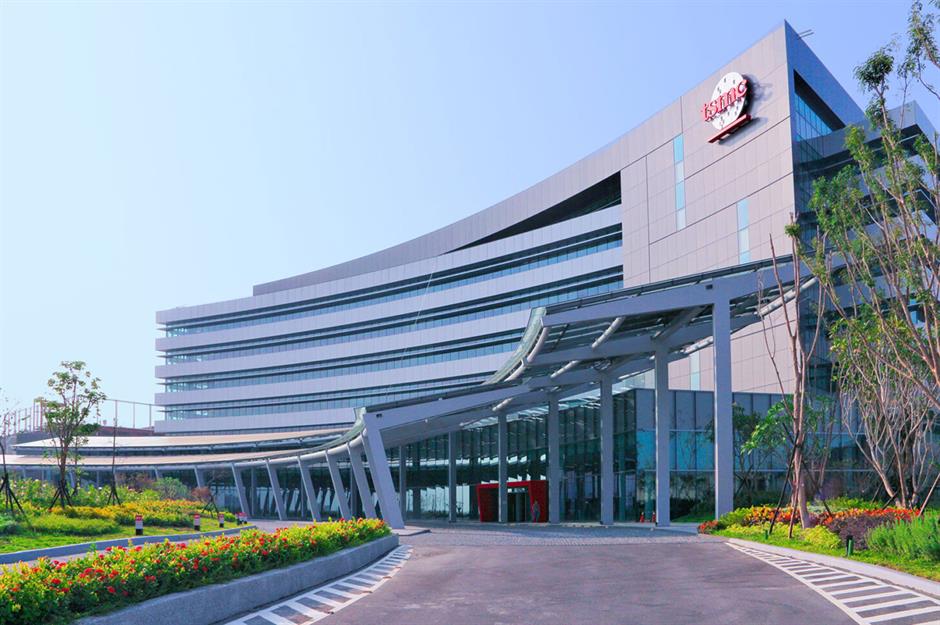
Producing some of the world's most advanced microchips requires an improbably large amount of space. TSMC's Fab 18 in Tainan covers 10.2 million square feet (950,000 sq m), including capacious cleanrooms where microscopic contamination must be kept to an absolute minimum.
The semiconductor giant began building the complex in 2018 for its 5-nanometre chips, later adding production of even more advanced 3-nanometre technology. Fab 18 ultimately expanded to eight phases, each with a massive cleanroom, while total investment in the complex has exceeded $61 billion (£46bn).
Sponsored Content
8. Samsung Pyeongtaek Fab, South Korea: 10.7 million sq ft (990,000 sq m)
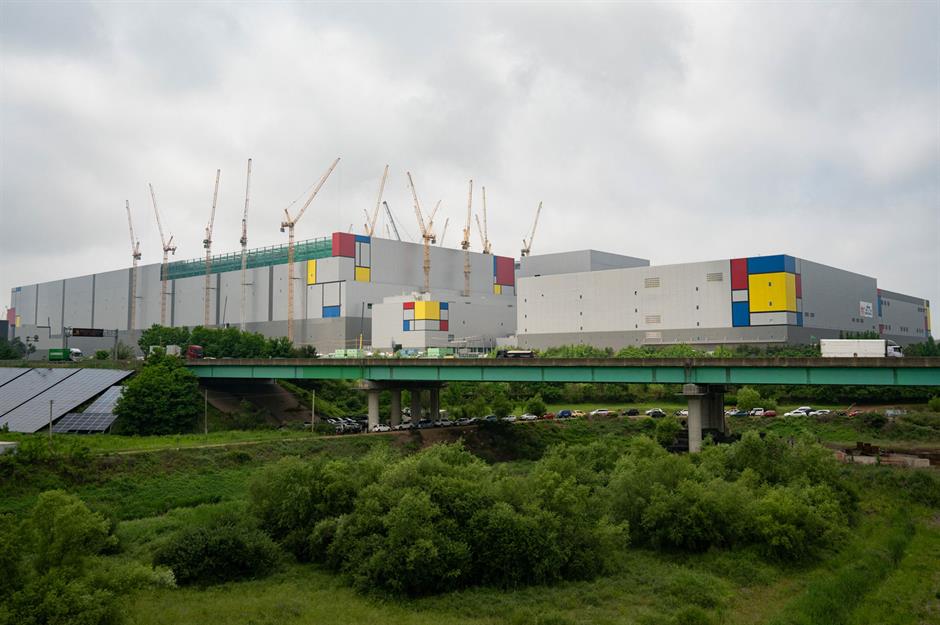
Samsung's semiconductor complex at Pyeongtaek takes factory building upwards as well as outwards. A single fab occupies a footprint of about 1.3 million square feet (120,000 sq m), but its multiple levels provide a tremendous 10.7 million sq ft (990,000 sq m) of total floor space.
Inside, supersized cleanrooms operate around the clock, producing advanced memory and logic chips in pristine environments where microscopic particles can ruin an entire manufacturing process. The wider Pyeongtaek campus covers 714 acres and continues to expand as Samsung pours investment into meeting surging demand for chips used in AI.
7. Airland Tyre factory, China: 12.5 million sq ft (1.16 million sq m)
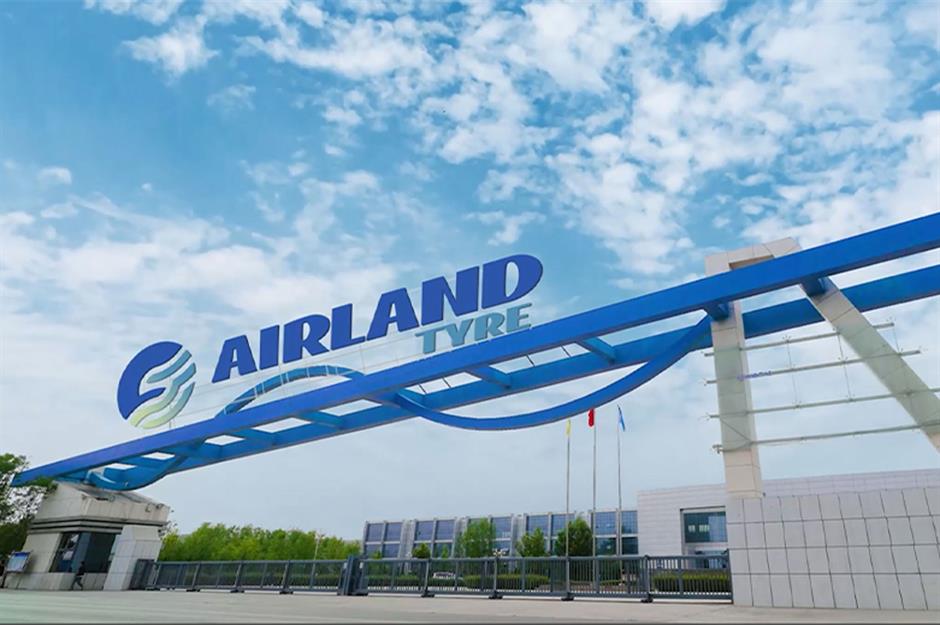
Tyres rather than cars roll out of this immense factory in Pingluo, northern China. Airland Tyre's manufacturing complex contains 12.5 million square feet (1.16 million sq m) of floor space, with the first tyre leaving the production line in May 2015.
The plant was designed to produce millions of truck and passenger-vehicle tyres, as well as aviation tyres. It also operates an unusually self-contained supply chain, reducing its reliance on outside suppliers for key manufacturing materials.
6. Volkswagen Wolfsburg plant, Germany: 17.2 million sq ft (1.6 million sq m)
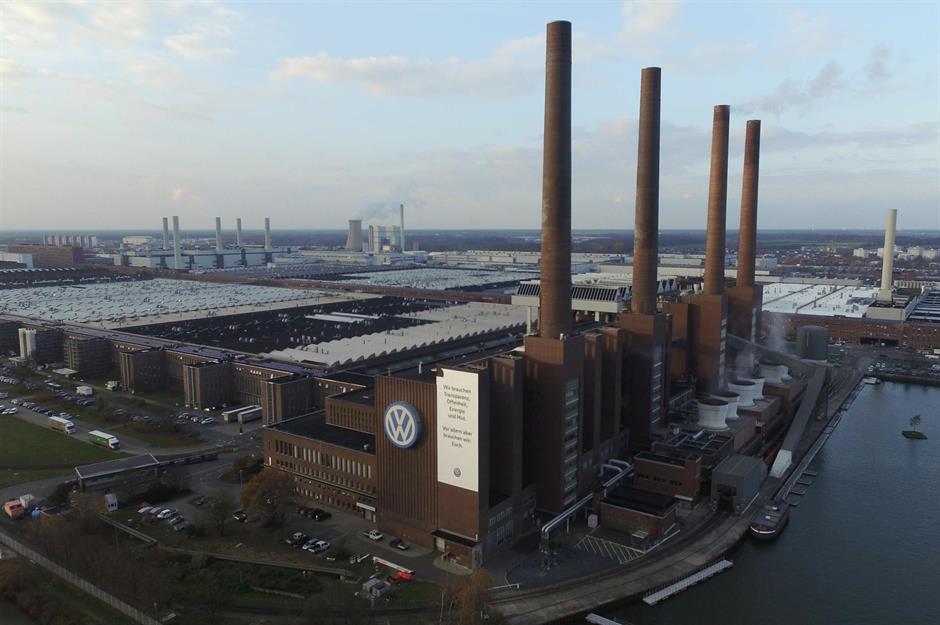
Volkswagen's flagship Wolfsburg factory is so extensive that its internal road network runs for 47 miles (75 km), supplemented by another 37 miles (60 km) of railway tracks. Its factory halls cover 17.2 million square feet (1.6 million sq m), within a wider 1,610-acre site on the banks of the Mittelland Canal.
Production began with the Beetle in 1945, and in February 2026 the 49 millionth vehicle built at Wolfsburg rolled off the line. Today, the plant produces the Golf, Tiguan, Touran and Tayron, and remains Volkswagen's global headquarters.
Sponsored Content
5. CATL Fuding battery base, China: 20.5 million sq ft (1.9 million sq m)
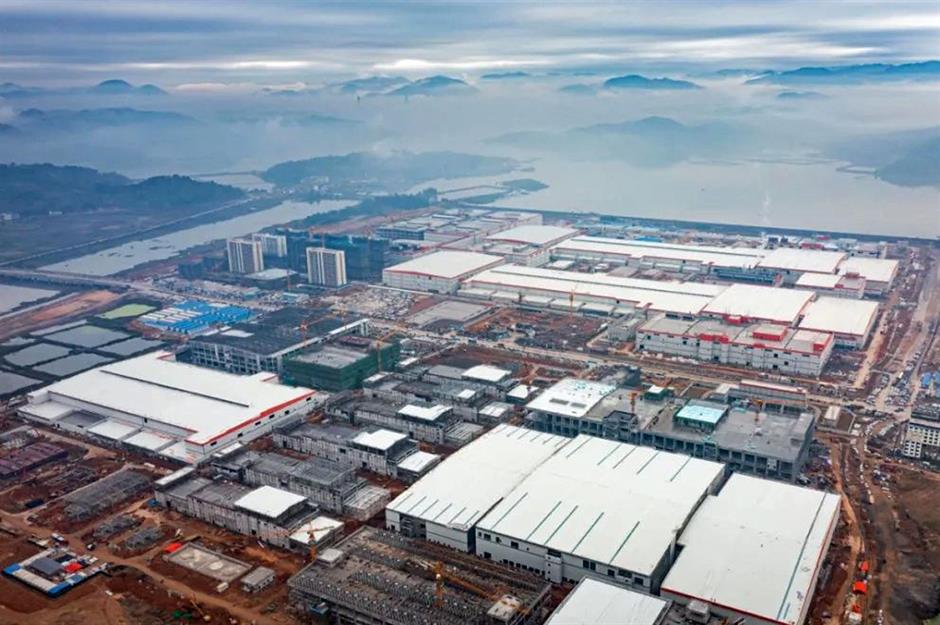
CATL's Fuding battery base in Fujian is the Chinese battery titan's biggest factory. Its first phase encompasses cell and module factories as well as warehouses, canteens, dormitories and other supporting buildings.
Production began in 2021, and the site has continued growing ever since. Its newest No. 5 Super Factory alone encompasses 2.5 million square feet (230,000 sq m) and contains four battery production lines with 25GWh of annual capacity.
4. Hyundai Ulsan plant, South Korea: 24.9 million sq ft (2.31 million sq m)
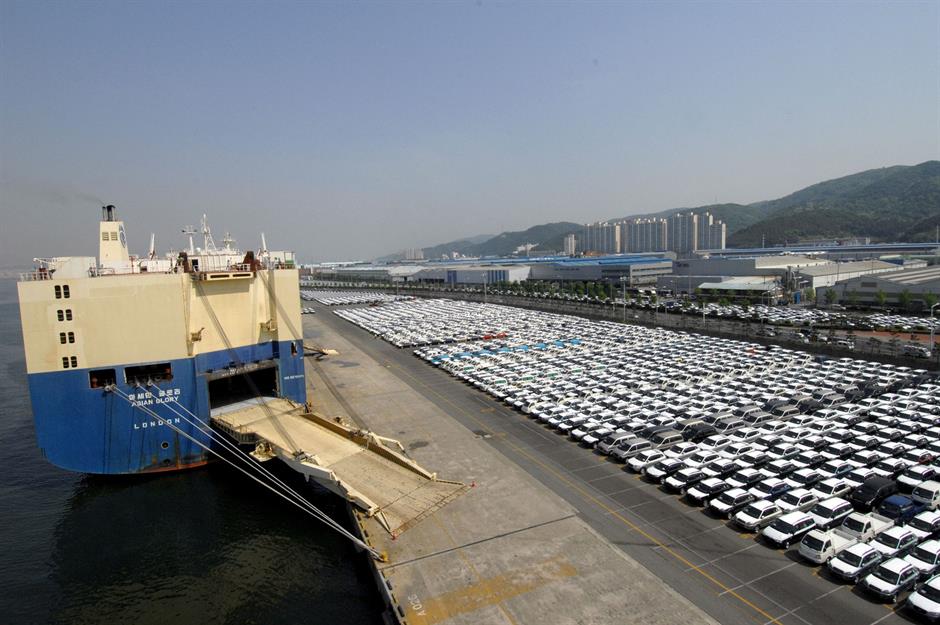
Opened in 1968, Hyundai's gargantuan Ulsan plant turns out about 6,000 vehicles a day. The sprawling site has annual production capacity of around 1.4 million vehicles and employs some 34,000 people.
The plant even has its own shipping dock, while a fleet of buses ferries employees around the vast complex. A new EV factory is now expanding Ulsan further.
3. BYD Hefei plant, China: 28 million sq ft (2.6 million sq m)
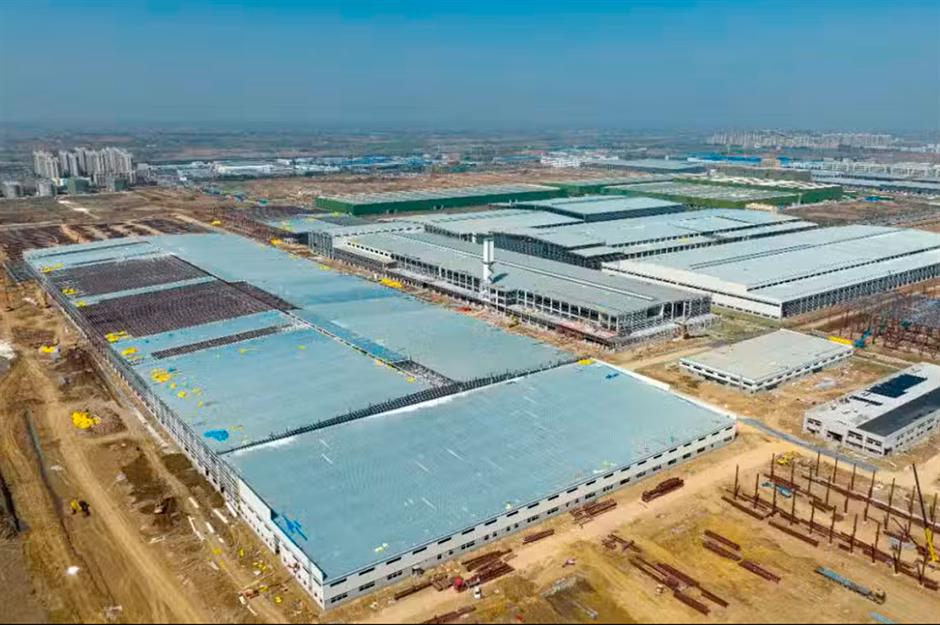
BYD's colossal Hefei plant in Anhui province was built at breakneck speed, with Phase 1 completed just 10 months after construction began and the first car rolling off the line in June 2022. The complex produces complete vehicles as well as key components including electric motors, control systems and high-voltage wiring.
The first two phases reportedly cost over $4.3 billion (£3.2bn), more than twice the cost of Tesla's Gigafactory Shanghai. Once all three phases are complete, annual production capacity is expected to reach 1.32 million vehicles.
Sponsored Content
2. Foxconn Zhengzhou Technology Park, China: 30.1 million sq ft (2.8 million sq m)
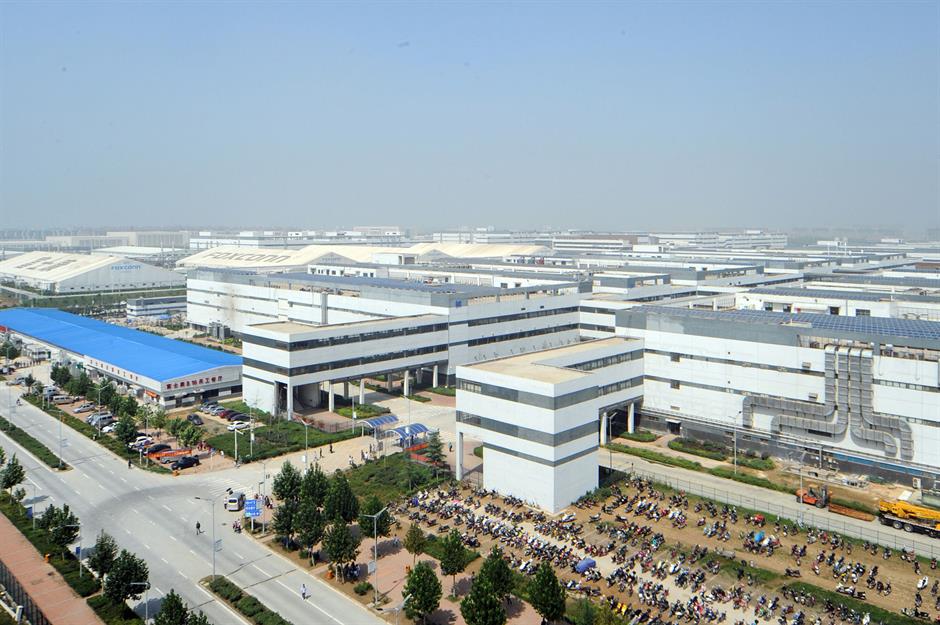
Nicknamed iPhone City, Foxconn's Zhengzhou Technology Park has a reported 30.1 million square feet (2.8 million sq m) of floor space and is the world's largest iPhone manufacturing hub. At peak production, hundreds of thousands of people work at the complex, which can turn out as many as half a million iPhones a day.
Opened in 2010, the factory has become central to Apple's global supply chain. The wider park covers nearly 60 million square feet (5.6 million sq m) and includes vast worker accommodation and other facilities needed to support its enormous workforce.
1. AvtoVAZ Togliatti plant, Russia: 64.6 million sq ft (6 million sq m)
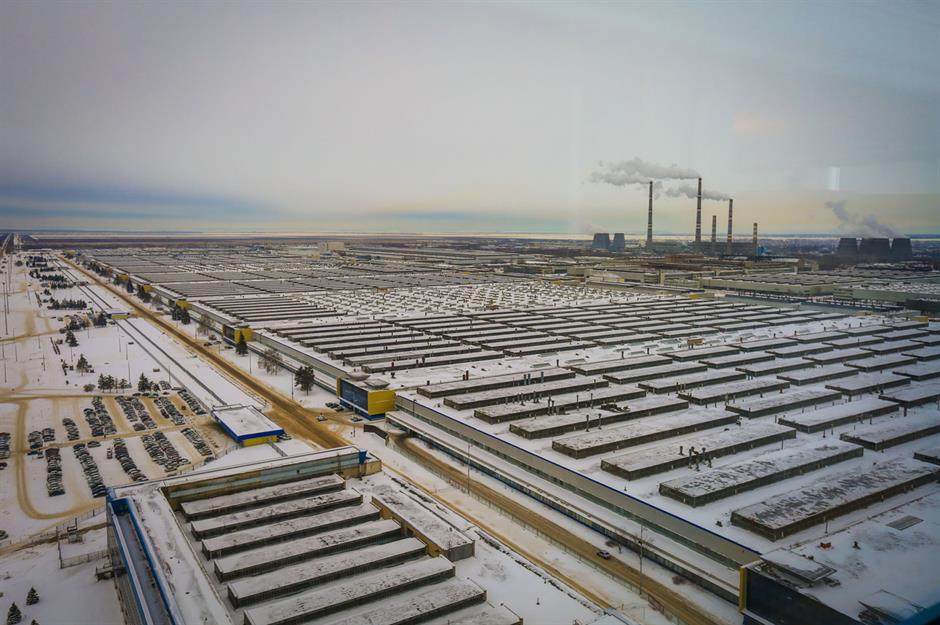
Taking the top spot is AvtoVAZ's Togliatti plant in western Russia. Its main assembly building contains a staggering 64.6 million square feet (6 million sq m) of total floor area across multiple levels.
Built in collaboration with Fiat during the Soviet era, the leviathan car plant began production in 1970. Its main building stretches for almost 1.2 miles (2 km), while the wider factory occupies some 1,483 acres. Best known for its Lada marque, AvtoVAZ remains Russia's largest carmaker and employs more than 30,000 people.