Love to be the one to Get the best deal?

Then register for free and get exclusive, personalised benefits that will help you achieve all your money goals.

Join the lovemoney.com experience

Register Now

Confused?

Why Register?

Credit card rate hike warning

Published 9 February 2010 in Get the best deal

Today, Capital One raised the interest rate on its credit cards by 90%, and similar increases may soon be on the way from other providers. Here's how to fight back against the rate hikes!

I think most of us will agree that credit cards can come in very handy at times. But the major drawback to using a credit card is the high rate of interest you'll often be charged.

Of course, if you're financially savvy, you're bound to already be using the right credit card for your needs - and that's likely to be one charging a low rate of interest.

Unfortunately, however, even if you are financially savvy, credit card providers seem to have it in for us at the moment. And for thousands of Capital One customers, the right credit card may have just turned into the wrong one, after the credit card provider announced that interest rates are set to almost double from 8.01% to a whopping 15.31% in March. That's a 90% increase - ouch!

Capital One is using the poor economic environment as its excuse, but of course, it could be the start of things to come, with speculation that other credit card providers may soon follow suit.

So if you're worried you might soon get whacked by a higher rate of interest on your credit card debt, what can you do?

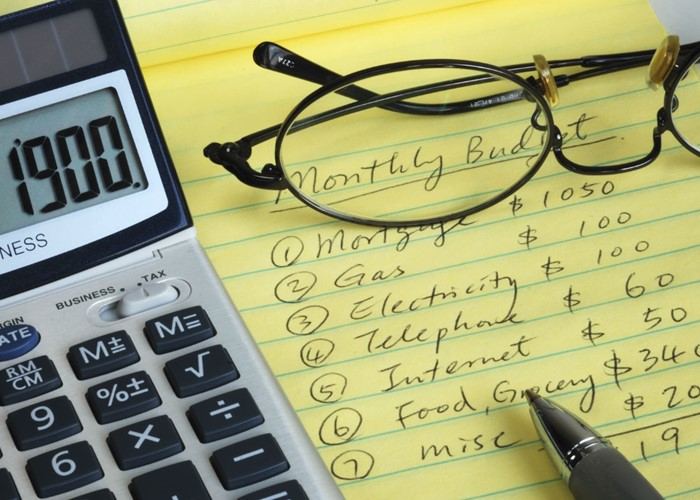
Draw up a budget

When money is a little tight, the first thing to do is to reign in your spending and get budgeting. And fortunately, here at lovemoney.com, we have a fabulous tool to help you do just this.

All you need to do is register for our newly-launched online banking service. This will allow you to see all your transactions in a categorised pie chart over the past month, so you'll be able to see at a glance what you're spending your money on.

You can then use the information about your monthly outgoings and earnings to create a budget using a statement of affairs calculator or this budgeting calculator from the FSA. Simply enter the figures in the boxes provided to view an instant snapshot of your household budget and personal balance sheet. This will help you to take control of your finances.

It's also well worth seeing whether you can make any cutbacks anywhere - could you spend less on socialising, or save money on your food bills? Perhaps it's time to see whether you can get a better deal on your gas and electricity tariff? Adopt our goal to get help on lowering your household bills.

Slash those debts

Once you've registered with lovemoney.com, you'll be able to adopt our goal on paying off your credit card debts. This goal will take you through a step-by-step plan to help you cut the cost of your debt and show you how not to get caught out by sneaky tricks such as negative order of payment (where your most expensive debt is paid off last) and minimum monthly repayments.

This goal will also teach you the art of snowballing. In a nutshell, this enables you to tackle your debt faster because you'll be paying off the most expensive debt first. All you need to do is work out which of your debts is charging the most interest and then start throwing as much cash as possible towards this debt (while still paying the minimum monthly payments on the rest of your borrowings).

Once you've paid off this debt, put the extra cash towards the next most expensive debt, and so on. By doing this, you'll clear your debt more quickly.

Get a better card

Of course, one of the best ways to reduce your credit card debt is to simply get a better credit card - and one that pays a lower rate of interest.

If you currently have a lot of debt sitting on a credit card which is charging a high rate of interest, your best bet is to move it onto a 0% balance transfer card. The Virgin Credit Card, for example, offers a market-leading 16 months interest-free on all balance transfers. So this means you'll have 16 months to start tackling your debt head on, without worrying about the interest stacking up.

Just remember that you'll have to pay a transfer fee of 2.98%, and if you haven't cleared your balance before the 16 month interest-free period comes to an end, you'll be hit with an interest rate of 16.6%.

Alternatively, the Barclaycard Platinum Credit Card with Balance Transfer offers 0% on balance transfers for 15 months, and this comes with a 2.9% transfer fee.

If the amount of debt on your existing credit card is so high you're worried you may never pay it off, you could consider a lifetime balance transfer card instead. These cards promise to offer a low rate of interest for the life of your debt.

Take the MBNA Platinum Credit Card Visa, for example. This credit card offers a fixed interest rate of 5.9% until the balance is paid off in full. Just bear in mind that you will have to pay a transfer fee of 2%.

If you'd prefer not to pay a transfer fee, the MBNA Platinum Low Rate American Express Card might be more up your street. However, the interest rate is slightly higher at 6.7% and this rate is variable, so there's no guarantee it won't change. 

Finally, don't forget to check out our videos on credit card debt: Slash your credit card debt in four easy steps and The three worst things you can do with your credit card. And if you have a burning question about your credit card debt, why not wander over to Q&A and ask other lovemoney.com members for advice?

More: Get the perfect credit card | Breathe easy with this new balance transfer card

Compare credit cards with lovemoney.com

Enjoyed this? Show it some love

Share this lovemoney.com content on any of the social networks and utilities below by simply clicking the site of your choice.

  • You can subscribe to all lovemoney.com articles via our RSS feed.

Comments

kenp said

  • 0 recommendations

Capital one suck as a company. A friend of mine had one of their cards at 8% as a 'special offer' and overnight more than doubled the interest rate after one year.

Unfortunatly he has financial problems ie loss of job etc but on asking Capital One for some 'breathing' space the reaction from them was pay or they would take action against him. But unfortunatly for them (i don't condone his actions) he declared himself bankrupt. Why don't these companies try and help people who are in genuine trouble, better for them to receive something than nothing.

But unfortunatly Capital One has not got a good reputation.  

eLJay said

  • 0 recommendations

Follow the motley advice - stop living off credit and start saving, if everyone did this then credit card companies would have to drop their rates to encourage people to use them.

Mike10613 said

  • 0 recommendations

Capital One doubled the rate on my card from 8% to around 15.9% last year and sold off it's savings division to Skipton Building Society. I pay off my credit card every month and soon moved my savings from Skipton. 0.1% is a stupid rate. Banks will pay for ripping us off. The governments with quantitative easing bailed them this time. Now they rip off their depositors, the government can't and won't bail them again. So depositors are looking for alternative investments and savings. Some banks are headed for liquidation. Capital One is one! I just read that they are doing badly in the USA too. 

charles125 said

  • 0 recommendations

Worrying Times!!!!

At least one card company now charges a 5% balance transfer fee. This is equivalent to over 10% on a reducing balance, and they have this money up front! Albeit usually from the other card company, which fortunately then encourages companies to keep up the offers.

Do also check the minimum rate before transferring a balance, as a higher minimum rate means paying more each month, sometimes substantially more.

Biggest concern is for people who's credit rating or changed circumstance doesn't allow extra cards. They are generally paying 16% to 25% rates or MORE.

If minimum rates went up to 5%, people on low incomes below £15000 pa with an average credit card debt of around £15000, would have to pay MORE THAN HALF THEIR INCOME AFTER TAX on card repayments. Without being cynical a LOT of people would be considering (or doing!) jumping off bridges, etc.

Can only hope things improve for us borrowers...

dubs1967 said

  • 0 recommendations

15% is a low rate anyway.Try paying 40% with MBNA.As a previous post mentioned,dont even use credit cards they are bad news.

hzplj9 said

  • 0 recommendations

Since becoming unemployed and unemployable(I'm 61) I have limited resource and so I pay off my card each month taking advantage of the payback on my credit card. I can only spend what I have but I can monitor my monthly outgoings as the total is taken from my bank and as soon as I get near to be overdrawn I stop spending. Go for a card like the Nationwide who operate a payment heirarchy of the debt first and then interest. Any other system is bad borrowing. A bank loan works that way so why not credit cards?. I once owed at least a months money on my card and eventually managed to get out of debt, apart from the mortgage and now I feel I can weather the storm. It's going to be a long hard road in the next few years so we have to rein ourselves in and spend only what we have. Lovemoney is right when they advise you to pay off the highest rate first but do not forget the other creditors. Just keep them at bay with a smaller chunk of your money.

garfsuncle said

  • 0 recommendations

Credit cards are not bad news if used sensibly. I don't care what interest rate is charged by Capital One: I pay off the entire balance every month. If an item is too expensive to be able to do this, then I don't buy it.

By using my Capital One card, I earn 1% cashback, so if I spend £1,000 in a month I receive £10 back. That may not appear much, but it's £10 more than I'd get if I paid cash or by cheque. OK, if you can haggle for a discount of more than 1% for cash, then pay cash. But Tesco checkouts and petrol pumps aren't over-ready to provide discounts! So I'll continue to pay by card.

Time to go said

  • 0 recommendations

It was my understanding that the credit card companies agreed with the government in late 2008 that if they propose an increase to someone's credit card interest rate that the card holder could decline the increase. Effectively freezing the account on the existing rate, not able to use in any more, but to carry on repaying the remaining balance over a 'reasonable period'. Although not defined the continuation of repayments at a level consistent with their previous repayments should be considered to be reasonable? However, trying to find articles to support this on the web has not been easy, but they are around.

  • 0 recommendations

Spot on Time to go! Before Christmas I received a letter from Capital One raising my cost of credit (which had already climbed up from 16%) from 22% to a crazy 32%. I had been with them for several years, always paid more than the minimum and never missed a payment. I've frozen at the 22% (itself diabolical) and will be paid off in around 24 months if not sooner. The problem is that lenders see a facility even if not (going) to be used and are likely to decline further credit to a zero % transfer. You just can't win with these people, if possible best not to play at all.

Join the conversation

Please sign in or register to add a comment or recommend.

Our top deals

Credit card
company
Balance transfers rate and period Typical
APR
Apply
now

Barclaycard Platinum with 16 Month BT Visa

0% for 16 months
(2.9% fee)
Typical 16.9% APR (variable) Apply

Virgin Money Credit Card MasterCard

0% for 14 months
(2.98% fee)
Typical 16.6% APR (variable) Apply

Egg Visa

0% until 1st Oct 2011
(3% fee)
Typical 17.9% APR (variable) Apply
W3C  Thank you for using Lock, Stock and Two Smoking Barrels