Comment: is the Bank of England’s 2% inflation target still fit for purpose?

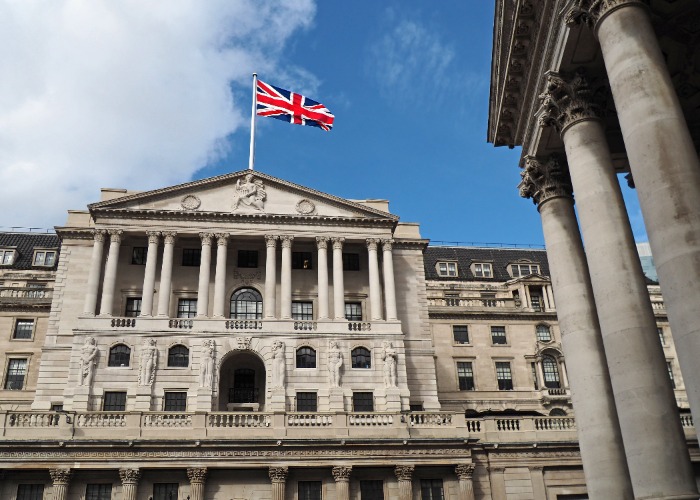
With inflation coming in high for 46 of the last 48 months and no respite on the horizon, Katy Ward wonders whether the 2% target is still practical – or even realistic.
The official measure of inflation currently stands at 3.8%, almost double the official target of 2%.
It's the latest data point in a prolonged period where inflation has remained frustratingly high, the impact of which has been keenly felt by most household budgets.
Worryingly, there seems to be little respite on the horizon.
The International Monetary Fund (IMF) recently raised its UK inflation expectations for 2025 and 2026 to 3.4% and 2.5%, respectively.
Although these numbers may seem modest against the double-digit peaks of 2022, they also highlight the gap between the UK and other developed economies.
According to the IMF, the UK is set to record the highest inflation rate of all G7 countries for two years running.
An ongoing story
It certainly feels like high inflation has been making the headlines for a very long time.
For years, policymakers have lauded the 2% figure as an economic sweet spot, representing the calm after the storm of rising prices.
But how did this 2% figure come about?
This article examines the origins of the BoE’s target – and why it may no longer be suitable in the current climate.
loveMONEY comment: it's staggering that more Budget tax hikes are coming
History of the 2% target
First off, it’s important to be aware that the BoE’s goal isn’t new.
The body has been aiming for 2% inflation since the early 2000s, after the Government granted it the authority to set interest rates in the late 1990s.
In theory, 2% represents an economic goldilocks zone: high enough to encourage spending and investment but low enough to avoid runaway prices.
A target seldom met
Looking at the data from the Office for National Statistics, however, it becomes clear that this aim has rarely been achieved in recent years.
Over the past four years, inflation has been at or below target in just two out of 48 months. And remember, inflation is forecast to remain above target for the remainder of 2025 and 2026.
Source: ONS
Perhaps it’s time to accept that this 2% target has quietly become more symbolic than realistic – an unachievable comfort blanket?
Why should we care?
Although it’s easy to assume that inflation is simply a matter for policymakers and Government officials, these figures obviously have a very real impact on our everyday finances.
If prices rise faster than wages, real incomes shrink, leaving households worse off – even if our pay packets look larger on paper.
This scenario also puts pressure on savers, who have to hunt for higher returns just to stay on an even keel.
An ongoing catch-22
It’s fair to say that the Bank of England can’t really win.
Raise rates and risk choking growth, as households and businesses face higher borrowing costs and reduced spending power.
Cut them too soon and risk increasing prices, since cheaper credit encourages borrowing and demand, which can quickly push inflation back up.
And once inflation has done its damage, higher prices also tend to stick – energy bills, grocery shops and insurance premiums don’t suddenly drop back if the BoE lowers its Base Rate.
Autumn Budget 2025: things you should (and shouldn’t) do before the speech
A weakened position on the global stage
What makes this particularly uncomfortable is how the UK compares internationally.
According to the latest IMF data, for example, US inflation is forecast at 2.7% for 2025.
Furthermore, it is expected to return to the Federal Reserve’s 2% target during 2027.
All in all, predictions for all advanced countries stand at 2.1% for 2026.
Against that backdrop, Britain’s expected 3.4% and 2.5% appear stubbornly high.
To make matters worse, higher inflation often feeds through into increased wages and costs, which can make UK goods and services more expensive abroad.
Mixed messages from Westminster?
And it doesn’t help that central government policy often puts increased pressure on inflation – even if these effects may not be immediately apparent.
For example, the National Insurance rise that took effect in April may not show up as a direct cost on goods, but it adds to employers’ expenses.
As a knock-on effect, this may result in higher prices for customers.
Where next?
So, is it time the BoE faced reality and updated its targets for a new economic era?
The 2% figure isn’t sacred – it’s really just an arbitrary line that most central banks adopted in the 1990s and 2000s.
Back then, it worked, but times have changed.
Of course, there’s also a politically sensitive conversation.
Admitting that 2% might no longer be realistic risks denting the Bank’s credibility.
That said, continuing to miss the target year after year doesn’t do anyone any good.
Have your say
How do you feel about the current inflation target?
Is it a sound economic policy or nothing more than a fairytale in 2025?
We’d love to hear your thoughts in the comments below.