loveMONEY comment: it's staggering that more Budget tax hikes are coming

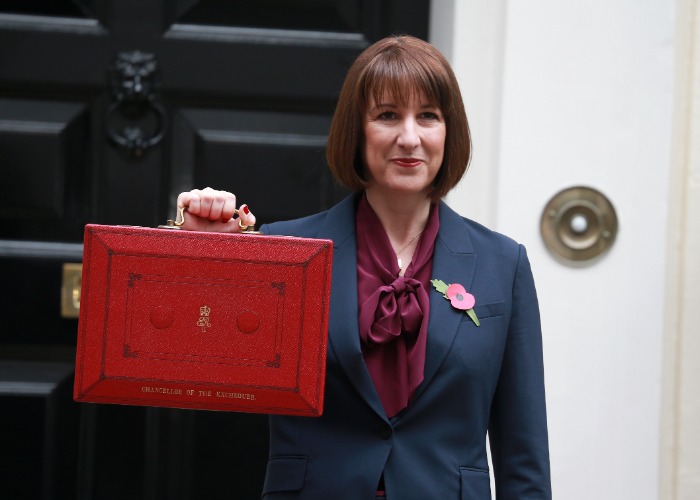
Income Tax bills up £29 billion in a year. £40 billion tax hikes announced in the last Budget. So why are we facing yet more pain next month?
The chancellor is widely expected to announce painful tax hikes in next month’s Budget.
A combination of weak economic growth, rising borrowing costs and higher-than-expected spending have combined to leave the Government needing to raise in the region of £30 billion to shore up finances.
If those figures prove correct, it would be the fifth biggest tax-raising Budget since 1970, according to Office for Budget Responsibility (OBR) data.
That in itself is remarkable.
But the fact it comes off the back of one of the most eye-watering tax raids in modern history is truly staggering.
The big freeze…
The first thing to highlight is how our Income Tax bills are skyrocketing as a result of the ongoing freeze on personal tax allowances.
In order for our tax bills to remain unchanged in real terms, these thresholds should increase roughly in line with inflation each year.
But these thresholds have been frozen at their current level since 2021 and are due to remain unchanged until 2028.
As a result, millions of people’s Income Tax bills are soaring as their income rises each year.
And the impact of this stealth tax hike can’t be understated.
Forgive us for getting stat-heavy at this point, but the numbers really do make for fascinating reading.
Last week, we highlighted how a worker on the average UK wage has seen their Income Tax bill soar 41% between 2021 and 2025, despite their wages only rising 25% in that time.
Separate Analysis by AJ Bell back in March found that someone earning £50,000 will have to pay nearly £15,000 more in Income Tax over the course of the six-year allowance freeze than if the thresholds had increased in line with inflation as normal.
This has supercharged the Government’s Income Tax haul.
In the 10 years before 2021, Income Tax receipts increased by just under £7 billion a year on average.
In the three full years that we have data for since the stealth tax hike was implemented, receipts have increased by almost £27 billion a year on average.
For the 2025/26 financial year, the OBR is forecasting another £29.3 billion leap in Income Tax revenue.
In case there was any doubt, it’s not the case that Income Tax revenue is simply soaring because the overall economy is booming, but rather because it is becoming more punitive.
Take a look at the OBR graph below, which looks at the percentage of GDP each tax makes up.
Notice how Income Tax is rising far more rapidly than other common types of tax.

Source: OBR
A punishing Budget
The second huge tax raid was unveiled in last year’s Budget, with the chancellor announcing £40 billion worth of hikes over the course of this Parliament.
According to the Institute for Fiscal Studies, this represented the second biggest tax-raising Budget in recent history after Norman Lamont’s in 1993.
At the time, Chancellor Rachel Reeves said she hoped the tax raid would be a one-off that would “fix the foundations” of the economy.
Record-high tax burden
The tax allowance freeze and this latest round of tax hikes have combined to push us towards uncharted waters.
Analysis by news agency PA earlier this year found that our tax burden is forecast to rise from 35.3% of GDP in 2024/25 to 37.7% in 2027/28, the highest level since current records began in 1948.
More tax hikes on the way
It is against this backdrop that Chancellor Reeves told the public that she is “looking at” tax hikes in her Budget during an interview with Sky this morning.
Which brings us back to the headline of our piece.
At a time when our tax burden is soaring, not just individually but collectively as a percentage of our nation’s wealth, it really is staggering that what lies on the horizon is not respite, but more pain for our pockets.
Given that’s the case, it’s vital you take steps to shield your wealth as best you can.
We’ve put together a list of changes to consider before the chancellor delivers her Budget speech in November.
You should also look at all the other ways you can minimise your tax burden, most of which are covered in our guide to legally paying less tax.
A disclaimer
We don’t align with any political party. The purpose of this piece is not to blame everything on the current Government or the previous one.
It is perhaps fair to say that financial measures from both parties have brought us here.