Exclusive: where UK house prices have risen and fallen in real terms over 10 years

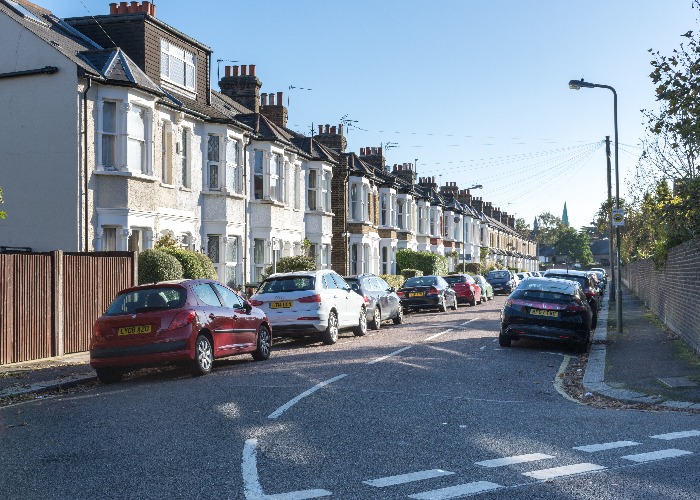
We reveal the areas where inflation-adjusted prices have soared almost £80,000 in a decade – and where values have actually plummeted.
Did you buy your home in the right region at the right time?
Buying property has always been one of the most significant financial decisions we make.
Our choices impact our quality of life in later years, pension provision, and the amount we can leave our loved ones when we’re gone.
So, how much are our homes really worth? According to official Government stats, the average house price for England and Wales stood at £290,000 at the end of 2024 – up from £176,581 at the same time in 2014.
A decade of inflation
While house prices generally only head in one direction, it's important you factor in the long-term influence of inflation.
To determine the real-world values of UK properties, loveMONEY analysed regional house price data from the Office for National Statistics (ONS) over a decade and then adjusted them for inflation.
The results revealed a remarkable disparity across different parts of the UK, with some potentially losing more than £100,000 in real terms.
In contrast, other homeowners found themselves more than £75,000 better off.
How did we come to our conclusion?
First off, we analysed Land Registry data for homes in 2014 for Scotland, Northern Ireland, Wales and the nine regions across England, then compared this information against figures for the end of 2024.
Note that we used late 2024 as a cut-off point because the Land Registry changed the way it calculates house prices at the beginning of 2025, meaning we wouldn't have been comparing like-for-like values after this point.
Next, we took inflation into account to determine how much we would have expected prices to naturally rise over this period, regardless of activity in the property market.
Finally, we calculated the gains and losses in real terms for those who had purchased a property during this period.
The regions with the biggest gains
Here’s what we found.
|
UK region |
Average price November 2014* |
Average price November 2024* |
Inflation-adjusted price for 2014-2024** |
Gain or loss in real terms |
|
North East |
£97,783 |
£168,791 |
£130,937.85 |
£37,853.15 |
|
North West |
£112,566 |
£226,627 |
£150,733.26 |
£75,893.74 |
|
Yorkshire and The Humber |
£119,252 |
£217,939 |
£159,686.25 |
£58,252.75 |
|
East Midlands |
£131,610 |
£248,561 |
£176,234.43 |
£72,326.57 |
|
West Midlands |
£138,175 |
£254,912 |
£185,025.39 |
£69,886.61 |
|
East of England |
£194,955 |
£339,560 |
£261,057.54 |
£78,502.46 |
|
London |
£461,453 |
£511,279 |
£617,915.85 |
-£106,636.85 |
|
South East |
£239,490 |
£377,822 |
£320,692.83 |
£57,129.17 |
|
South West |
£185,051 |
£317,608 |
£247,795.43 |
£69,812.57 |
|
Wales |
£118,762 |
£219,446 |
£159,030.11 |
£60,415.89 |
|
Scotland |
£128,308 |
£195,036 |
£171,812.83 |
£23,223.17 |
|
Northern Ireland |
£143,675*** |
£190,553 |
£192,390.25 |
-£1,837.25 |
*Figures from ONS data
**Figures obtained using Bank of England inflation calculator
*** Figures are for the fourth quarter of 2014, obtained using Housing Executive data
Where values are up
Perhaps unsurprisingly, prices are on the increase across the vast majority of the UK.
In fact, most regions have seen property prices rise well ahead of inflation.
The East of England, North West and East Midlands stand out with particularly strong gains, with each seeing a real-terms increase of up to £78,000.
Where values are down
According to our data, only two regions experienced a real-terms decline during this 10-year period.
One of the more surprising results from our study is that London homeowners actually suffered the most in real terms.
Shockingly, the values were down by almost £107,000 once inflation is taken into account.
Regular readers of our monthly house price analysis will know that London has been among the worst-performing markets for some time now. What's more, the 10-year window of our analysis coincided with the peak of the London house price boom (they had jumped 18% between 2013 and 2014 alone).
Looking elsewhere, homeowners in Northern Ireland experienced a much smaller loss of £1,837.25.
Most valuable property types
While every property type saw an increase between November 2023 and November 2024, not all properties are created equal.
Detached homes rose by a modest 1.5% to £436,949, while semi-detached properties climbed 4.3% to £283,546, the ONS found.
Terraced houses recorded the strongest growth, up 4.7% year-on-year to £242,598.
Flats and maisonettes also gained 2.1%, reaching £233,230.
Have your say
What have been your experiences of property prices in recent years?
Has your home's value increased or decreased?
We’d love to hear your thoughts in the comments below.