Coronation Crowns and Other Priceless, Controversial, Royal Treasures
The royal treasure trove
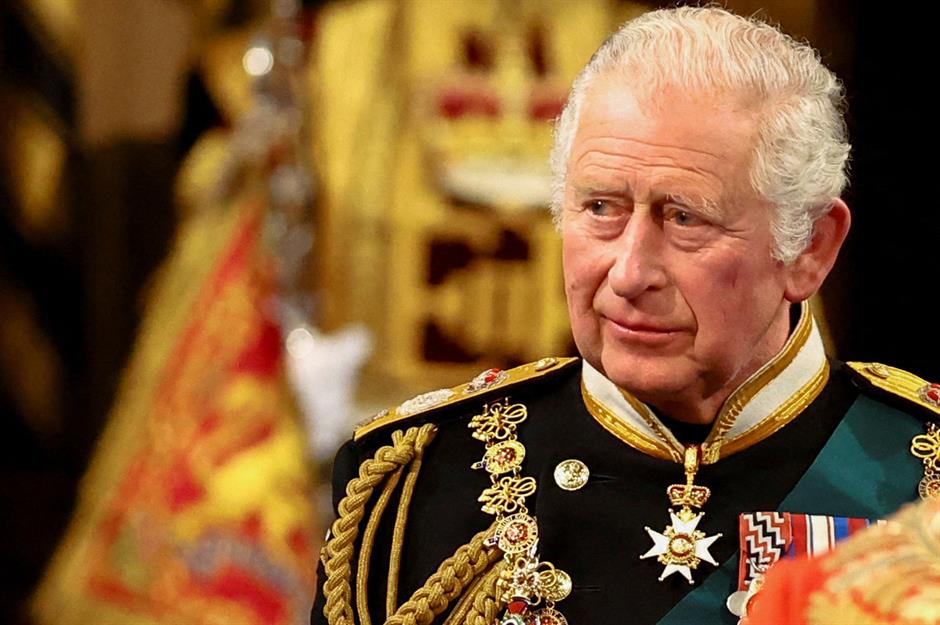
Some of the British royal family's Crown Jewels will play a prominent role in the coronation of King Charles III.
Read on as we take a closer look at these, and some of his family's other most valuable – and surprising – treasures. All dollar values in US dollars.
St Edward’s Crown
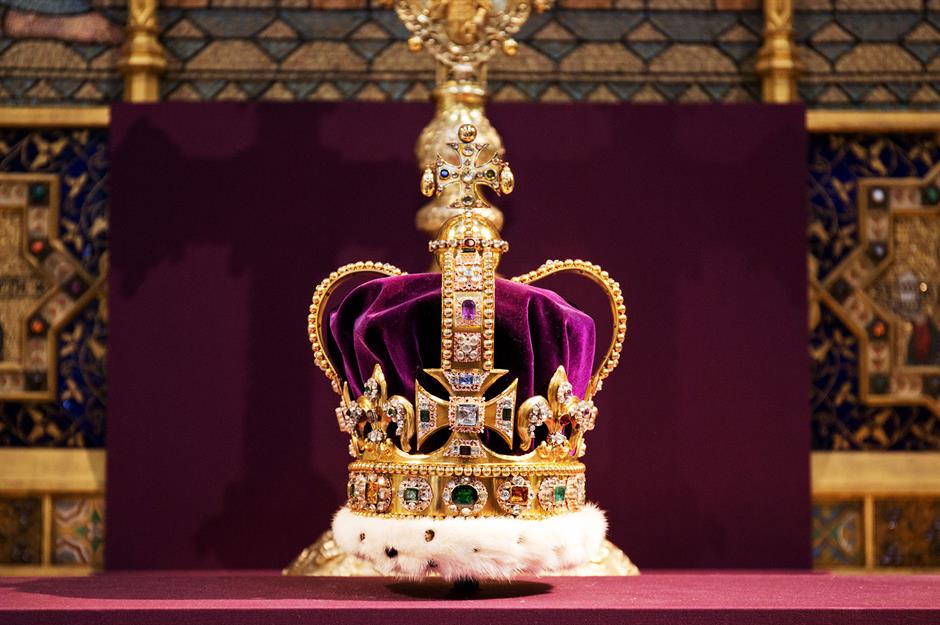
At his coronation, King Charles III will wear the St Edward’s Crown, which is solid gold and weighs nearly 5lbs, being decorated with 444 precious and semi-precious stones. His mother Elizabeth II wore it only briefly in 1953 and never wore it again, although it appears on her coat of arms.
The St Edward's Crown was made in 1661 for the coronation of Charles II after the previous medieval crown was melted down by Parliamentarians in 1649 during the English Civil War. According to a palace spokesperson, "St Edward's Crown, the historic centrepiece of the Crown Jewels, [was] removed from the Tower of London to allow for modification work to begin ahead of the Coronation" so that it could be resized to fit the current king.
Imperial State Crown
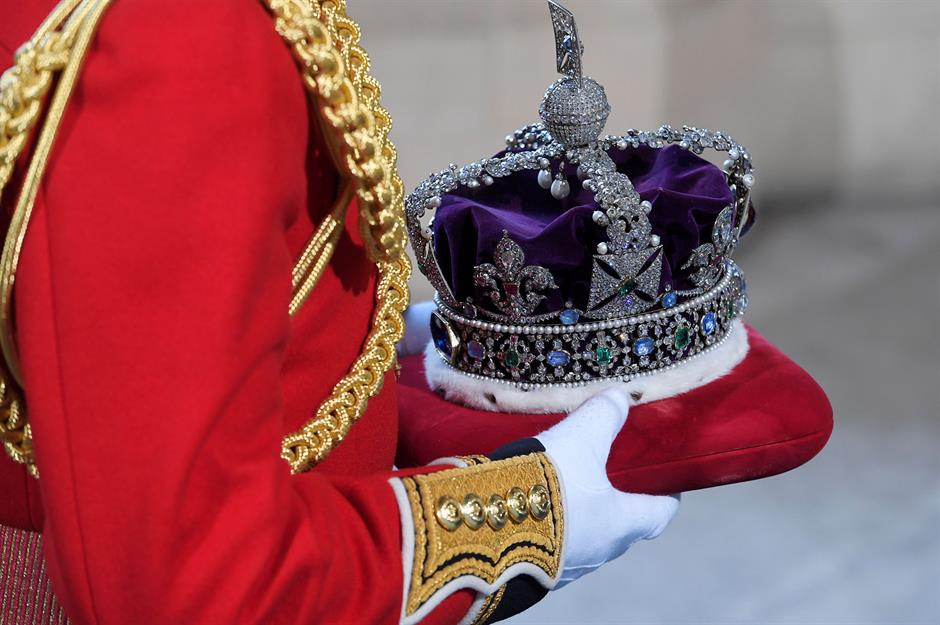
The Imperial State Crown, which was last seen in public when it was placed on Queen Elizabeth II's coffin for her lying in state and funeral, is a relatively modern artifact.
Made in 1937 for the coronation of King George VI, the Imperial State Crown contains some of the most historic jewels in the royal collection, including the Black Prince’s Ruby, said to have been given to Edward, Prince of Wales (the Black Prince) in 1367. The crown is set with 2,868 diamonds, 17 sapphires, 11 emeralds, and hundreds of pearls. At the center is the Cullinan II diamond, one of the largest in the world.
Once Charles III has been crowned, he will switch the St Edward's Crown for the Imperial Crown for the procession back from Westminster Abbey to Buckingham Palace. Queen Elizabeth II once admitted that she found the headpiece, at 2.3lbs, so heavy that she couldn't look down when reading a speech or her “neck would break and it would fall off” – one of the “disadvantages” to crowns, she confessed.
Sponsored Content
Sceptre with the Cross
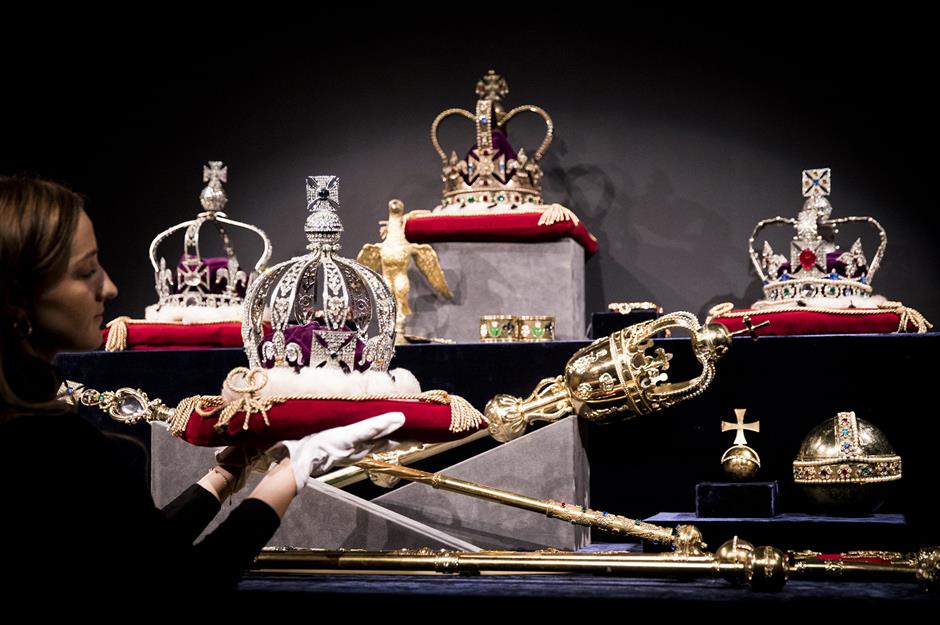
Surely one of the most valuable items in the Royal Collection, the Sceptre with the Cross (far left in this replica set of the Crown Jewels) is presented to the monarch during their coronation. Weighing over 2.2lbs, it has been in use since 1661 but was transformed in 1910 with the addition of the Cullinan I diamond, the largest clear-cut diamond in the world, weighting 530.2 carats and estimated to be worth $514 million.
Charles III will carry the Sceptre with the Cross, which "represents the sovereign's temporal power" according to Buckingham Palace, during his coronation. Camilla will also carry a sceptre, but hers will feature crystals instead of real diamonds.
Sovereign Orb

The Sovereign's Orb is usually seen alongside the Sceptre with the Cross – both were set on Queen Elizabeth's coffin during her funeral and will also play a key role in King Charles' coronation. Charles will be handed the orb during his investiture: the part of the ceremony where he puts on special coronation robes and is presented with his regalia.
Like the Sceptre with the Cross, the Sovereign's Orb was made for King Charles II in 1661. Made from hollow gold and adorned with an amethyst, diamonds, emeralds, rubies, sapphires, and pearls, it weighs almost 2.2lbs. While the orb is considered priceless, The Sun has reported that it cost £1,150 in 1661, the equivalent of around $290,000 today.
Crown of Queen Mary
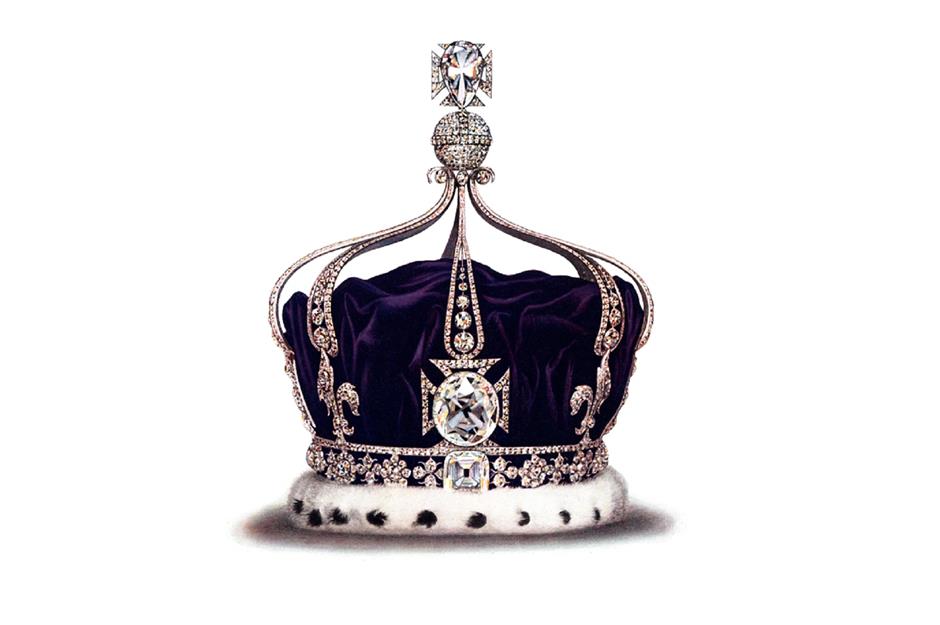
Camilla, who will be crowned Queen Consort alongside her husband on 6 May, will reportedly wear the Crown of Queen Mary for the ceremony. A special consort crown, it was bought by Mary of Teck – the wife of King George V – in 1911 and weighs 1.30lbs.
According to the royal family, this is the first time in recent history that a consort will use an existing crown rather than commissioning a new one. The Crown of Queen Mary has been resized to fit Camilla and will be modified to include some of Queen Elizabeth's favorite diamonds, the Cullinan III, IV, and V, as a tribute to the late royal. However, the precious Koh-i-Noor diamond is reportedly being removed, as it's at the center of a claim from India for it to be returned.
Sponsored Content
Cullinan III and IV diamonds brooch
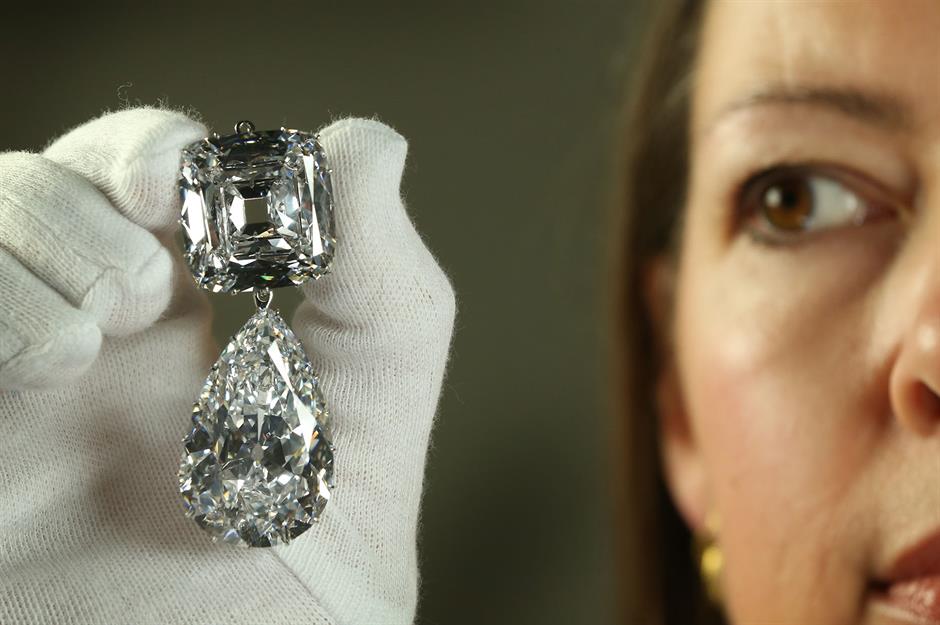
The Cullinan Diamond, which weighed 3,106 carats in its rough state, was discovered in 1905 at a South African mine and presented to King Edward VII as a gift. It was cut down into nine diamonds, the largest of which are in the Sceptre with the Cross and the Imperial State Crown. Diamonds III and IV, weighing 94.4 and 63.6 carats respectively, were made into a brooch. It is thought to be worth $100 million. In total, the Crown Jewels are estimated to be worth around $6.4 billion.
Imperial State Crown of George I
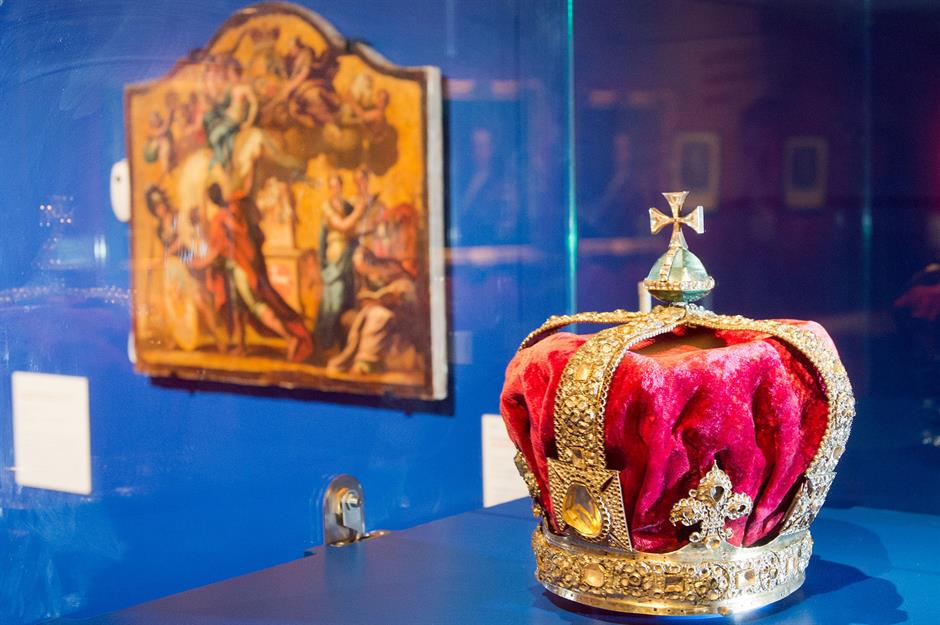
Made in 1714 for King George I, this crown replaced that of Charles II. It took some of the old crown’s jewels and pearls, adding 265 new pearls, 160 diamonds, six emeralds, and two sapphires. It was used until 1838 but then emptied of its jewels and discarded by the royal family.
It was acquired by the Brunei royal family in 1995 upon being valued at $740,000, and was returned to the UK Crown to be put on display at the Tower of London.
Crown of Queen Elizabeth the Queen Mother
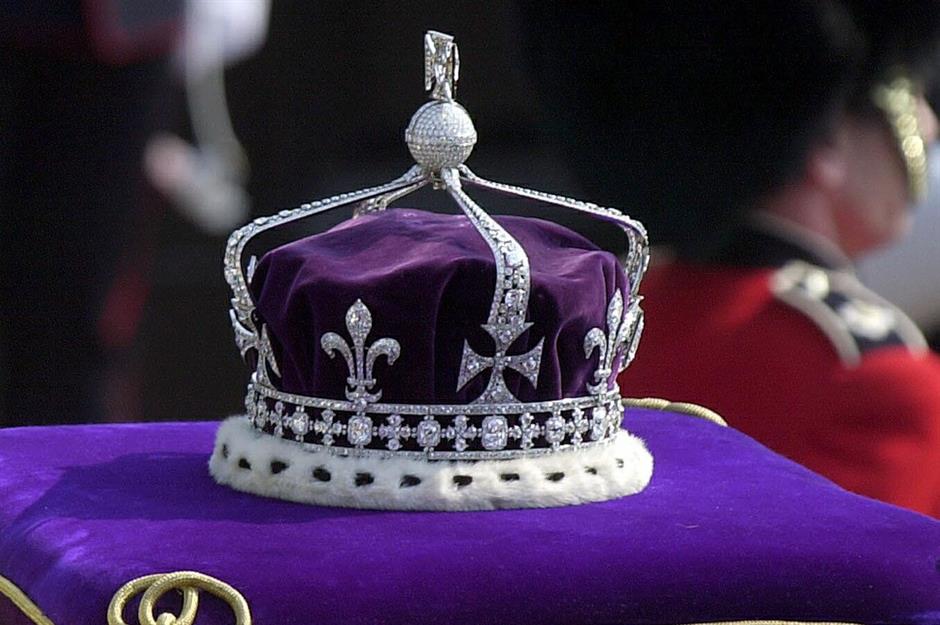
This crown was made in 1937 for Queen Elizabeth, the late Queen Mother, for the coronation of her husband, George VI, in 1937. After his death she wore it for the coronation of her daughter, Queen Elizabeth II. It normally contains 2,800 diamonds, including the 105-carat Koh-i-Noor, which was originally set in the crown of Queen Mary, and is the only crown in the Crown Jewels to be made of platinum. It was placed on the Queen Mother's coffin for her funeral in 2002 (pictured).
Sponsored Content
Victoria’s Small Diamond Crown
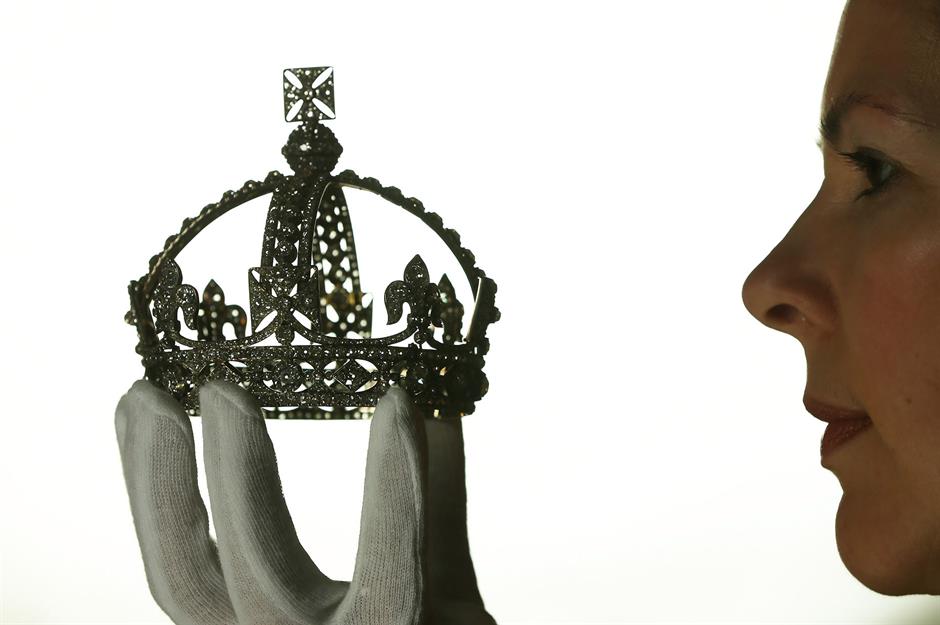
This crown is a miniature one made at the behest of Queen Victoria in 1870 to wear over her widow's cap following the death of her husband Prince Albert. It contains 1,162 brilliant and 138 rose-cut diamonds weighing 132 carats taken from a large necklace belonging to the queen. Diamonds, unlike colored gems, were acceptable to wear in mourning. The crown was Queen Victoria’s personal possession, but she left it to the Crown and it is now on display at the Tower of London.
Diamond Diadem
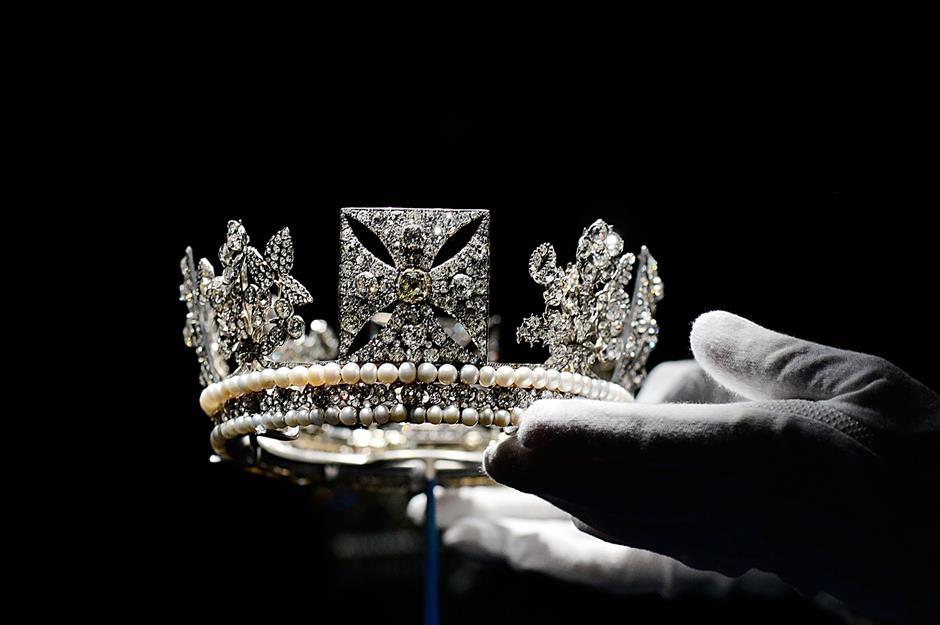
The diadem, worn by modern-day British queens (including Elizabeth II on British and Commonwealth stamps), was originally made for a king, George IV, in 1820. As was the norm in the 19th century, the gems were initially rented – they would then usually be removed after a coronation and sent back to the jeweler – but on this occasion they were then sold to the Royal Family.
Diamond Diadem
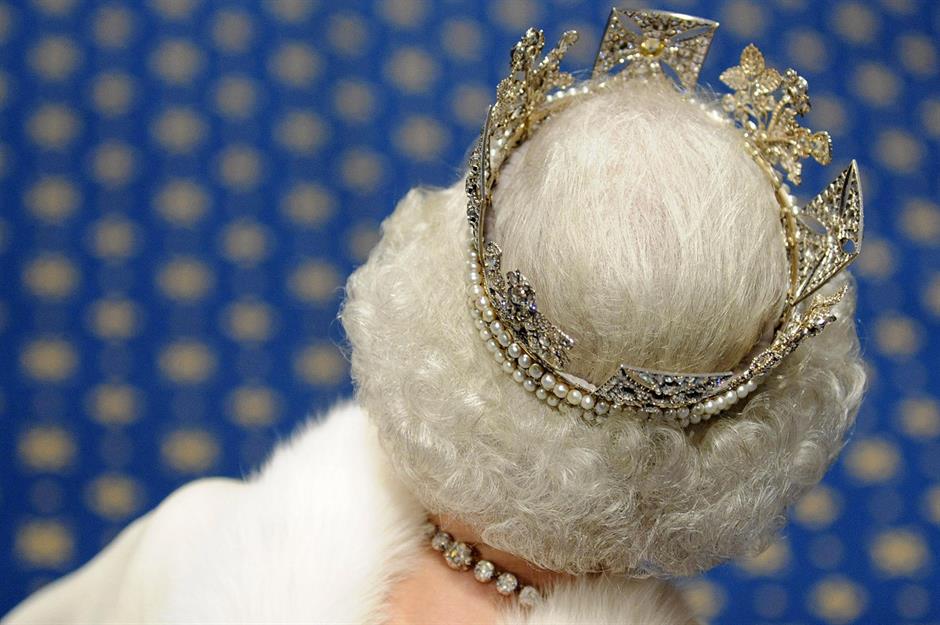
Featuring English roses, Scottish thistles, and Irish shamrocks, instead of the fleur-de-lis usually seen on British crowns, it contains 1,333 diamonds, including a four-carat yellow diamond. The Queen wore the diadem on her way to and from Westminster to give her speech at each State Opening of Parliament (during which she would swap it for the heavier Imperial State Crown).
Sponsored Content
Queen Mary's Diamond Bandeau
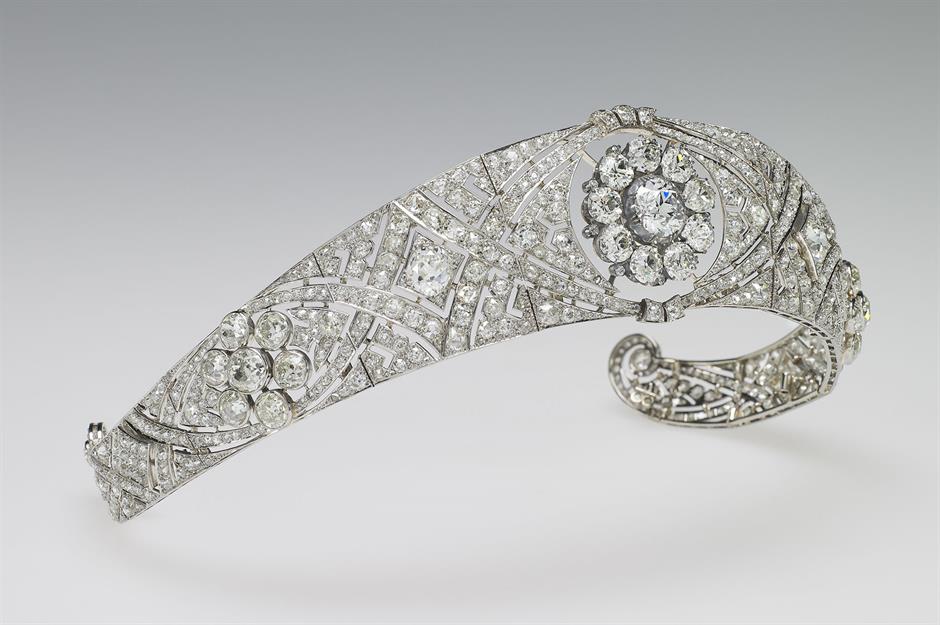
Royal brides are traditionally loaned heirlooms from the royal collection on their wedding day and Meghan Markle chose this tiara for her wedding to Prince Harry in 2018. It was owned by Prince Harry’s great-great grandmother Queen Mary, was made in 1932, and is formed as a flexible band of 11 sections, set with diamonds and with a detachable brooch as its centerpiece with a further 10 diamonds. The brooch was given to Mary as a wedding present in 1893 by the County of Lincoln.
Queen Mary's Diamond Bandeau
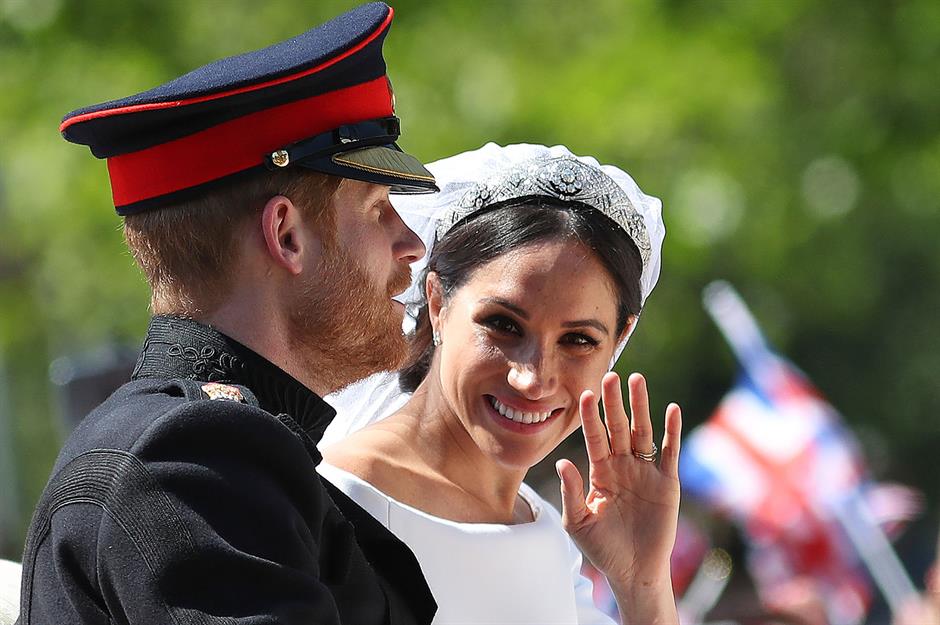
The Duchess of Sussex wore the tiara to hold her long veil in place as she arrived at St George’s Chapel, Windsor, and it was the item of jewelry that sparkled the brightest among the Cartier earrings and bracelet accessorizing her Givenchy wedding gown.
Delhi Durbar Tiara
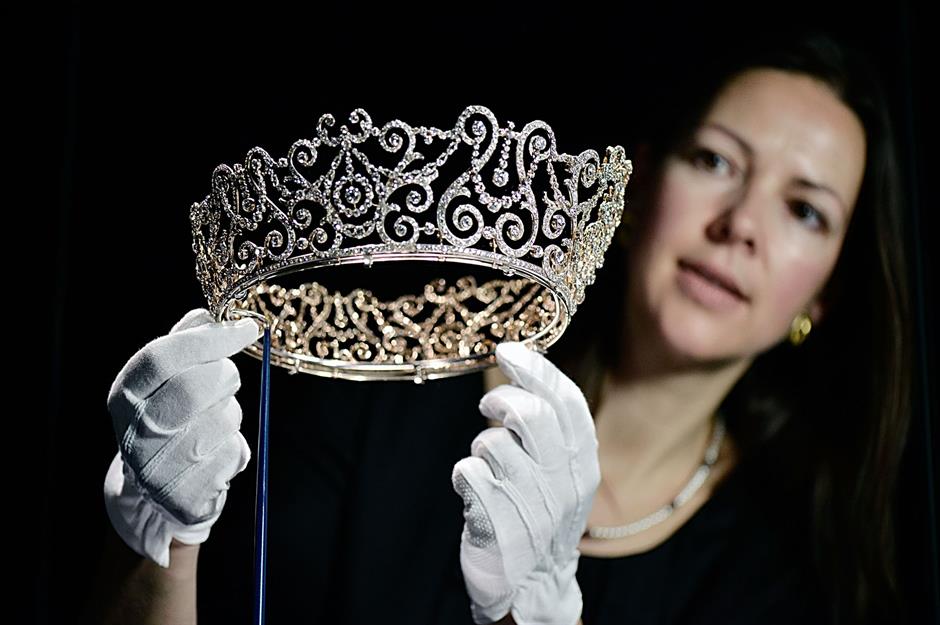
This tiara was made in 1911 for Queen Mary, using diamonds from a dismantled tiara. She wore it for a formal reception or "durbar" in Delhi, India, to mark the coronation of her husband King George V and herself as Emperor and Empress of India. This was one of the only Indian coronation durbars to be attended by the royals themselves instead of their representatives.
Elizabeth II lent this tiara to the then-Duchess of Cornwall Camilla in 2005.
Sponsored Content
Mosaic Fabergé egg
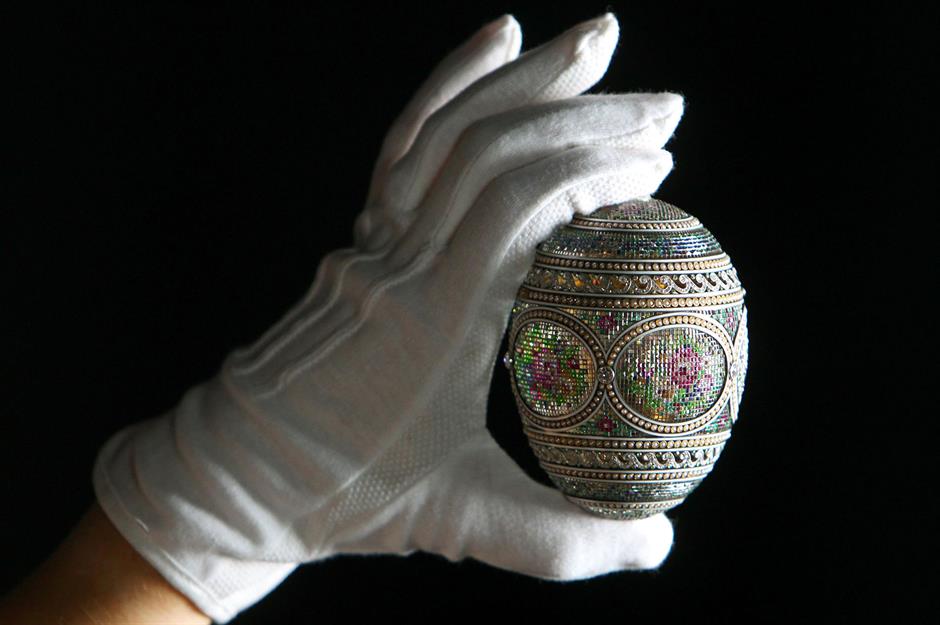
Jeweler Carl Fabergé made 50 Easter eggs for the last Russian tsar Nicholas II to give to his wife. Three now sit in the Royal Collection, acquired by Queen Mary in 1933. The Mosaic Egg (pictured), one of those three, is made with diamonds, rubies, topaz, sapphires, garnets, pearls, and emeralds, and contains a "surprise" medallion inside, painted with the portraits of the five children of Nicholas and Alexandra. The last Imperial egg to be sold fetched $25.7 million in 2015.
Lobmeyr glass chandelier
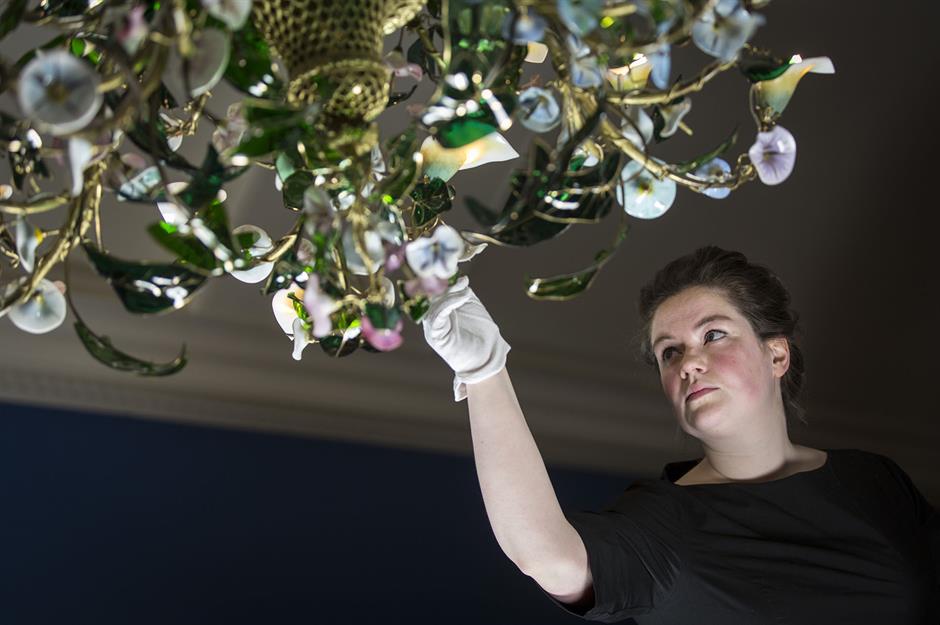
No one is quite sure how or when this ornate floral Victorian chandelier, made by the famed Viennese Lobmeyr glass company in 1855, came to arrive in the Royal Collection but it seems likely it was bought by Queen Victoria and Prince Albert. It lights up the Audience Room at Osborne House on the Isle of Wight. Other, less ornate 19th-century Lobmeyr chandeliers retail for more than $25,000.
Astronomical clock
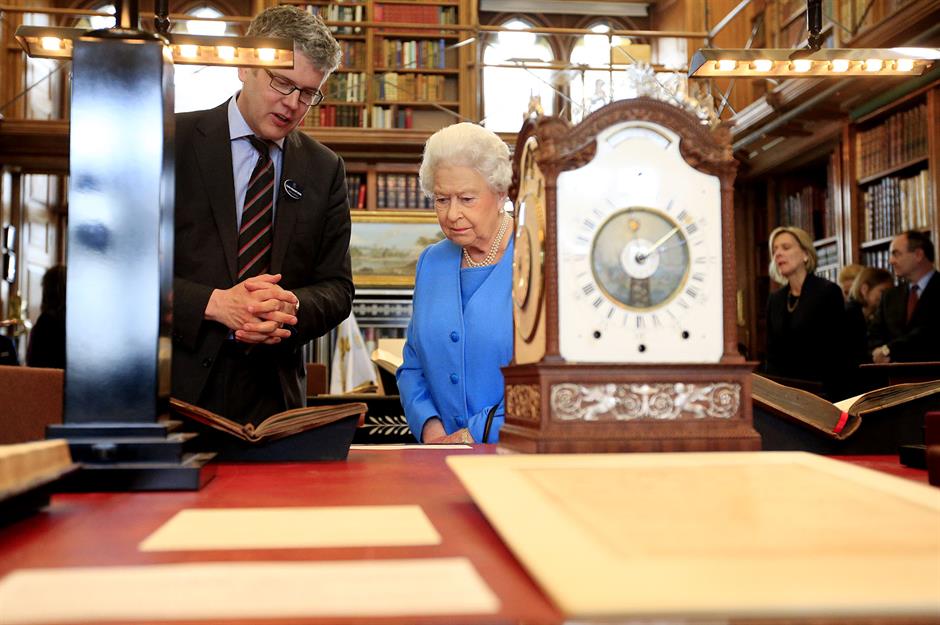
This 1765 Eardley Norton clock would have been the ultimate gadget of its day, showing the time at 30 locations across the globe relative to Greenwich Mean Time, a year calendar, an orrery of the Solar System, ages and phases of the moon, and high and low water at 32 geographical seaports. It was bought by George III for £1,042 for his dressing room at Buckingham Palace.
Sponsored Content
The Royal Family in 1846 – Franz Xaver Winterhalter
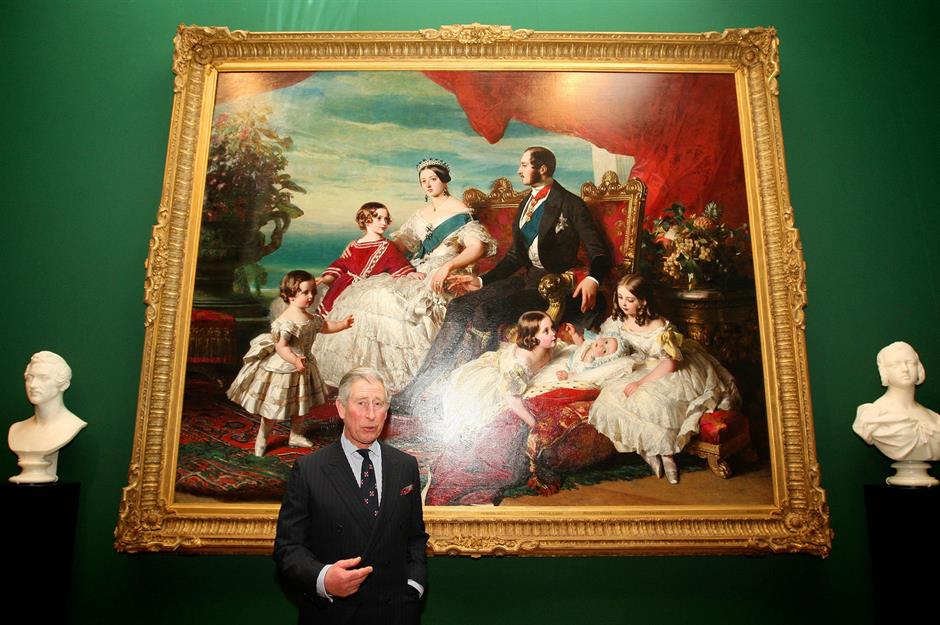
In 1846 Queen Victoria persuaded the French king Louis-Philippe to release Winterhalter from his position as court painter so he could paint the British Royal Family to put in her residence at Osborne House. Her favorite family picture, it shows Victoria and Albert bedecked in jewelry and insignia with their then five children. It now hangs in the East Gallery at Buckingham Palace.
Cimabue's Madonna Carried in Procession – Frederic Leighton
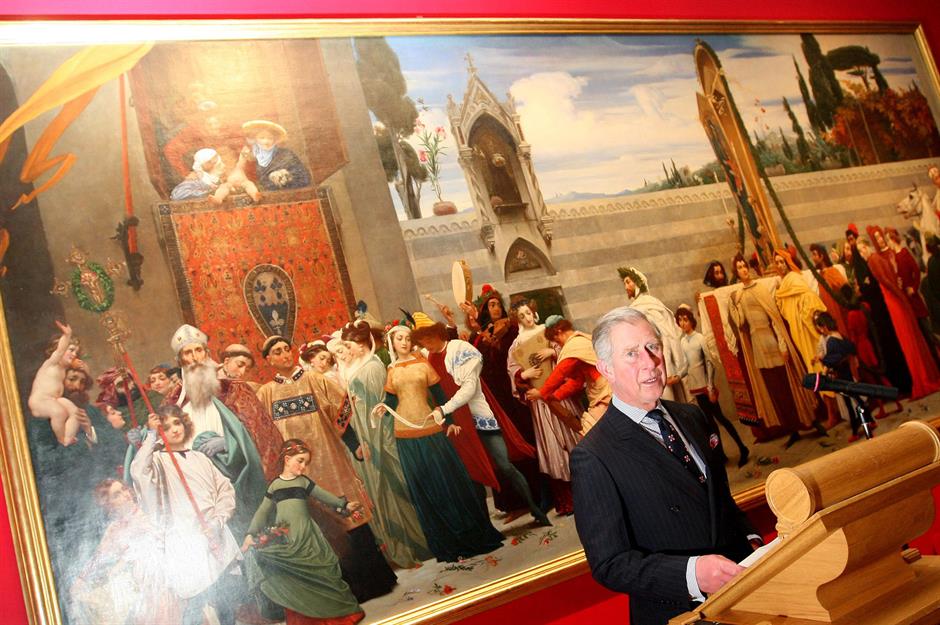
This huge painting, measuring 17 feet by seven feet, was Leighton's first major work. It was shown at the Royal Academy in London in 1855 and Queen Victoria bought it for 600 guineas on the opening day. She wrote in her diary: "There was a very big picture by a man called Leighton. It is a beautiful painting… so bright and full of light. Albert was enchanted with it – so much so that he made me buy it."
The Calling of Saints Peter and Andrew – Caravaggio
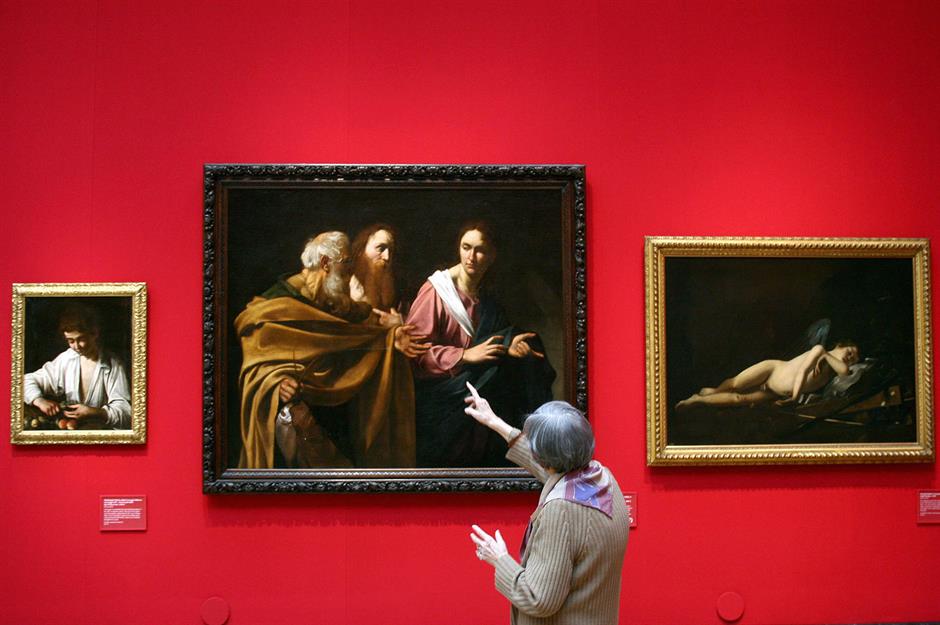
For many years this Caravaggio was kept at Hampton Court Palace and believed to be a worthless copy of the lost original. It was only in 2006 after it was restored and examined that the Royal Collection declared it to be authentic – and is probably worth more than $64.5 million.
The painting was bought by Charles I in 1637, sold during Cromwell’s time, and reacquired by Charles II, remaining in the royals' possession ever since.
Sponsored Content
Portrait of the Duke of Wellington – Sir Thomas Lawrence
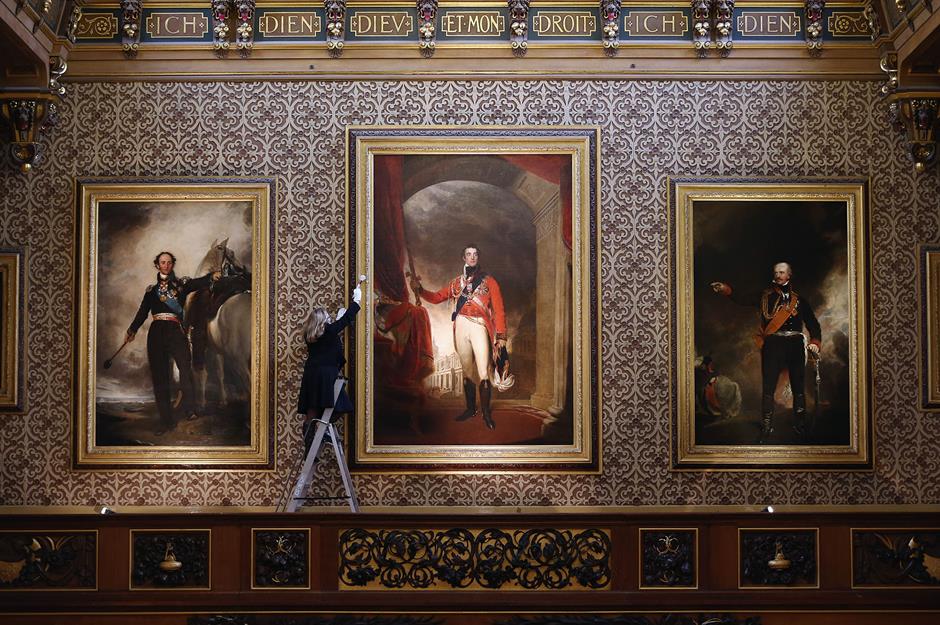
Lawrence was specially commissioned by George IV to paint the leaders responsible for the defeat of Napoleon in 1814 and 1815. The king set aside a room especially for their display, where this portrait still hangs: the Waterloo Chamber in Windsor Castle.
Nymph sculpture – Antonio Canova
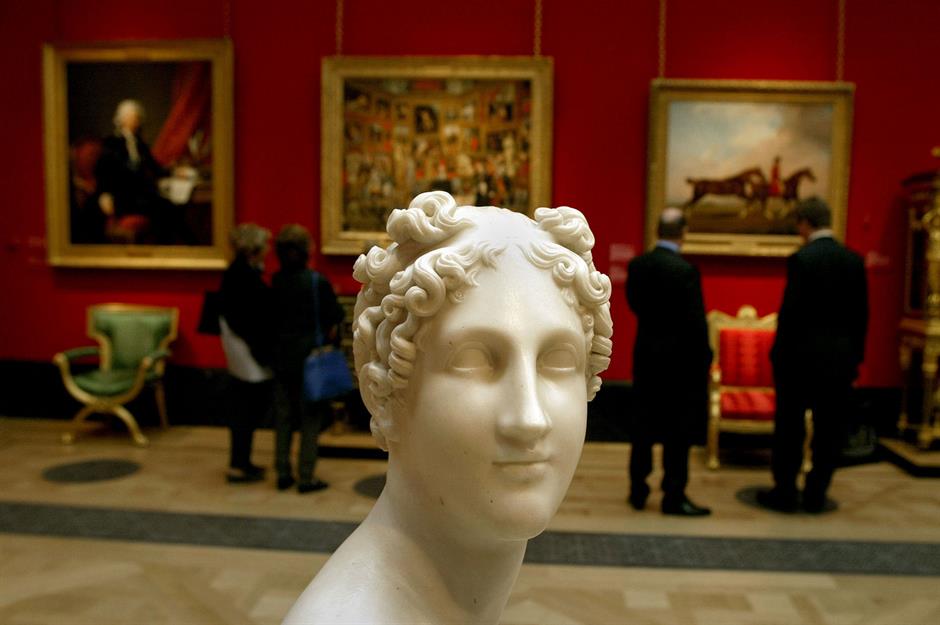
Antonio Canova spent his final years working on commissions from a visit to the future George IV in 1815. The marble fountain nymph was delivered in 1819 and installed in the Gothic conservatory of Carlton House (with detailed instructions of how to place and light it), while the other two, Dirce (pictured) and Mars and Venus, arrived in 1824, two years after Canova’s death. Today these sculptures are in the Grand Entrance and Marble Hall at Buckingham Palace.
Massacre of the Innocents – Pieter Bruegel the Elder
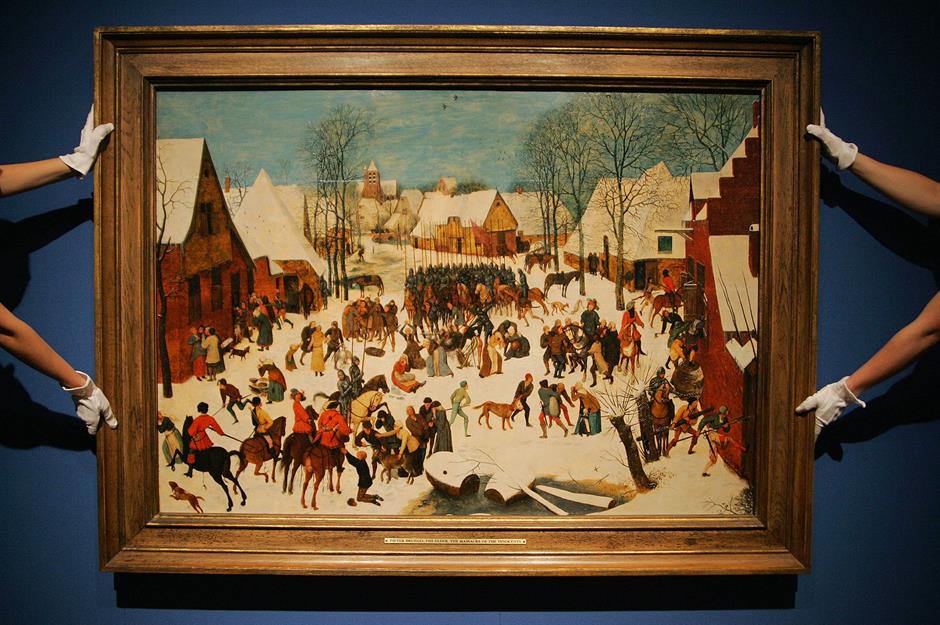
This 16th-century painting by Pieter Bruegel the Elder was acquired over a century later by Charles II. Painted as a representation of the murder by King Herod’s soldiers of all male children in Palestine, it was set in Bruegel’s own time. But there are no bodies and no blood. The painting’s first owner, the Holy Roman Emperor Rudolph II, ordered that all the dead babies be painted out and replaced with animals, objects, and food. There are some 50 Flemish paintings from the 15th to 17th centuries in the King's Dressing Room at Windsor Castle.
Sponsored Content
Presumed self-portrait – Giovanni Benedetto Castiglione
One of the great artists of the Baroque era, Castiglione was a painter, but became famous for his drawings and prints. He fell from fame around a century after his death, but the Royal Collection holds what it says is the "finest" surviving set of his works. This is believed to be a self-portrait and is thought to have been purchased from the British Consul in Venice by George III in 1762.
Agatha Bas – Rembrandt
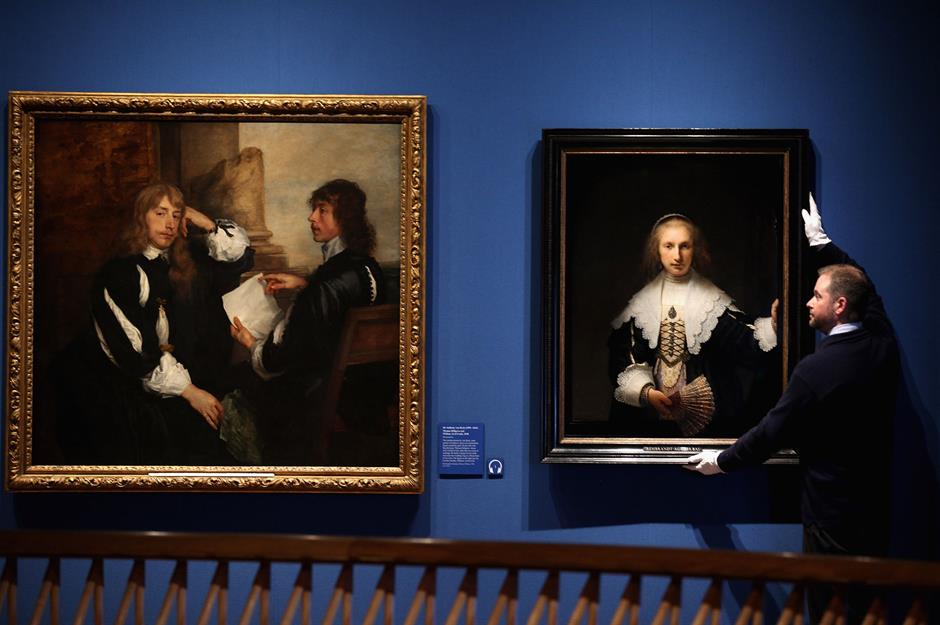
"One of the most beautiful portraits" in the collection, according to the Trust, this portrait of Agatha Bas (right) has a companion painting depicting Agatha’s wool merchant husband Nicolaes van Bambeeck, which hangs in Brussels' Musée Royal des Beaux-Arts.
There are five paintings by Rembrandt in the Royal Collection, the earliest of which, The Artist's Mother, was presented to Charles I before 1633, and was one of the first works by Rembrandt to reach England. It's on display in the Picture Gallery at Buckingham Palace.
HM Queen Elizabeth II – Lucian Freud
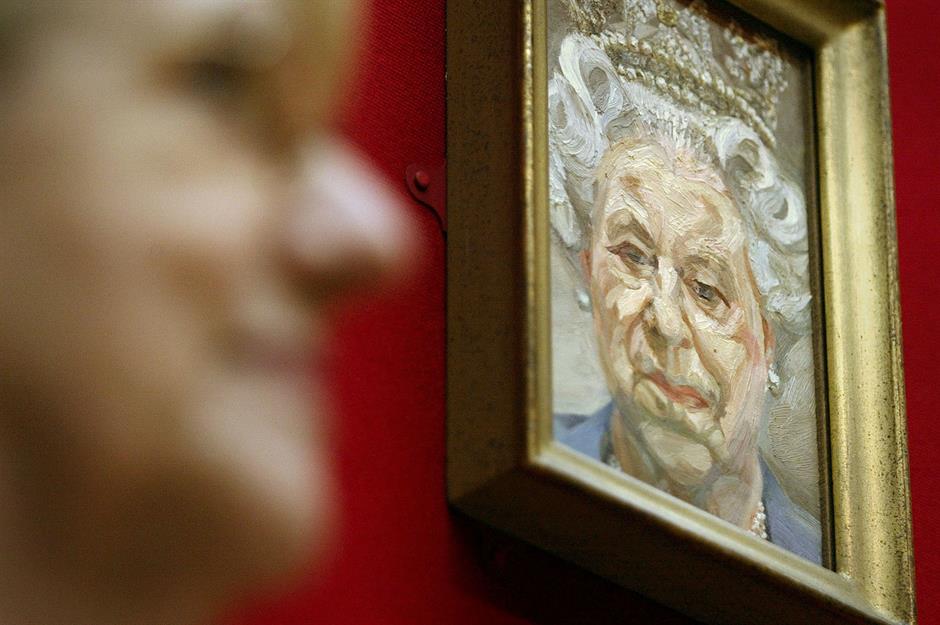
Not all pictures in the Royal Collection are inherited. This rather unflattering painting of the Queen (wearing her Diamond Diadem) was painted by Lucian Freud, the grandson of psychoanalyst Sigmund Freud, at the late British painter’s behest. The picture was declared a "travesty" by one UK newspaper when it was presented by Freud to the Queen in 2002. Still, the painting is likely to be hugely valuable. Another work of Freud’s, Benefits Supervisor Sleeping, sold for $56.2 million at auction in 2015.
Sponsored Content
Eos – Sir Edwin Landseer
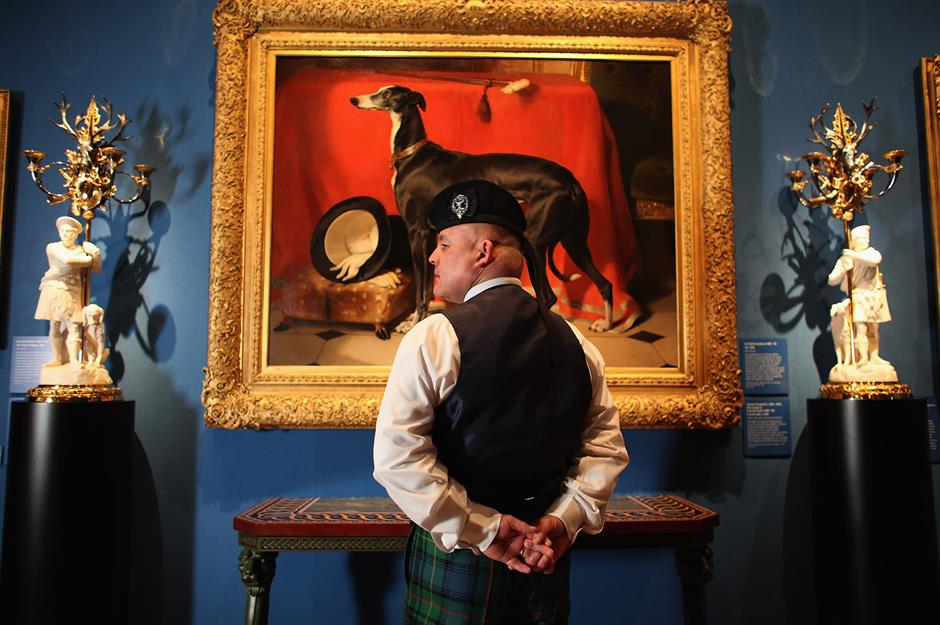
Eos, the greyhound that accompanied Prince Albert when he came to the UK to marry Queen Victoria, features in several portraits and sculptures in the Royal Collection.
This painting by Sir Edwin Landseer is dated 1841 and was presented by Queen Victoria as a Christmas present to her husband. Landseer produced some 40 works for the royal couple. His Monarch of the Glen, one of the most recognizable paintings of Scotland, is valued at $10.3 million.
The Music Lesson – Johannes Vermeer
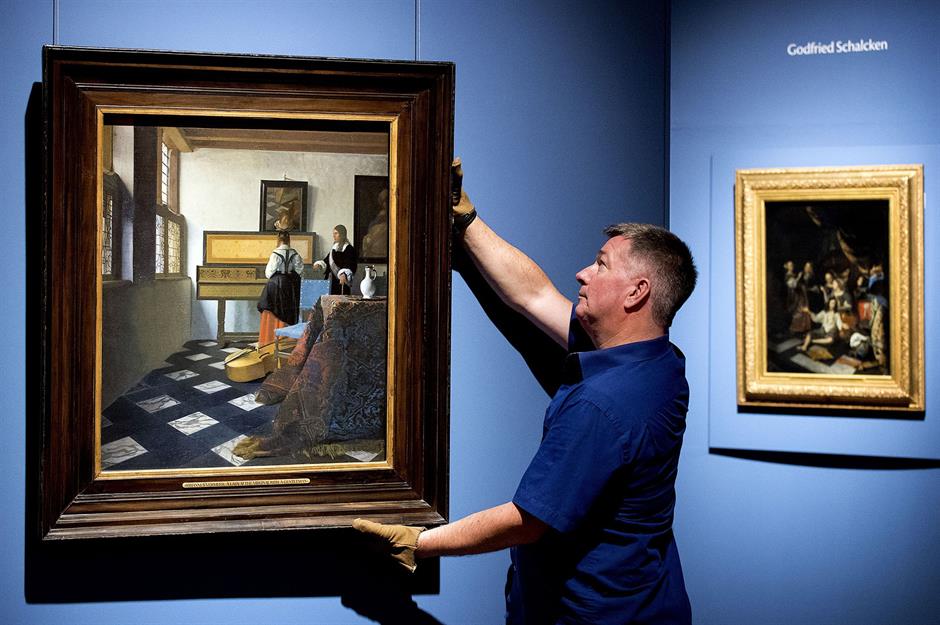
The Music Lesson is one of around 34 Vermeers in the world and probably one of the best-known paintings in the Royal Collection. The Dutch artist’s work rarely comes up for sale, but his A Young Woman Seated at the Virginals sold for $20.8 million in 2004.
Leonard Da Vinci sketches
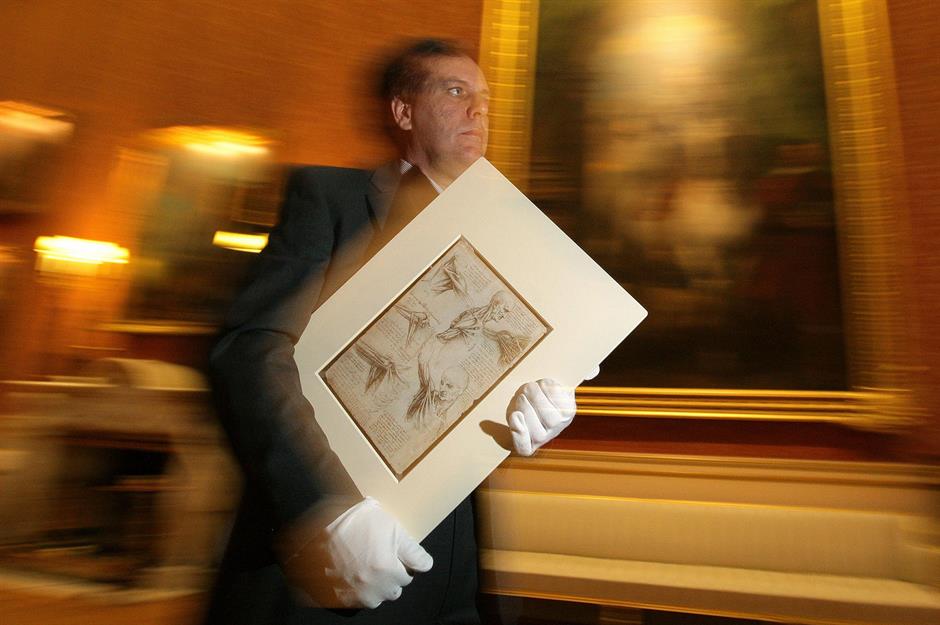
One of the most extraordinary sets in the Royal Collection contains some 600 Leonardo Da Vinci drawings, including all his anatomical sketches, such as The Muscles of the Neck and Shoulder (pictured) from 1510-11. They are presumed to have been acquired by Charles II, although it is not clear how or why.
Sponsored Content
Pop art – Andy Warhol
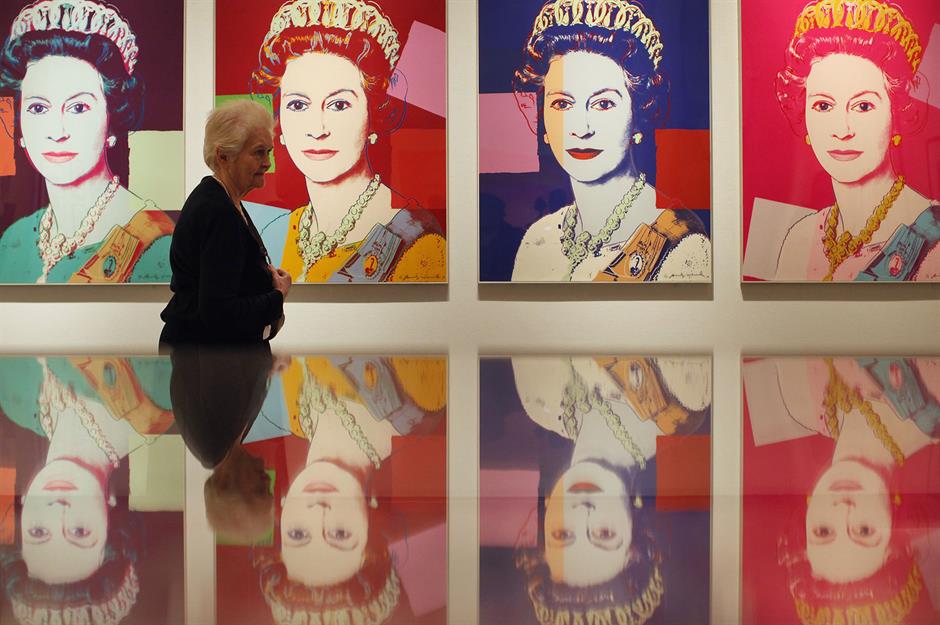
With so many Old Masters in her collection, it’s a surprise to learn that the late Queen was a fan of contemporary art, but in 2012 four screen prints of her by Andy Warhol were bought for the Royal Collection. Made in 1985, they are based on a photograph taken in 1977 for the Queen’s Silver Jubilee.
It's unknown how much the Queen paid for her pictures, but Sotheby’s had recently sold another set from the same print run for $140,400.
Twopenny Blue Mauritian stamp
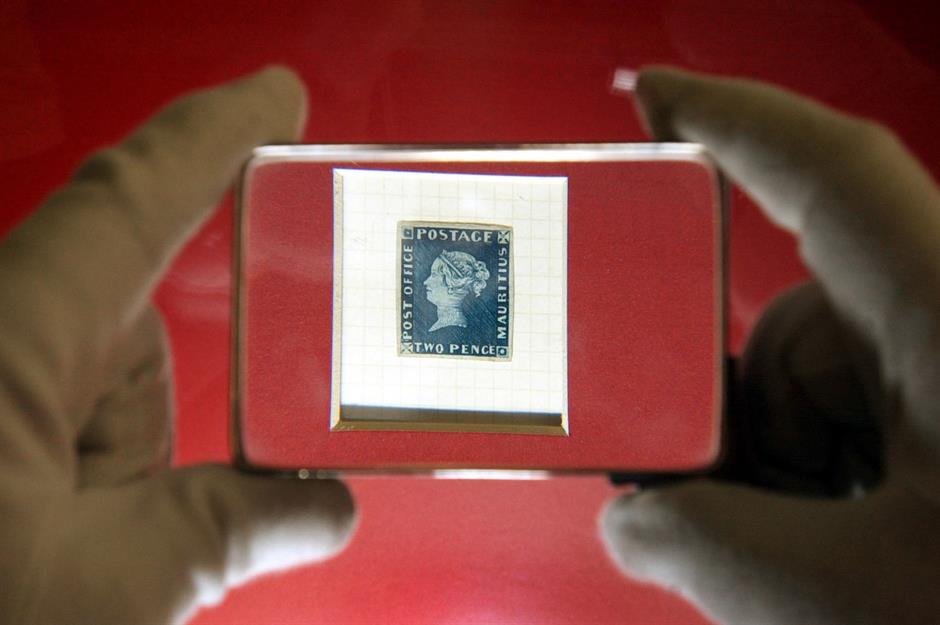
The Queen was the fifth monarch to inherit the Royal Philatelic Collection, thought to be worth $129 million. The centerpiece is an extremely rare Twopenny Blue Mauritian stamp from 1847, valued at $2.59 million and the first stamp to be issued by a colonial post office. It was bought at auction by the future King George V in 1904 and it's said that afterwards a courtier asked him if he had heard that "some damned fool" had just bought it, to which he replied: "I was that damned fool."
Now discover how rich King Charles III is