Elon Musk And Other Entrepreneurs Who Gave Away Trade Secrets
Firms sharing intellectual property
During the COVID-19 pandemic, some companies gave away their patents so that others could copy their inventions and manufacture life-saving equipment. Yet this isn’t a new phenomenon. Throughout history, there are countless examples of firms lifting the lid on game-changing innovations. Read on to see the companies that made patents and trade secrets freely available and just why they did it.
Singer and other sewing machine manufacturers

Way back in the 1850s a war broke out between several major sewing machine inventors in America. Elias Howe had created the first idea for a machine in 1846, but Isaac Merritt Singer had added to this and created his own patent in 1851. This resulted in multiple lawsuits between different companies, and the perfect machine wasn’t actually created.
Singer and other sewing machine manufacturers

Sponsored Content
Volvo

Volvo

IBM

Sponsored Content
IBM

Bosch

The Eco-Patents Commons was launched in January 2008 in partnership with the World Business Council for Sustainable Development. It's a collective designed to promote and share environmentally-sustainable solutions. The first companies to sign up included IBM, Sony and Nokia. Home applicance manufacturer Bosch later joined the party.
Bosch

Sponsored Content
Xerox

Xerox

Tesla

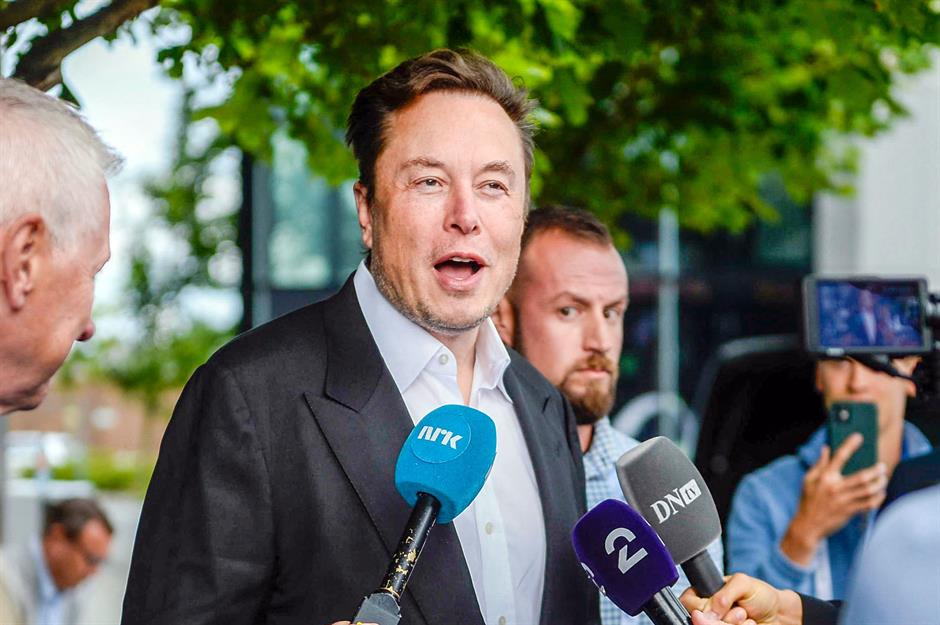
Elon Musk, Tesla’s CEO, announced he was giving away the patent to his electric cars in 2014. In the announcement, the technology entrepreneur and inventor said the company would not “initiate patent lawsuits against anyone who, in good faith, wants to use our technology.”
Sponsored Content
Tesla

The company said it wanted Tesla to act as a catalyst for other manufacturers and it had opened up the patent to other firms in order to accelerate the widespread adoption of electric cars. The move was also designed to benefit Tesla by bringing electric vehicles into mainstream production.
Toyota

Shortly after Tesla announced it would share its patents, Toyota followed suit in 2015 and agreed to share its 5,680 patents related to electric vehicles. It said the move was to help promote the technology and advance the production of fuel-cell vehicles. Akio Toyoda, president of Toyota, said at the time: “One car company alone cannot create a hydrogen society, it needs to be a worldwide effort.” This was the first time the Japanese manufacturer had opened up one of its patents without charging a royalty fee and came shortly before it launched a new fuel-cell Sedan in the US and Europe.
Toyota

In 2019, the automaker said it would release 23,740 patents relating to its hybrid technology, including fuel cells, electric motors, power control units, system controls and engine transaxles and chargers. The car company has the world's largest hybrid model range and has sold more than 13 million hybrid vehicles around the world since 1997.
Sponsored Content
GlaxoSmithKline

GlaxoSmithKline

Nutriset

It’s estimated that 820 million people across the globe are suffering from malnutrition, according to the Food and Agriculture Organisation of the United Nations and, by opening up its patents, Nutriset says it is helping to tackle the problem. It has developed a range of nutritional products that do not need to be dissolved into water, which could be diseased. Instead, these products come in paste, milk and tablet forms to treat severe acute malnutrition.
Sponsored Content
Nutriset

Ford

Ford

Ford opened up access to some of its electric vehicle patents to widen the creation of electric, hybrid and fuel-cell cars across the world. Kevin Layden, director of Ford’s electrification projects, said at the time: “By sharing our research with other companies, we will accelerate the growth of electrified vehicle technology and deliver even better products to customers.”
Sponsored Content
Golden rice

Golden rice

The Golden Rice Project says that, as it is a humanitarian project, the patent is readily available for those in poorer countries. However, the exact details on how it can be recreated are unclear. The project says farmers with an income of less than $10,000 a year are able to grow it without a license, however there are no details about how this is enforced and some have criticized how a blanket approach can work in different countries.

Sponsored Content

Nokia and Xiaomi

Nokia and Xiaomi

Xiaomi was once the biggest-selling smartphone brand in China, and access to some of Nokia’s patents will help it with global expansion. Nokia will benefit from Xiaomi using its infrastructure technology.
Sponsored Content
Medtronic

Medtronic

While the company had already increased its own production by 40%, it acknowledged it could be doing more. So it's made its product and service manuals, design requirement documents, manufacturing documents and schematics available freely online. “By openly sharing the PB 560 design information, we hope to increase global production of ventilator solutions for the fight against COVID-19,” said Bob White, executive vice president and president of the company's minimally invasive therapies group.
The super-rich donating big money to fight coronavirus and other causes