Are edible insects the future of food?


High in protein, sustainable and abundant, insects have been heralded as one solution to the global food crisis. But what are they actually like to eat? We decided to investigate.
There’s no doubt that when it comes to food, the world is in crisis. The UN estimates that 108 million people in 2016 were facing crisis-level food insecurity or worse, a 35% increase compared to the previous year.
Conflict and drought have a large part to play in these figures, but it’s inescapable that water usage and greenhouse gas emissions associated with high-intensity meat production are stressing the planet’s resources.
Enter insects: cheap, readily available, packed with nutrients and much more sustainable. The only problem? It’s going to take a serious attitude adjustment to get more people eating them.
Jimini’s are one of the companies on a mission to get us to “think bigger, eat smaller”. They estimate that they can produce a kilogram of insects with one hectare of land and 10 litres of water. By contrast, they reckon a kilogram of beef requires 10 hectares and 22,000 litres of water before it reaches your plate.
We put their snacking boxes to the test.
What did we try?
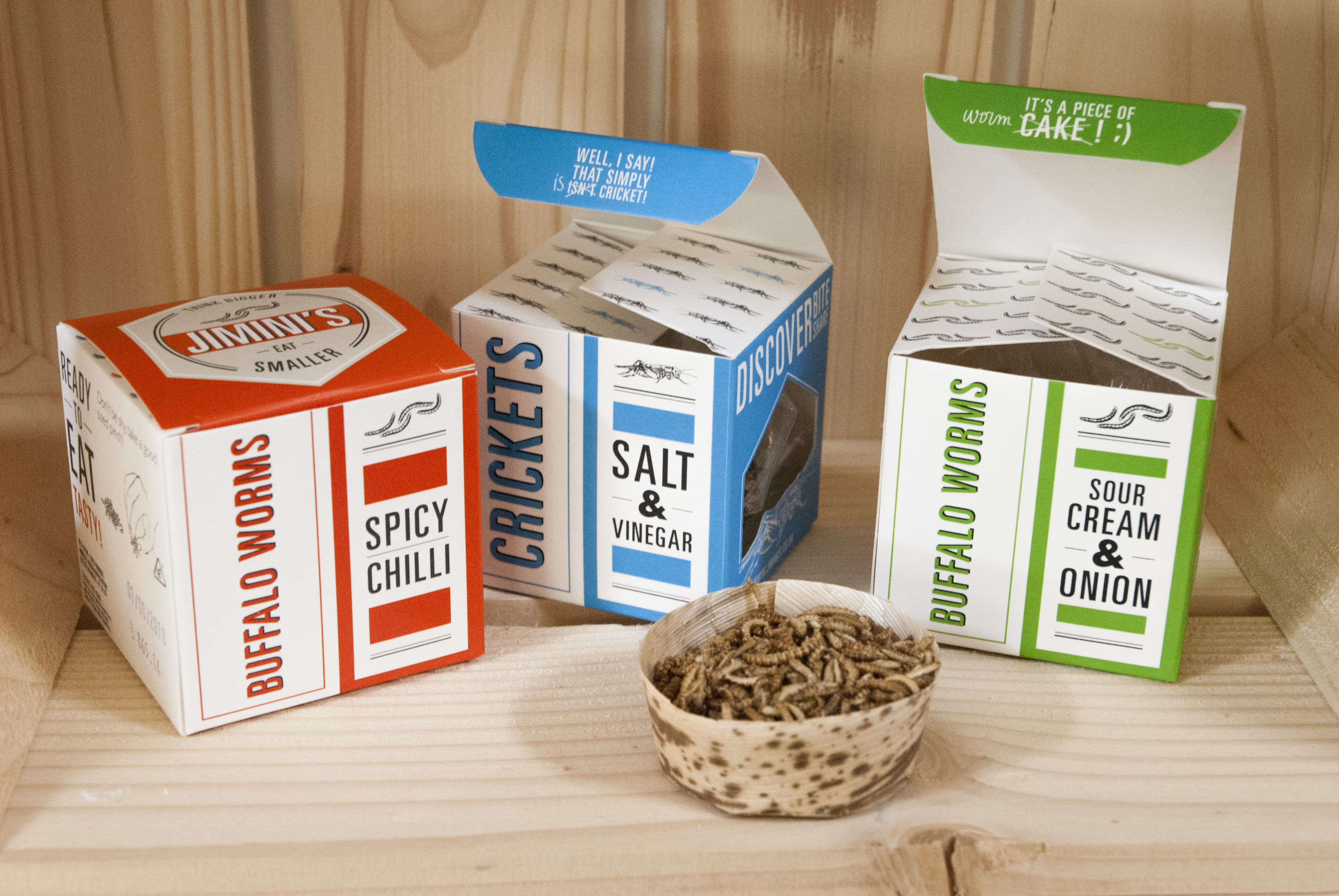
We tried Jimini’s salt and vinegar crickets and their chilli and sour cream and onion buffalo worms, which retail from £5.95 a box.
Their serving suggestions is to “take a good sized pinch and keep a smile on your face”.
The loveFOOD verdict?
While Jimini’s mission is admirable, it’s going to take more than a coating of crisp-flavouring to get us choosing mealworms instead of a pack of Walkers.
If you can get over the appearance, the texture is much better than you might expect: dry, brittle and almost dusty rather than chewy. It’s a relief to discover that at least you don’t feel like you’re crunching through wings, legs and exoskeletons.
We liked the flavourings, the packaging and the concept, although few of our testers were clamouring to have another handful.
Ultimately, the novelty factor definitely makes them worth a try. Will they catch on in a big way? Sadly we're not convinced, especially at this price.
Are there other insect products on the market?
If you’re not ready to choose crickets for your next coffee break, there are plenty of other ways to incorporate insects into your diet.
Jimini’s also make energy bars with cricket flour and high-protein pasta with buffalo-worm flour. Cricket protein powder, cacao bars and myriad dried insects (ranging from silkworms to ants) are just a few of the other options.
Note that insects are arthropods, as are crustaceans, and those with a shellfish allergy may suffer adverse reactions.
Want to find out more?
If you want to learn more about the role insects could play in the future of food, this UN report is the most comprehensive piece of research, concluding that edible insects are “a promising alternative for the conventional production of meat”.
All images in this piece courtesy of Jimini's.
Comments
Be the first to comment
Do you want to comment on this article? You need to be signed in for this feature