Opinion: shrinkflation is by far the biggest rip-off you’ll face at the supermarket

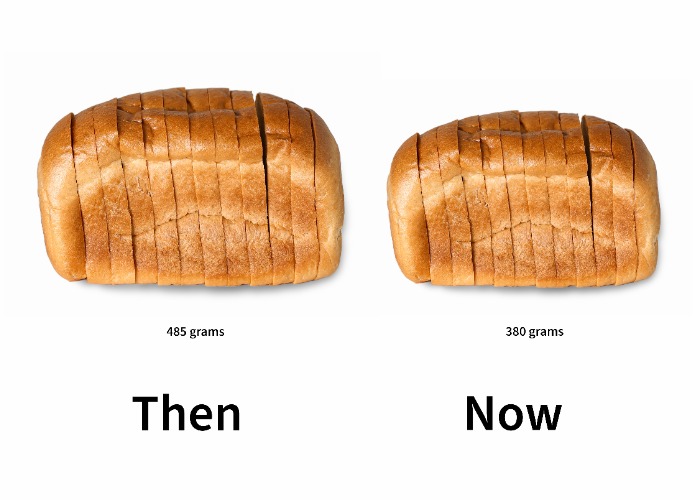
Brands are effectively hiking prices by up to 236% while claiming it’s somehow for our benefit.
There are many different ways you can end up getting a bad deal at the supermarket.
Perhaps you don’t have the right loyalty card, or you forgot to bring a ‘bag for life’ with you for the hundredth time.
But the biggest rip-off lurking in the supermarket aisles is one that can be quite tricky to spot.
Spend more, get less
The practice of shrinkflation is where manufacturers reduce the amount or size of a product, while often hiking the price at the same time.
It affects a wide range of products, from toothpaste to chocolates, and has a staggering impact in terms of value-for-money for shoppers.
A recent investigation by consumer group Which? highlighted many recent shrinkflation examples in our trolleys.
It found that Aquafresh Complete Care Original Toothpaste had reduced in size from 100ml to 75ml while the price went up from £1.30 to £2 in most supermarkets, representing a 105% increase per 100ml.
Elsewhere, Kit Kat two-finger multipacks decreased from 21 bars to 18, while the price at Ocado soared from £3.60 to £5.50 – a 53% hike.
The most egregious example Which? highlighted was Sainsbury's Scottish Oats, which halved in size to 500g while the price jumped from £1.25 to £2.10.
That represents an effective 236% price rise per 100g.
"This demonstrates the underhand tactic by which manufacturers make profit by shrinking the size of the products you buy"#GMB reporting on shrinkflation. Clip edited to remove statements from each of the manufacturers trying to justify their profiteering. pic.twitter.com/XlY3dIeieg
— Saul Staniforth (@SaulStaniforth) October 28, 2025
Why are so many products shrinking?
The rising cost of many raw materials, as well as historically high energy prices, are driving up production costs for many manufacturers.
Shrinkflation offers them a way to massively reduce these costs while still competing on price with rival brands.
The customer is the big loser in all of this, getting far less for their money at the tills.
Do shoppers want shrinkflation?
Companies will argue that this is the least-bad outcome for shoppers.
Whenever they are questioned on why products are shrinking, the response generally goes along the lines of: ‘Costs are rising and we know customers are struggling, so rather than charge them more we’ve decided to slightly reduce the size.'
Firstly, this only works if you’re reducing the size of single-serving items, making customers get used to slightly smaller portions while still offering the same number of servings.
But the Which? research we mentioned above highlights numerous examples where you’re simply getting fewer servings.
Secondly, there’s almost never a mention on packages that the size has been reduced, which raises the question of whether shoppers are being tricked into paying more for less.
We’ve highlighted before how French supermarket Carrefour started placing shrinkflation warnings next to affected products, highlighting how it had “seen its volume or weight fall and the effective price by the supplier rise”.
Is this not something we should expect?
Be it warnings printed directly onto packages by the brands or labels printed by stores, shoppers deserve clear warnings when we’re being hit with a hefty price rise that we might not otherwise notice.
Most would rather just pay the higher price
While brands will argue that shrinkflation is better than hiking prices without changing products, many shoppers disagree.
Asked what they would rather companies do in response to rising production costs, only one in five respondents to a Yougov poll said they’d rather see prices kept the same and products shrunk.
By contrast, more than half (51%) said they’d rather pay a higher price in order to keep products the same size.
If most shoppers don’t want shrinkflation, then why is it being done?
There’s a case to be made that it allows brands to hike effective prices by a greater margin than shoppers would be willing to accept normally.
As per some of the more extreme shrinkflation examples mentioned at the start, would anyone really buy a product again if they noticed it cost 236% more than the last time they bought it?
Britons tend to say they'd rather companies kept products the same size than the same price, as a new report by Which? reveals the extent of 'shrinkflation' in shopping baskets
— YouGov (@YouGov) October 28, 2025
Rather products stayed same size: 51%
Rather products stayed same price: 20% pic.twitter.com/iyT3b7TPWq
Time to be transparent
Companies should absolutely be free to choose whichever route they like to deal with rising production costs – hike prices, shrink sizes, or even both.
But if the size of the product is to change, then companies should be required to flag this up on the packaging so shoppers can make an informed decision.