Energy bills ‘to rise 20% over the next 5 years’

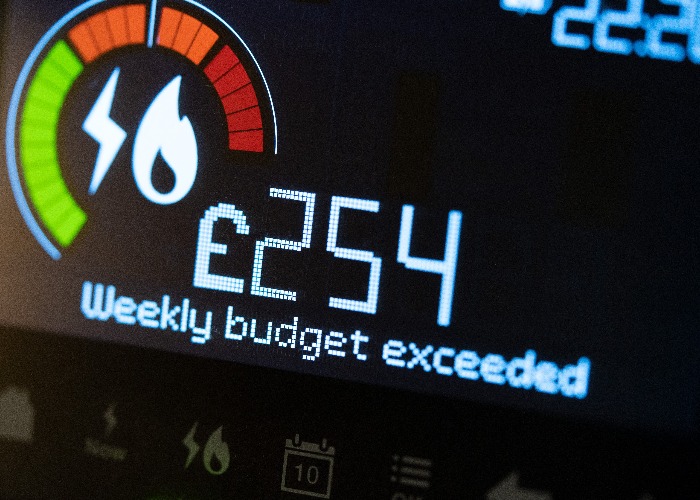
Rising taxes and levies mean we’ll all be paying far more for energy even if wholesale prices fall, an Octopus Energy executive has warned.
Households will be paying hundreds of pounds more for their energy even if wholesale prices fall in the coming years, a senior executive at Britain’s biggest energy supplier has claimed.
Rachel Fletcher, director for regulation and economics at Octopus Energy, claimed the increasing cost of Government policies could see bills rise 20% by 2030 even if wholesale energy costs were to halve during that time.
Given the average energy bill currently stands at £1,755, this would see bills rise £351 to £2,106.
The Government policies Fletcher was referring to include plans to spend £80 billion on infrastructure investment as well as rising policy-related expenses.
Speaking to a committee of MPs, Fletcher said: “It’s time we got this burden under control.
“There’s no budgetary control of this and yet it all ends up on household bills or contributing to making our electricity some of the most expensive in the industrialised world.”
She added that “serious and urgent consideration” was needed to address these rising costs.
Speaking at the same event, Eon chief executive Chris Norbury added that "we could get to a position by 2030 where if the wholesale price was zero, bills would still be the same as they are today" as a result of rising expenses not related to wholesale energy.
The Guardian contacted the Government for an official response to these claims, and a spokesperson said they “categorically reject” them.
|
PROMOTION
|
||
|

Annual bills ‘will be £70 higher’ in April
Looking at the shorter term, analysts at Cornwall Insight have warned that annual energy bills are expected to be £70 higher on average come April 2026.
The company, which has become the go-to source for energy price predictions, said rising charges to maintain electricity and gas networks, as well as higher taxes, would be the main sources behind the increase.
Craig Lowrey, principal consultant at Cornwall Insight, said the Energy Price Cap would likely fall £30 in January as a result of cheaper wholesale costs, before Government policies kicked in from April, adding £100 to bills.
“A dip in bills this January might come as a relief for households, but we shouldn’t mistake this as the start of a trend toward cheaper energy,” he said.
“The reduction we are forecasting is being driven by relatively small shifts in the wholesale market.
“At the same time, new charges like those to support nuclear development are starting to appear on bills, and that’s a sign of things to come.
“Any fall in January would represent a pause rather than a permanent drop. By Spring, costs are expected to rise again as network charges and policy costs increase."
How to protect yourself against rising bills
If you’re currently sitting on your supplier’s standard tariff, which is tied to the Energy Price Cap, then you’re not only paying more than you need to right now, but you’ll also feel the full impact of any price hikes down the line.
Our golden rule for cheaper energy bills is to ensure you are locked into a fixed energy deal.
Price comparison site Uswitch estimates the average household will save £211 a year compared to their energy supplier’s standard tariff and, of course, you’ll be shielded from future hikes for the duration of your fix.
Most deals run for roughly a year, but there are a few out there that run for two years if you wanted more long-term price security in return for a slightly higher monthly bill.
We’ve teamed up with Uswitch to help you easily switch to a cheaper deal, but any price comparison site will help you find a cheaper option than a standard tariff.