Look up! Luxury treetop homes for living the high life
Amazing homes hidden among the treetops
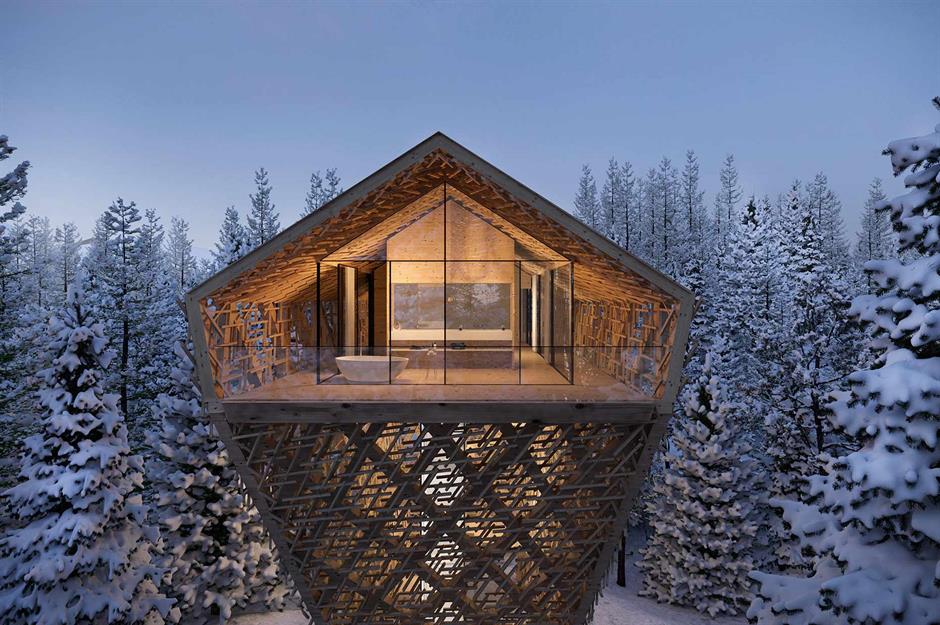
If you've ever dreamed of living among the treetops with breathtaking views of some of the planet's most stunning landscapes, then look no further. From lush tropical rainforests to serene pine forests, these luxury retreats combine serenity with all the modern comforts you’d expect from a beautifully designed home.
Click or scroll on to explore some of the world’s most extraordinary treetop homes...
Açucena House, Minas Gerais, Brazil
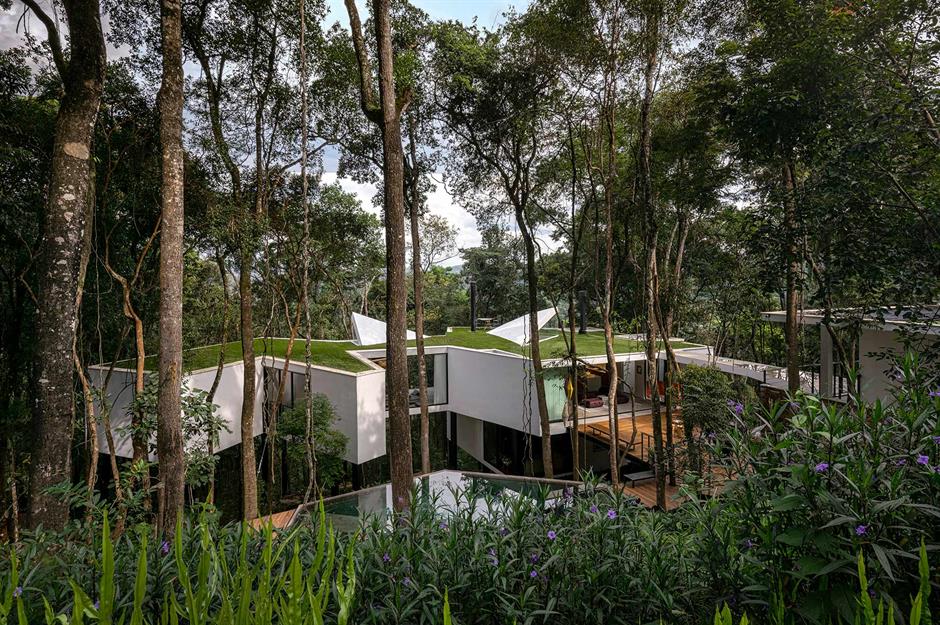
Hidden inside a dense rainforest in the Brazilian state of Minas Gerais in the southeast of the country, Açucena House seems like a mirage at first glance, effortlessly floating among the tree canopy.
The project posed a challenge for its architects, Brazil-based firm TETRO: how to create a home in the heart of the natural world without damaging the surrounding landscape.
Açucena House: led by nature
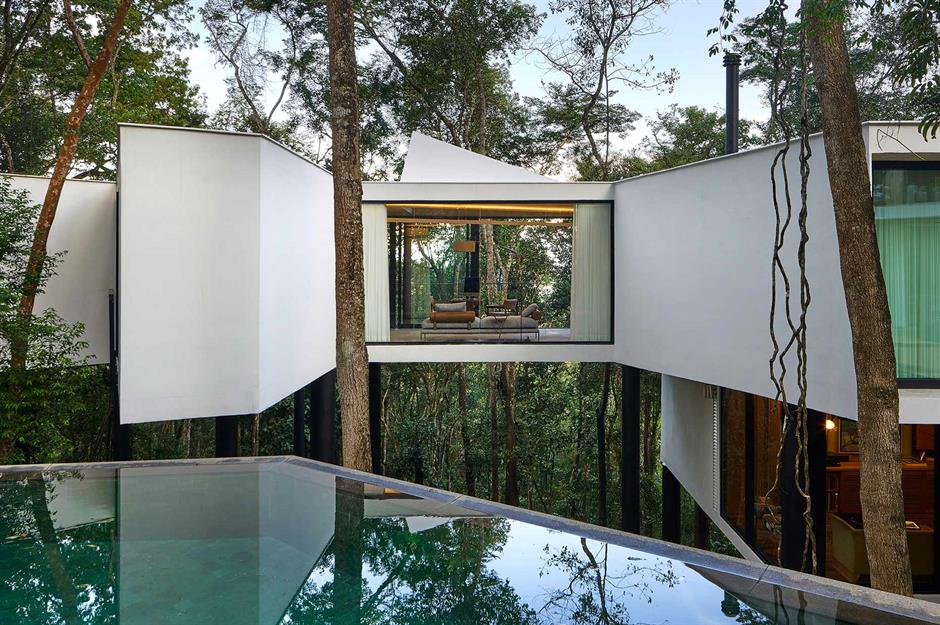
The architecture firm decided that the home's look and feel should be led by its forest environment. In keeping with this philosophy, the property was designed to occupy the empty spaces between trees, giving rise to a cubic, modular structure.
Photographed here by Jomar Bragança, the home is elevated around 49 feet (15m) above ground level on black column supports that resemble the tree trunks around it. The exterior is bright white – envisaged by the architects as a white flower in the middle of nature.
Sponsored Content
Açucena House: modular architecture

The rainforest's ecosystem continues uninterrupted below the house – not a single tree was felled in the construction – while new life unfolds in the canopy.
The interior encompasses 5,382 square feet (500sqm) of modern living space contained in modules that stack and radiate outwards from each other. In the kitchen, walls of wood-grained cabinetry are flanked by floor-to-ceiling windows that frame the rugged bark of tree trunks.
Açucena House: a remote refuge
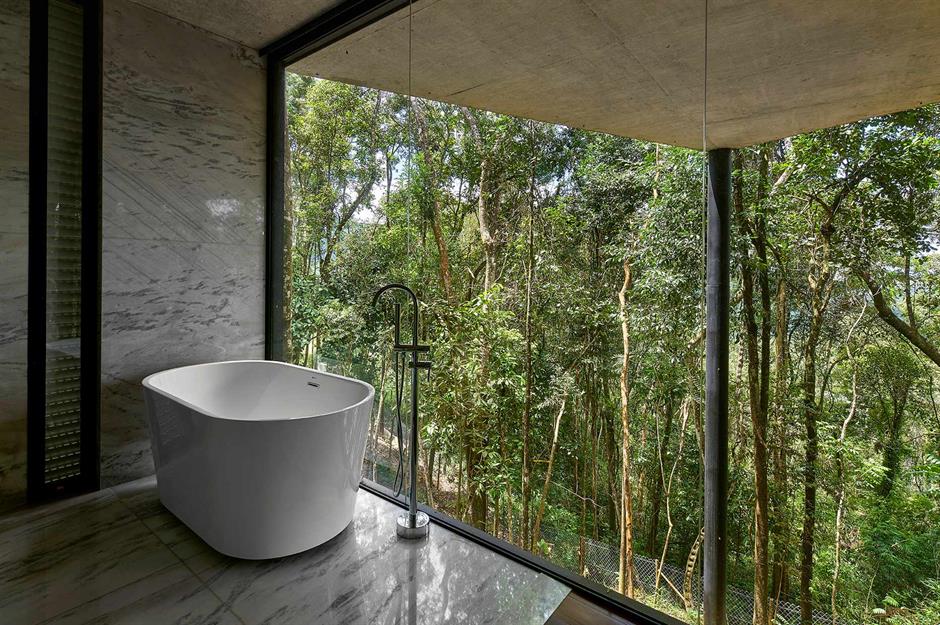
Striking in its remoteness, this image captures the view from one of the bathrooms, offering insight into the dense rainforest surrounding it.
The luxurious space features large slabs of grained marble across the floors and ceiling, while a concrete overhang shields the washroom from the glare of the full sun.
MapleHaus, Utah, USA
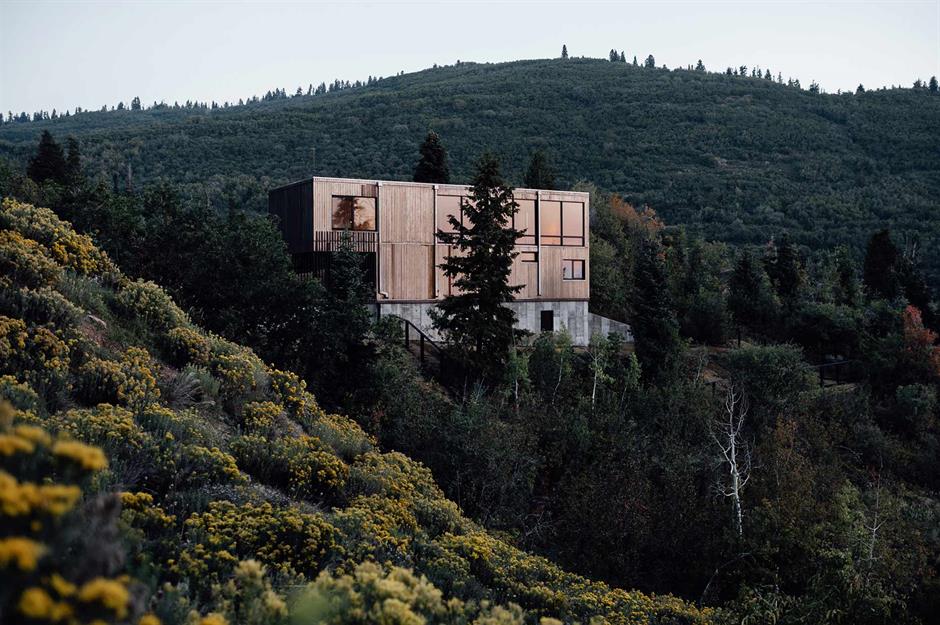
Rising out of the hillside in Summit Park, a mountain community just outside of Park City in the US state of Utah, this house can be found 7,000 feet (2,134m) above sea level in the Wasatch Mountains.
Known as MapleHaus, the family home was designed by Utah-based architecture firm KLIMA, who sought to create a woodland retreat that embraces bold, contemporary design, modern materials and Passive House principles – a framework that sets out energy performance standards for new buildings.
Sponsored Content
MapleHaus: Corten steel skin
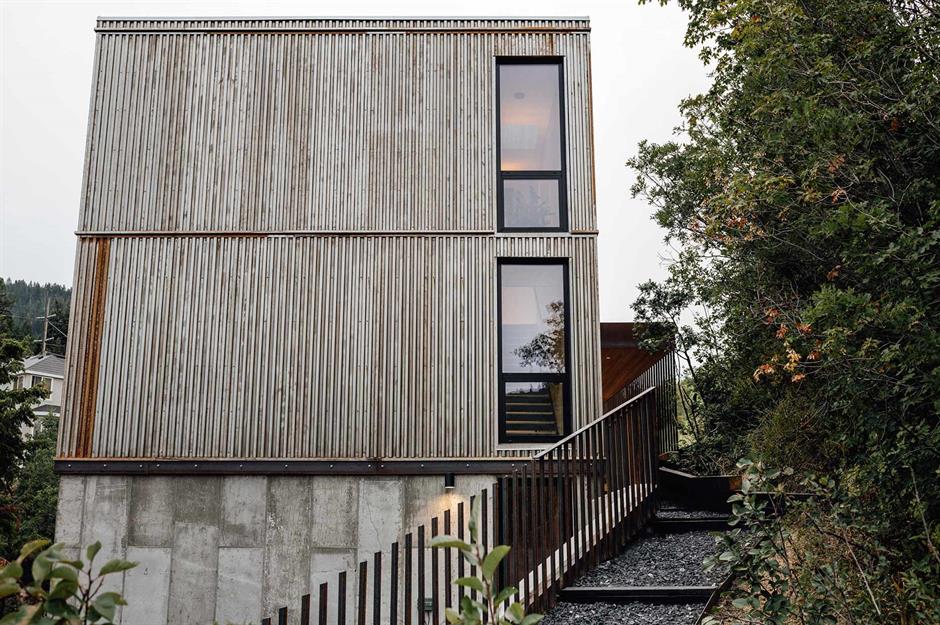
12-inch-thick (30cm) double-stud walls encase the woodland home with impressive insulation, while triple-glazed windows keep out the biting cold in the winter months.
The house has a concrete base, but the upper stories are wrapped in corrugated Corten steel, which is designed to weather and patina over time with exposure to the elements. More than just an aesthetic choice, it helps make the home fire-resistant and a smart choice for scorching summers, as the cladding can withstand high temperatures without corroding.
MapleHaus: space-efficient design
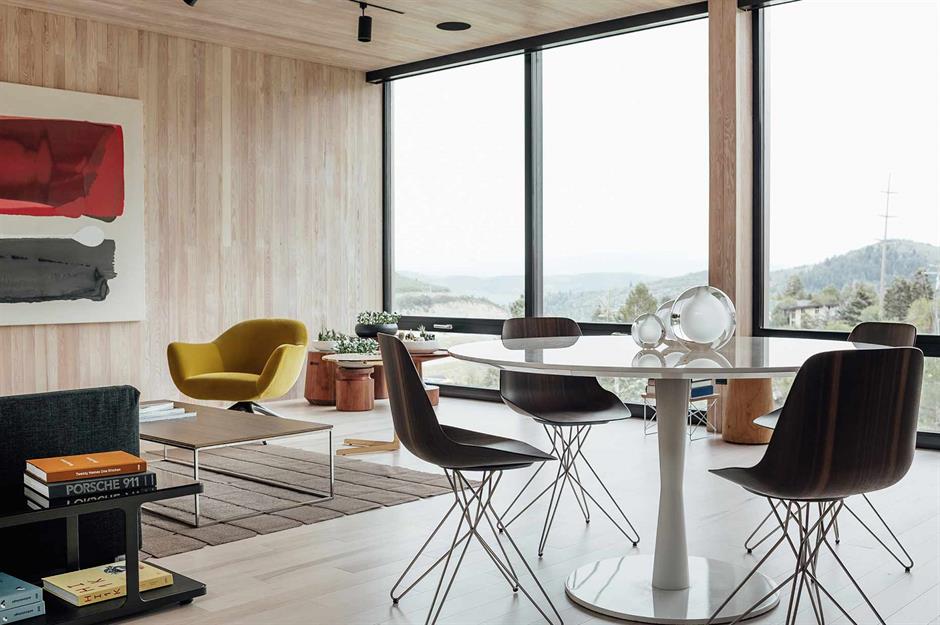
Inside, the home's floor plan spans 2,500 square feet (232sqm) of living space across three levels, including four bedrooms and three bathrooms.
The house was designed using a 12-foot (3.7m) by 12-foot (3.7m) grid, which helped the architects make the most of the 0.75-acre (0.3ha) plot's available space while minimising material waste.
MapleHaus: minimal material palette
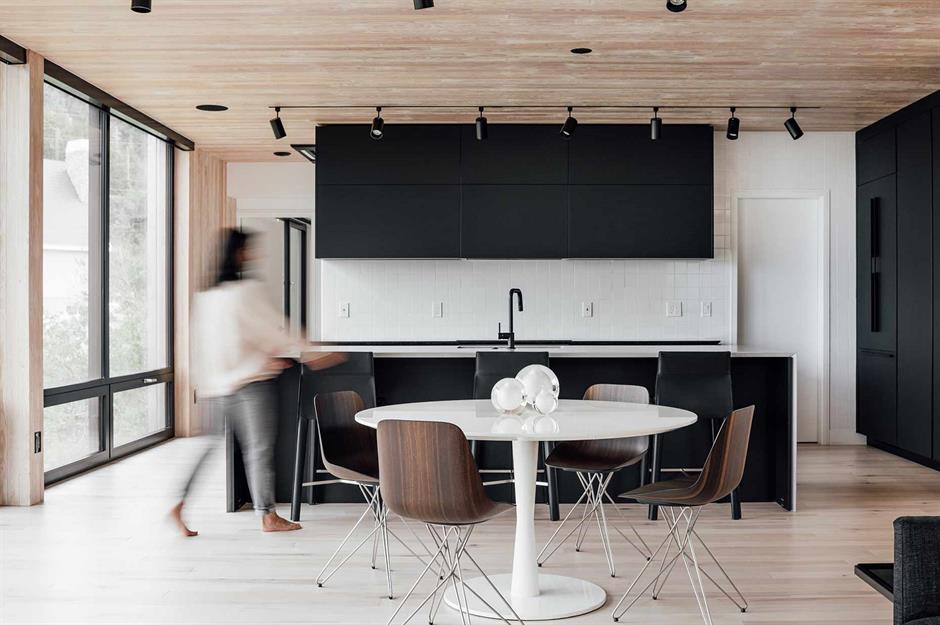
The brief called for a minimal material palette throughout the home. Consequently, the living areas feature light wood across the floors, walls, and ceilings, while black and white accents add structure to the interior. In the kitchen, charcoal kitchen cabinetry from Poliform zones the functional space, offering a dramatic contrast to the soft pine hues.
The star of the show, however, is undoubtedly the incredible views across the woodlands, which are showcased by walls of floor-to-ceiling windows.
Sponsored Content
Forest cabin, Brittany, France
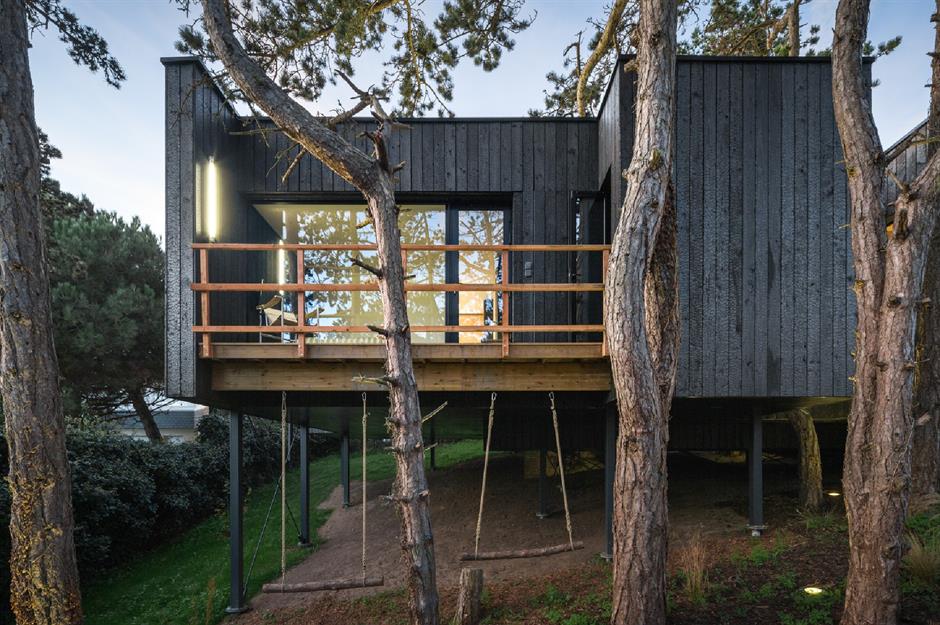
Hidden in the woodlands of Fréhel in the French region of Brittany, Paris-based architectural practice Atelier Victoria Migliore created this remarkable family home among the trees in 2018.
Built on sandy ground, the 904-square-foot (84sqm) structure is raised off the forest floor on deep-screw piles, minimising the home's impact on the rural landscape and protecting the root systems of the surrounding trees.
Forest cabin: charred wood
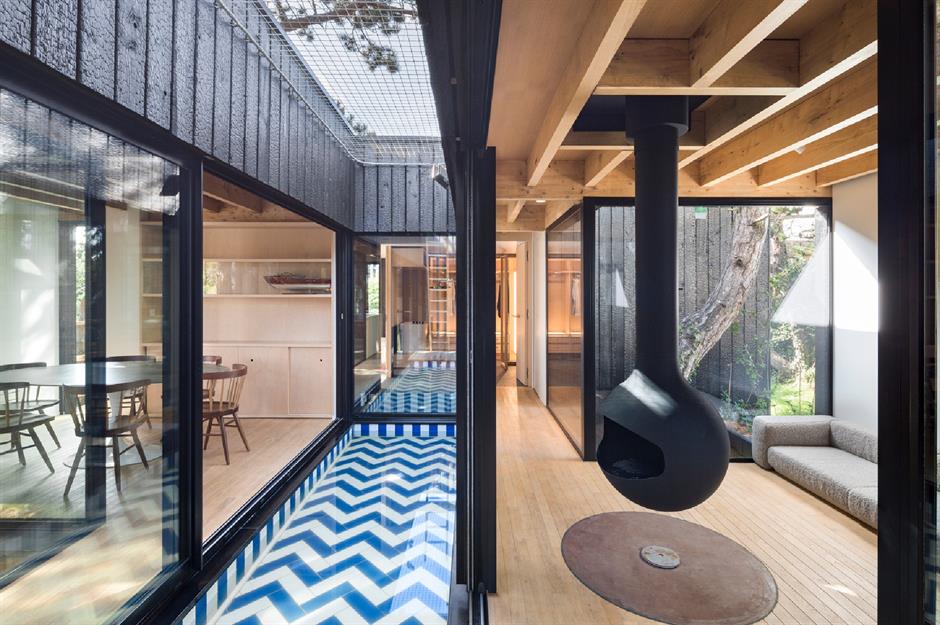
Clad in blackened wood, the house blurs into the dark tree trunks of the surrounding pine forest – the structure looks at home in the wilderness. From the exterior, glimmers of blonde wood from the living spaces create a bold juxtaposition.
The home’s interior is organised around a tiled water feature that runs between the living room, with its stylish, suspended fireplace, and the kitchen and dining area. Timber beams across the ceilings have been left exposed while floor-to-ceiling windows bring the outdoors in.
Forest cabin: at one with nature
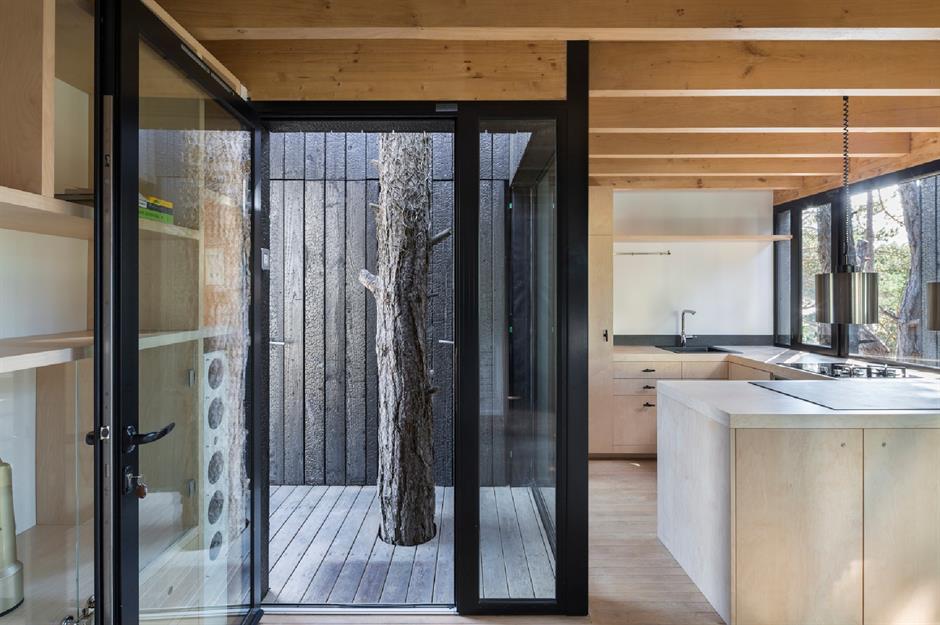
At the home's entrance, a deck has been sensitively installed around an existing tree, turning it into a striking natural feature.
Amazingly, the home was constructed without felling a single tree on site. The architects carved niches into the building so as not to disturb the growth of the surrounding pine trees.
Sponsored Content
Forest cabin: bringing the outdoors in
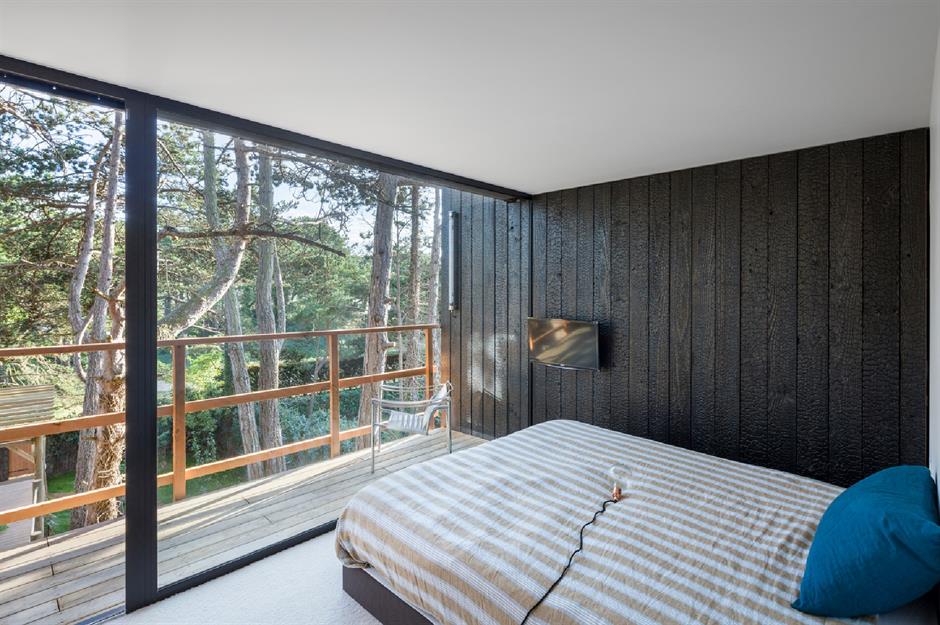
More charred wood clads the bedroom walls, further blurring the boundary between inside and out. Simple furnishings and a neutral colour palette allow the view of the forest to take centre stage.
This peaceful space leads to an outdoor deck, which has two swings attached to its base that dangle over the forest floor – the perfect spot for fully immersing yourself in nature.
Modern treehouse, Cape Town, South Africa
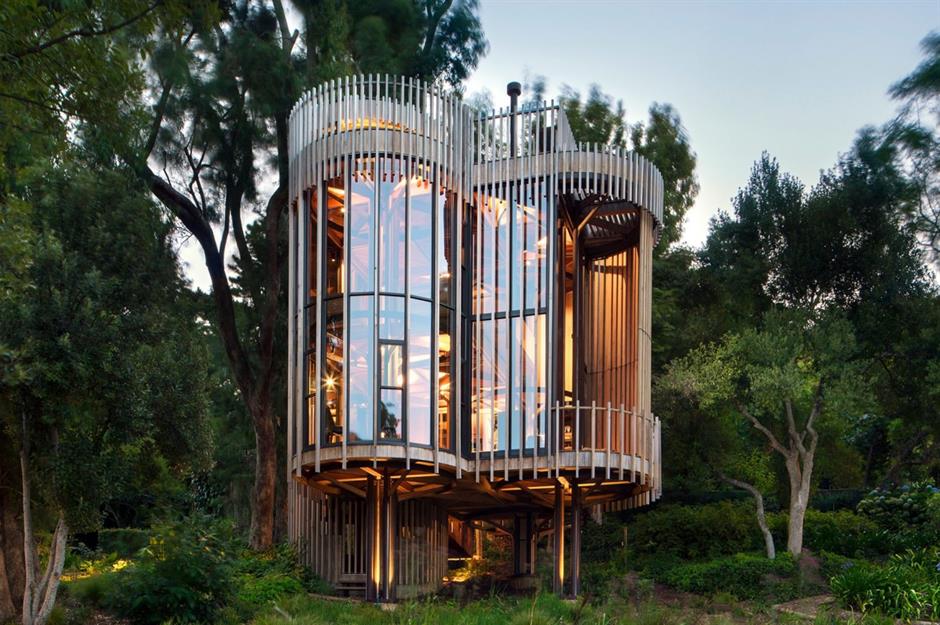
South African architecture studio Malan Vorster designed this incredible house for a client who wanted a cabin-style hideaway that resembled a treehouse.
Set in the Cape Town suburb of Constantia, the impressive home was deliberately built on a steep slope so that it would sit above the forest’s tree line, just high enough to glimpse breathtaking views of the surrounding landscape.
Modern treehouse: raised above the ground
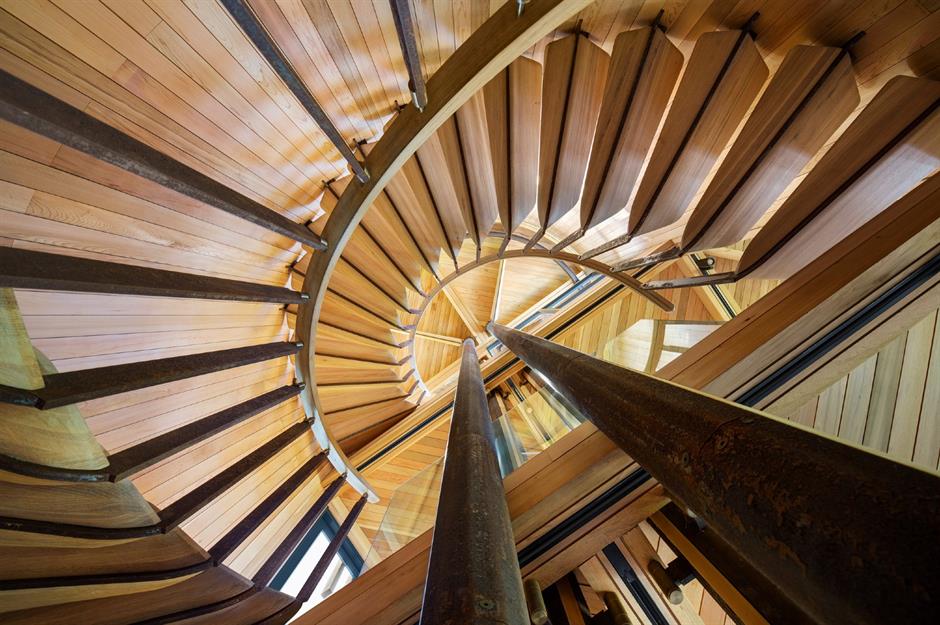
Made up of four cylindrical towers raised above the ground on stilts, the property offers 360-degree views in all directions from its swathes of large windows.
The materials used to build the house – western red cedar wood and steel beam supports – will naturally weather over time, allowing the structure to blend into the forest around it.
Sponsored Content
Modern treehouse: showcasing the treetops
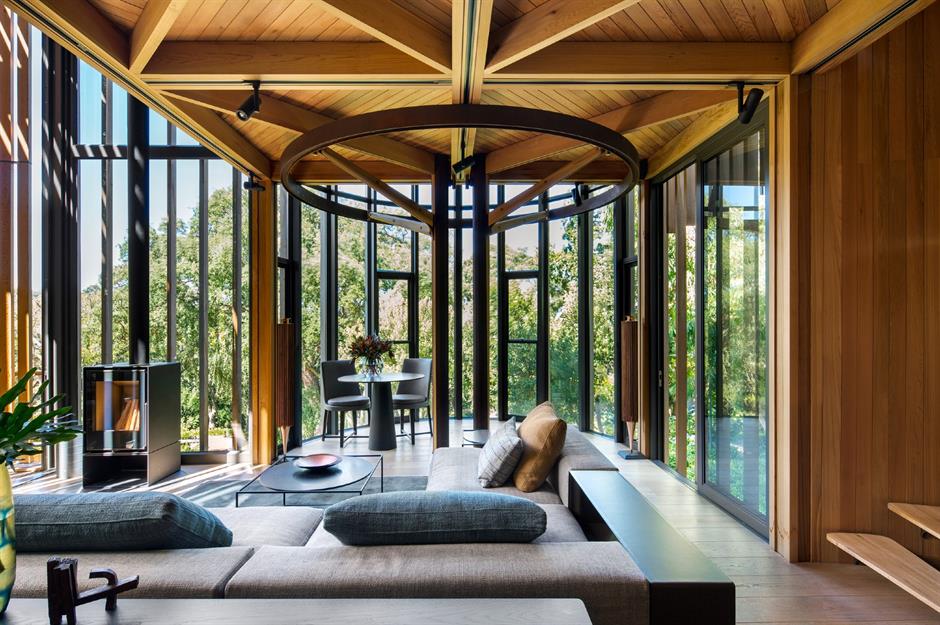
This open-plan living area and kitchen occupy the first floor of the house. Minimal furnishings in a neutral palette allow the warm cedar walls and floors, and the stunning views of the treetops to do the talking. The strong black lines of the wood-burning stove, side table, and floor lamp echo the industrial steel beams that frame the windows.
Modern treehouse: breathtaking views
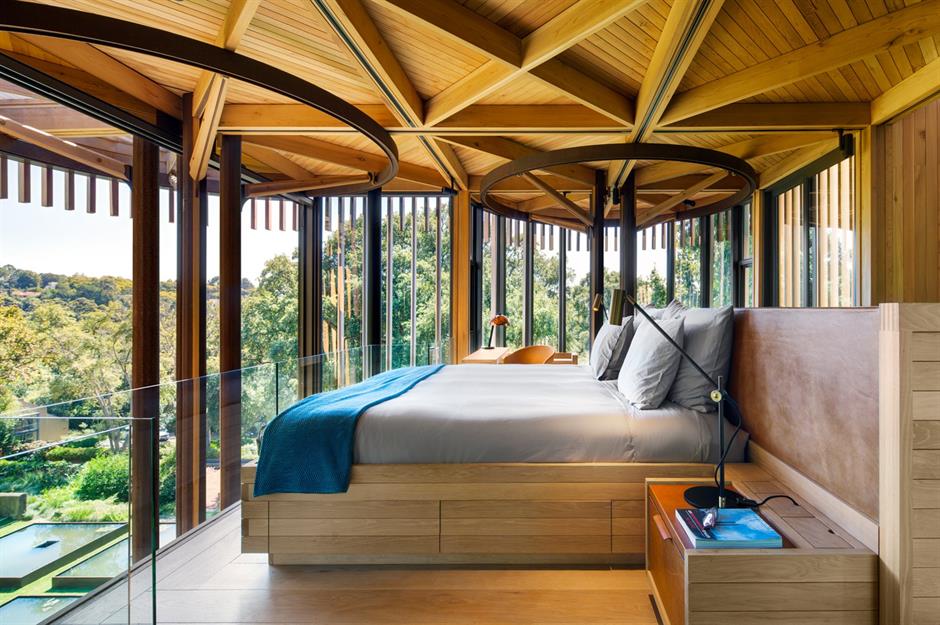
Enclosed by a glass balustrade, the master bedroom on the second floor was designed to double as a lookout platform, offering stunning vistas of the trees below. The bed frame and bedside table are cleverly built into the wall, creating a minimal, seamless finish. Meanwhile, an en suite bathroom is tucked away in a nook behind the bed.
Up on the top level, there's a roof deck with a built-in seat, the perfect vantage point to soak up the woodland vistas.
Cantilevered cabin, Quebec, Canada
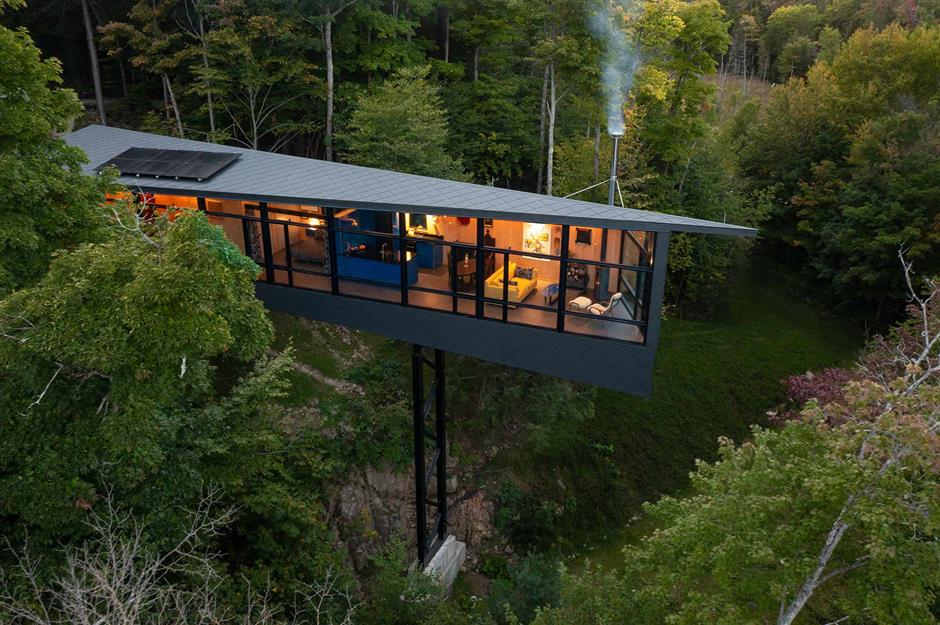
While some forest homes are designed to seamlessly integrate with the natural landscape, this innovative cabin by Canadian firm Kariouk Architects was designed to stand out. The studio argues that a separation between architecture and the organic environment can offer a more sustainable blueprint for the construction of wilderness homes.
In keeping with the architects' ethos, the house floats among the treetops, supported by a single steel mast and a small concrete footing. Creating minimal points of contact with the landscape, the home protects the site's flora and fauna and helps prevent the erosion of the hillside.
Sponsored Content
Cantilevered cabin: protecting the natural world
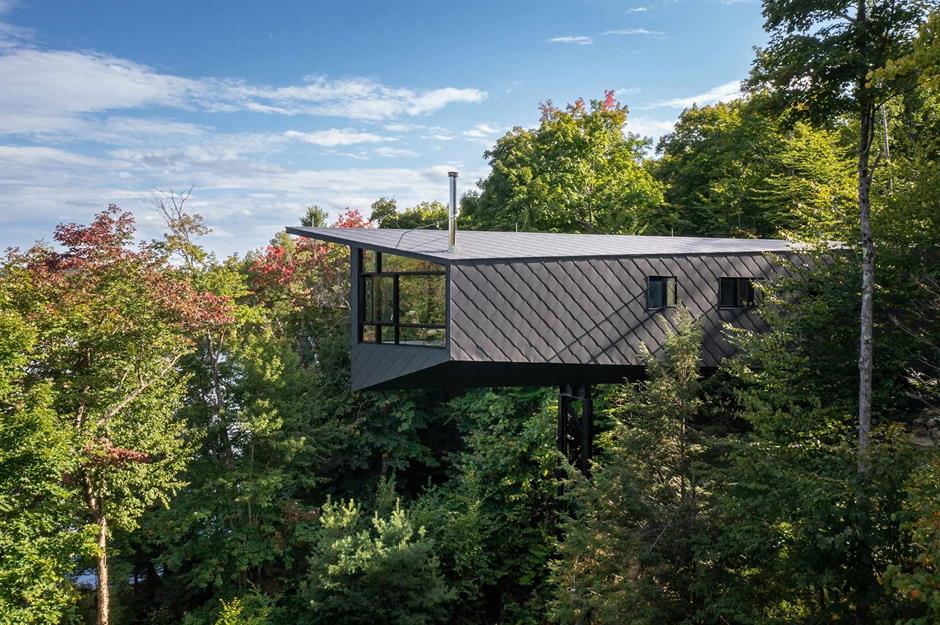
While the house is distinct from the surrounding woodland, it sits in harmony with it, elevated some 65 feet (20m) above the ground in the undisturbed tree canopy.
The structure of the cabin is made from low-waste cross-laminated timber panels and glulam beams. The unit was prefabricated off-site and then lifted into place to avoid damaging the landscape with large construction machinery.
Cantilevered cabin: bathed in light
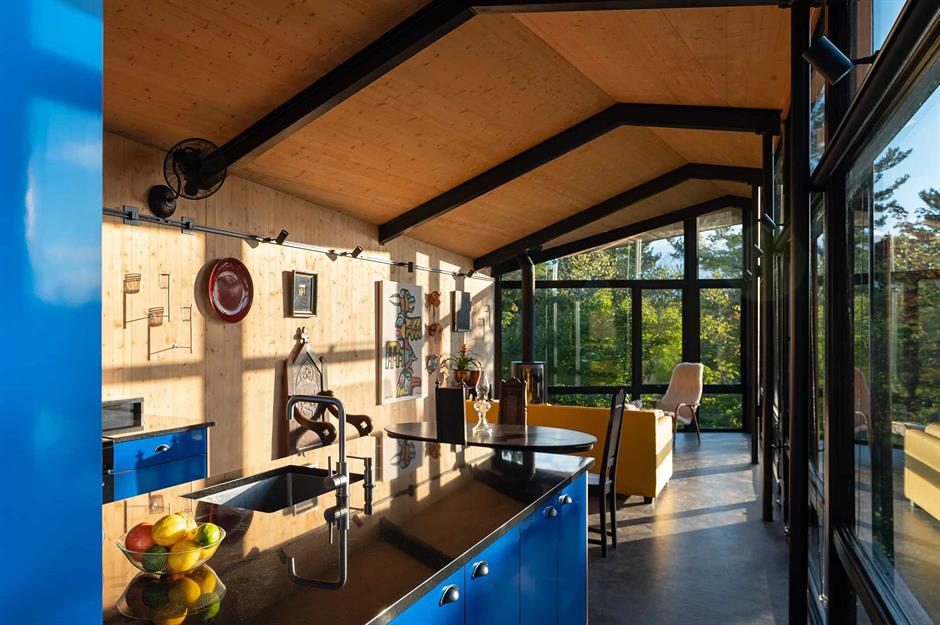
Featuring vaulted 12-foot-high (3.7m) ceilings clad in exposed timber, the home feels airy and spacious. Floor-to-ceiling glass envelops the south and east walls, bathing the interior in natural light that shifts throughout the day.
The floor plan is open, designed as a corridor of space that gets increasingly more private as you move from the lounge and kitchen at the front of the cabin to the bedroom and bathroom at the rear.
Cantilevered cabin: a home for wildlife
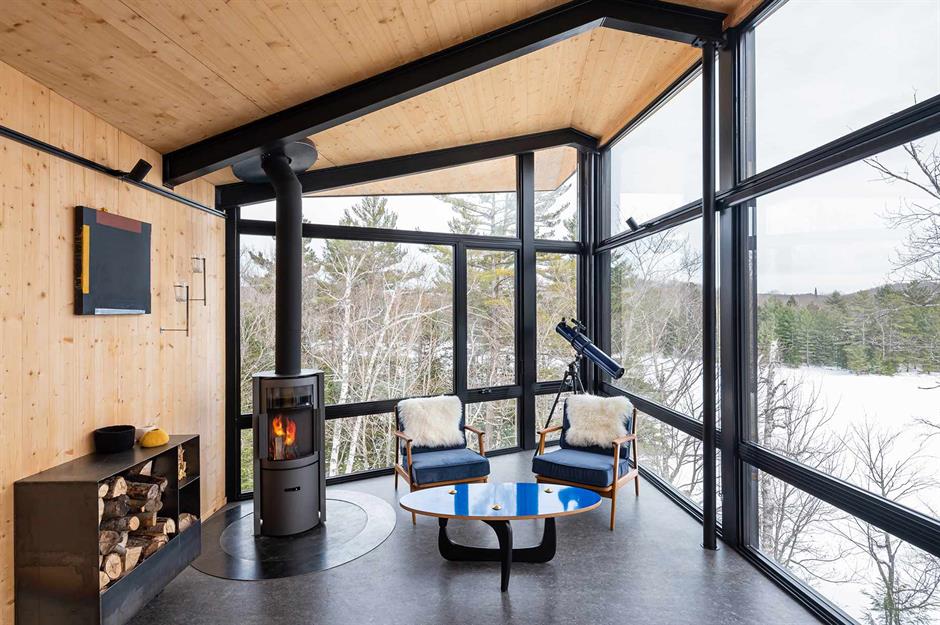
In addition to its high-efficiency wood stove, the cabin is kept at a comfortable temperature all year round thanks to the innovative design of its south-facing glazed wall. In the summer months, the tree canopy shades the interior from the hot sun, while in the winter months, the bare branches allow sunlight to stream through and warm the living spaces.
As well as providing a welcoming place to live for its residents, the cabin also offers a home to the region's brown bats. Bat pods were integrated into the metal support mast to give the endangered species a safe space to roost.
Sponsored Content
Coastal masterpiece, Kawau Island, New Zealand
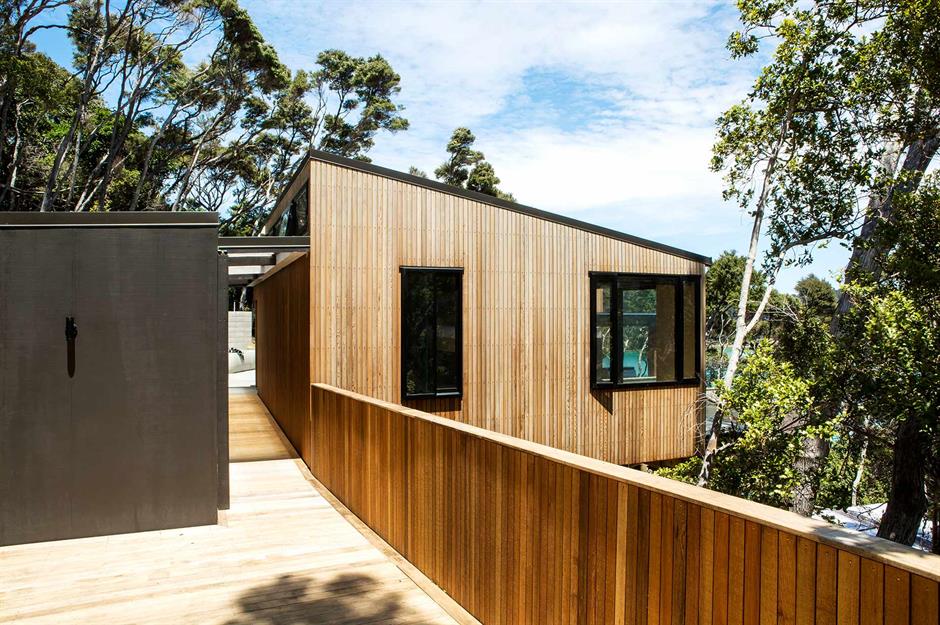
Constructed in 2014, this holiday home on New Zealand's Kawau Island in the Hauraki Gulf hunkers down into its wooded, sloped site. The striking house was conceived by Dorrington Atcheson Architects as a retreat for a family of four.
The structure consists of two pavilions clad in cedar shiplap and contrasting black plywood. Hidden in the trees, it was designed around its spectacular outlook over the headland, Bon Accord harbour and the ocean beyond.
Coastal masterpiece: a home of two halves
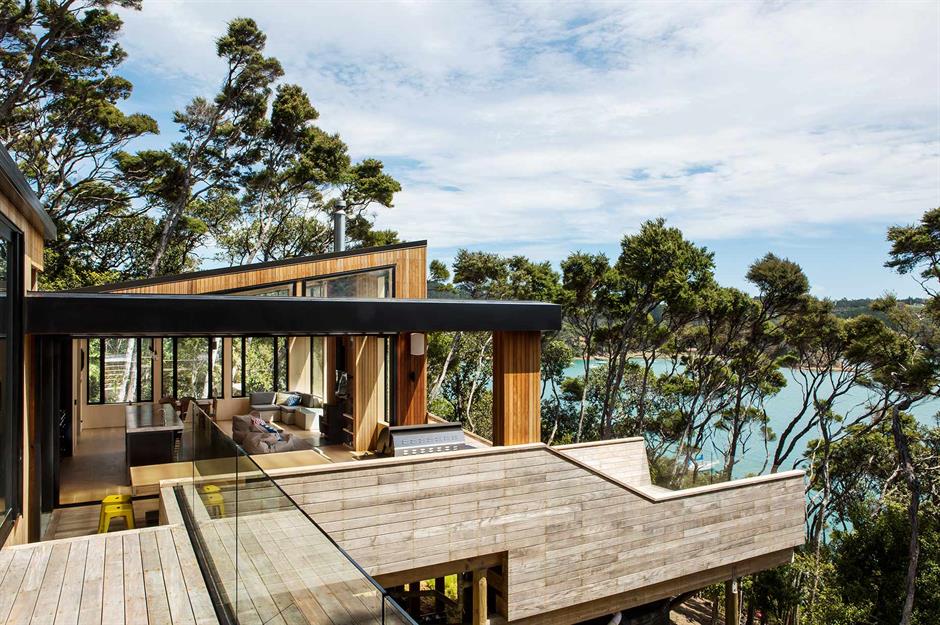
The home's stepped form gives way to a carefully organised interior, which is zoned into two halves: the open, communal living spaces and the more private sleeping quarters.
A tiered deck hugs the living areas, following the contours of the terrain. It culminates in a pier-like vantage point that hovers at the front of the house, overlooking the glittering water of the bay.
Coastal masterpiece: warming timber interior
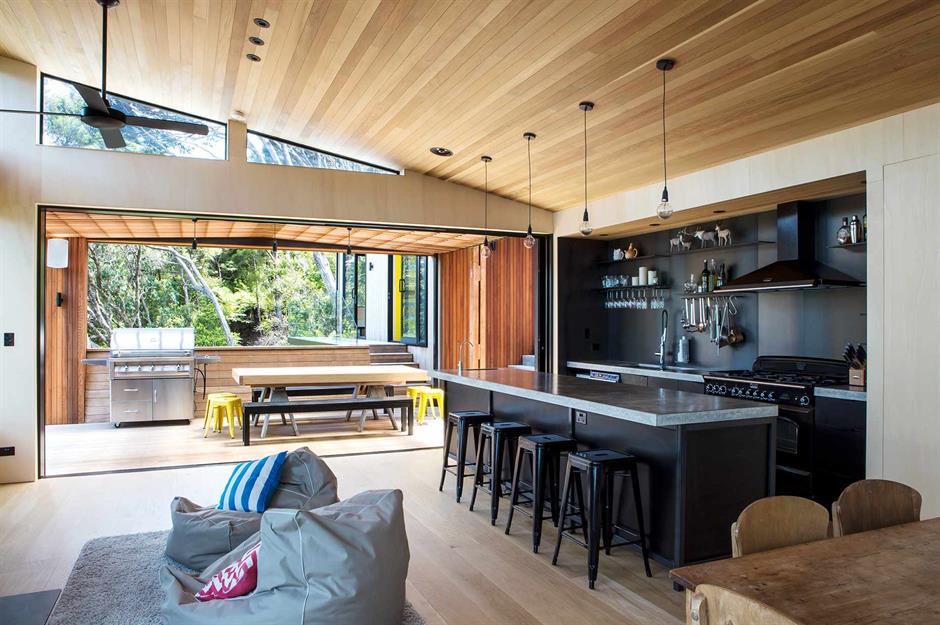
Spanning 1,292 square feet (120sqm), the interior is defined by a warming palette of timber, from the cedar ceilings to the plywood walls and solid oak flooring.
Pictured here is the social hub, comprising the kitchen, lounge, and dining area. The vaulted ceiling creates a triangular opening for two clerestory windows that draw light into the room, while recessed doors allow the interior living space to spill out onto the deck.
Sponsored Content
Coastal masterpiece: spectacular treetop views
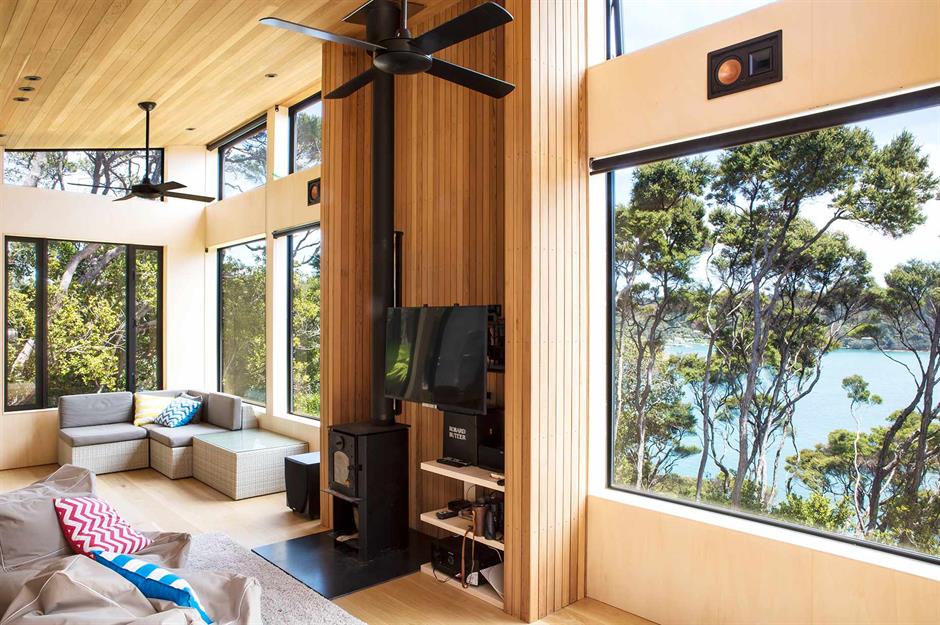
Large picture windows capture breathtaking views of the water and treetops, which elevate the neutral interior with their vivid blue and green hues.
Elsewhere, the sleeping zone at the rear of the house offers more privacy, featuring two bedrooms, bathrooms, and an innovative bunk room, designed to channel the communal feel of a camping ground.
House Dokka, Buskerud, Norway
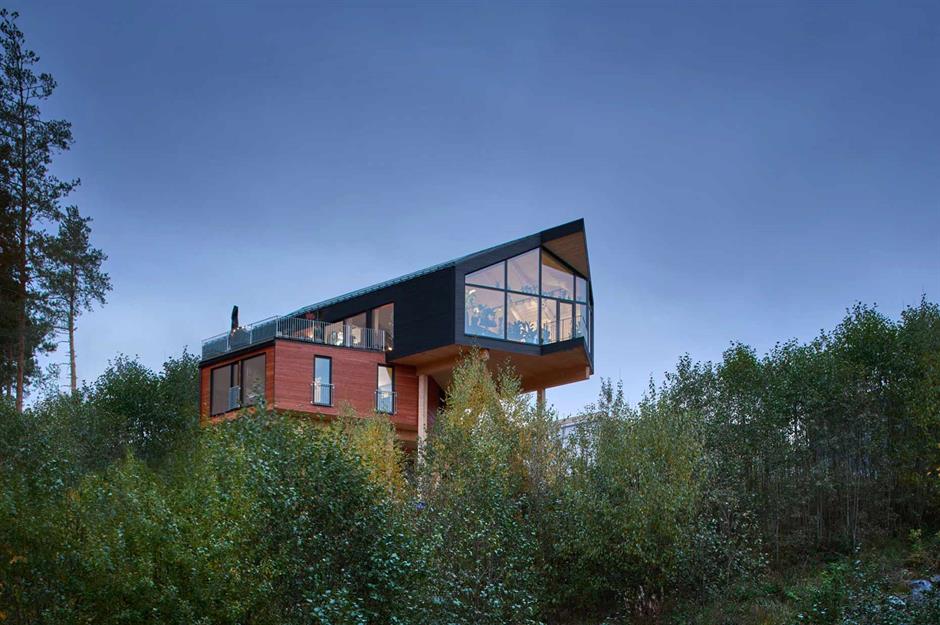
Grazing the treetops in Kongsberg, a historic mining town in the Norwegian county of Buskerud, House Dokka blends environment-first construction principles with all the comforts of a modern home.
Designed by architecture firm Snøhetta, which is headquartered in Oslo, the house comprises two different parts: a black upper volume and a warm brown lower volume that reflects its proximity to the earth. Almost like an optical illusion, the two sections balance on top of each other with only a slight overlap.
House Dokka: a blueprint for sustainable living
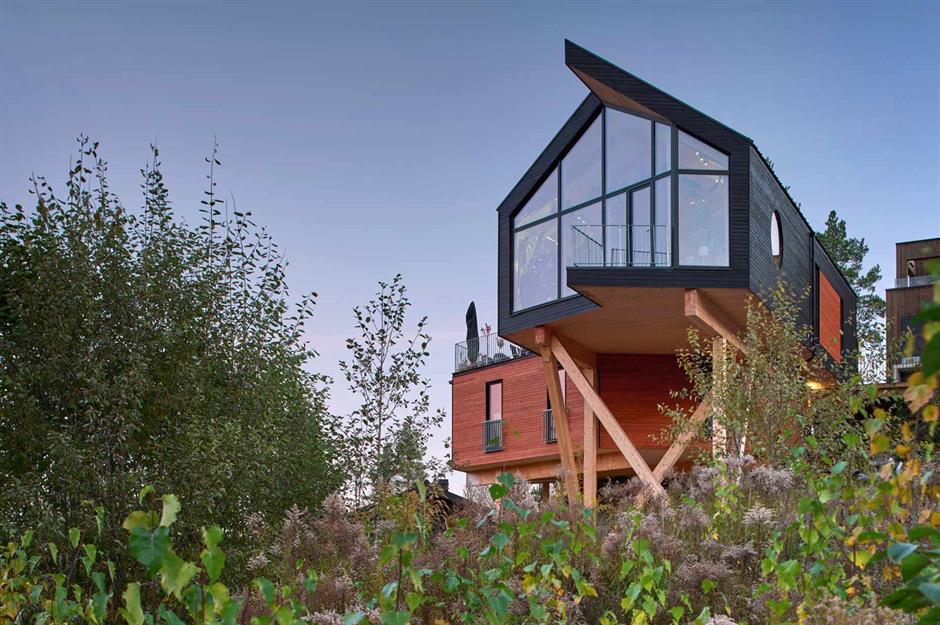
Sustainability is at the forefront of the home's innovative design. In fact, the energy the house produces in the next 10 years is estimated to offset the embodied energy of the materials used to construct it.
Solar PV panels are integrated into the roof, while a ground source heat pump powers the underfloor heating. Ingeniously, the system can be reversed in the summer months to help cool the house instead.
Sponsored Content
House Dokka: soaring, vaulted ceilings
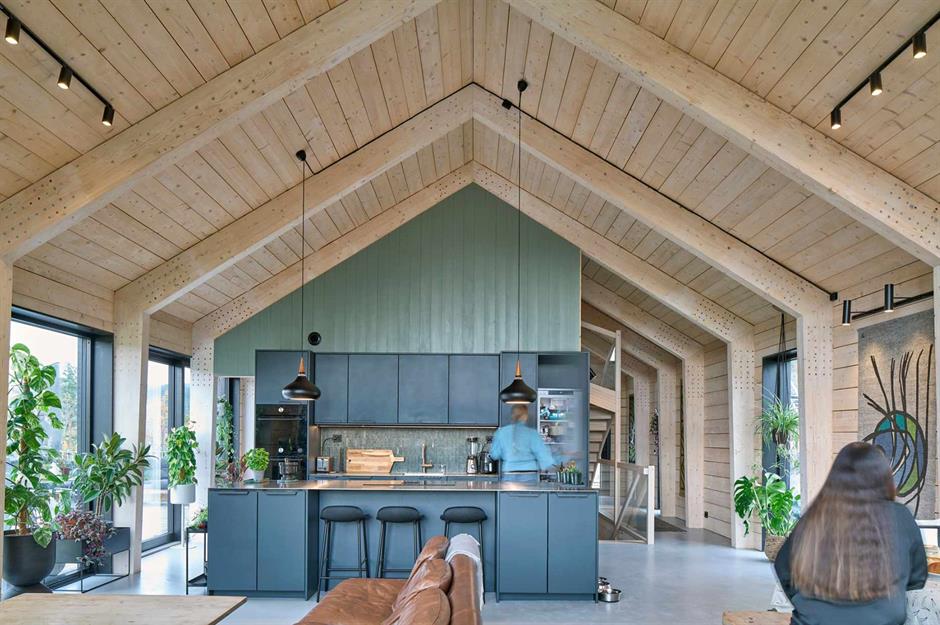
The home's frame, which consists of cross-laminated timber and glue-laminated timber, is showcased throughout the interior. An exposed, vaulted ceiling soars above the kitchen here in a dramatic A-frame. Rich blues and soft greens contrast against the stripped-back timber.
In total, the house encompasses 2,045 square feet (190sqm) of accommodation. Making the most of the views across the hillside, the main living areas are situated on the top floor, along with the master bedroom and a bathroom. The lower level houses three additional bedrooms, an office, and another bathroom.
House Dokka: a fully recyclable home
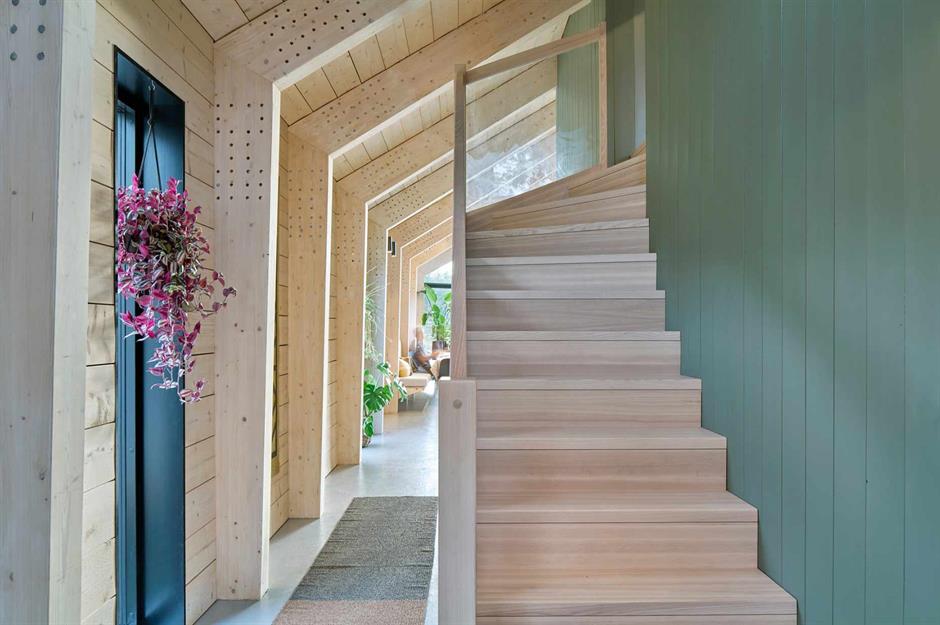
The home wasn't designed with just its own lifespan in mind. The cleverly designed structure, which is held together with screws rather than nails, can be easily dismantled when the property is no longer needed, with the materials recycled and given a new purpose.
Equally, this unique construction helps to future-proof the house – residents can make expansions and alterations to the house in the future with relative ease.
Vertical chalets, Tyrol, Austria
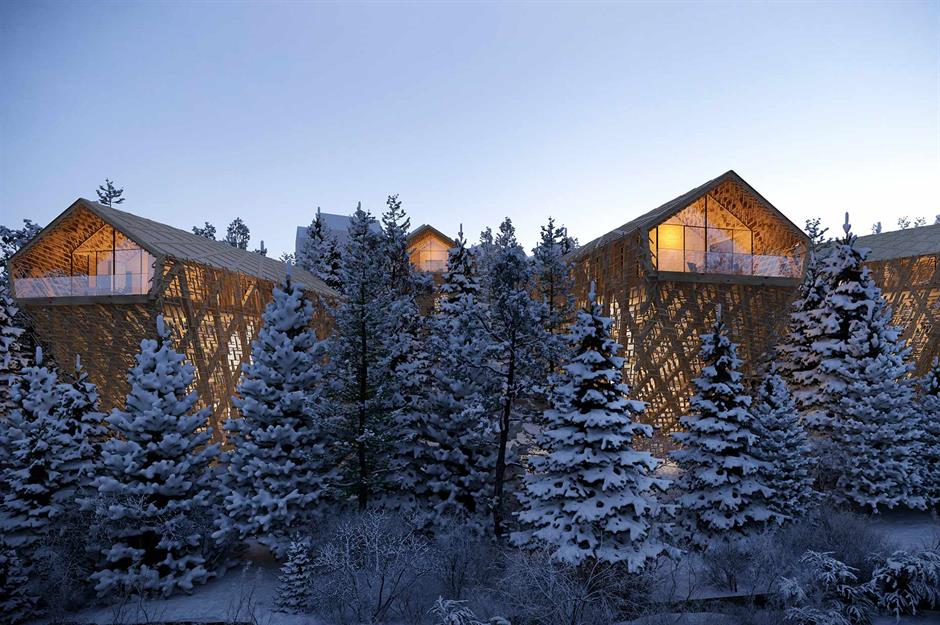
Part of a new development of holiday homes, these elevated chalets are under construction in Thurn Pass, a ski region in the western state of Tyrol in Austria. Italian firm Peter Pichler Architecture is overseeing the design, which will see six luxurious timber suites perched between the treetops.
An extension of a nearby hotel, the unique design is a modern twist on the traditional architecture of an Austrian chalet, offering escapism within the snow-covered canopy.
Sponsored Content
Vertical chalets: closer to nature
Designed with various floor plans ranging from 646 square feet (60sqm) to 861 square feet (80sqm) in size, the suites will be accessible via an external staircase or a glass elevator.
Beneath the shelter of the wooden framework, the units will comprise a glass-framed living space that offers unimpeded views across the alpine landscape. In this way, the project will quite literally remove the visual division between indoor and outdoor, heightening holidaymakers' connection with nature.
Vertical chalets: luxury amenities
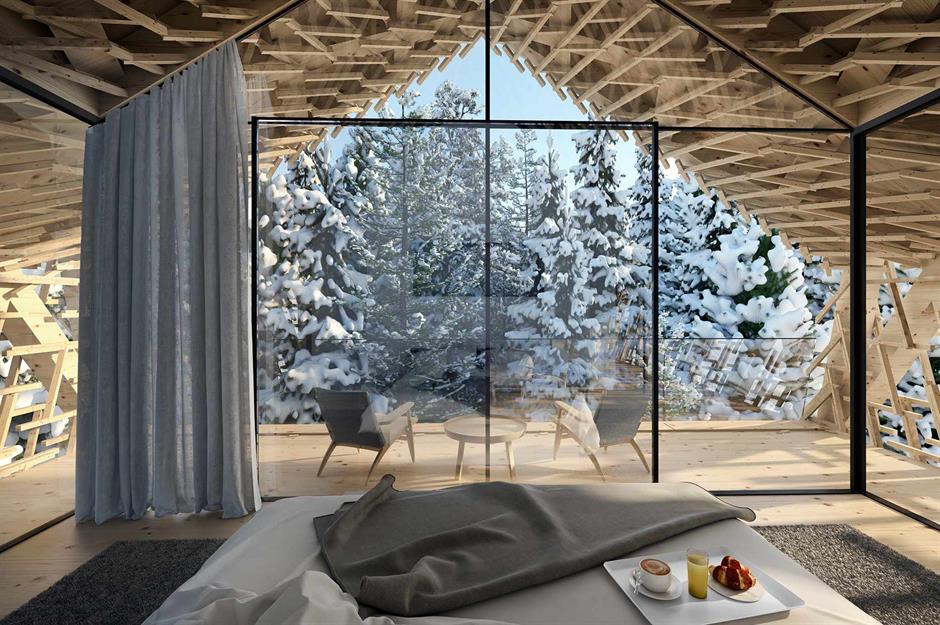
Each chalet will have a living room with a fireplace, a bedroom, and a large bathroom, complete with a freestanding bathtub, sauna, ice fountain, and experience shower.
Pictured here, renders for the sleeping zone show walls of floor-to-ceiling glazing framing the peaks of the surrounding trees. The intricacy of the woodwork becomes apparent in the overhang, which will shelter a glass-lined terrace.
Vertical chalets: an architectural marvel
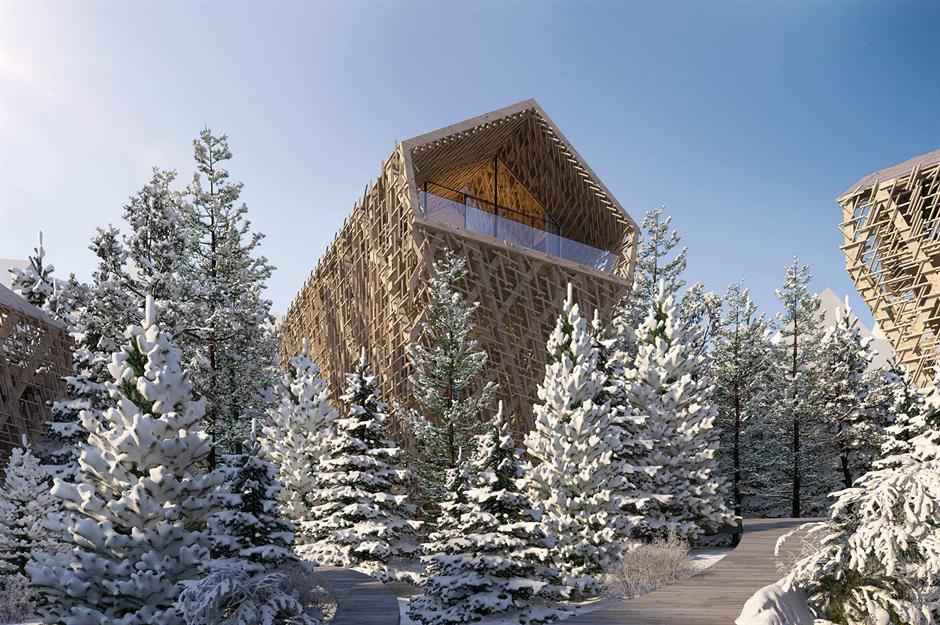
The intricate wooden exoskeleton that will support and encase the suites is nothing short of a work of art. As well as offering stability, the lattice structure will create privacy for holidaymakers, shielding them from the view of neighbouring chalets, while allowing natural light to filter into the living spaces.
Talk about living the high life!
Loved this? Discover more unusual homes around the world