How does the UK's retirement system rate against other nations?
Which countries boast the strongest pension systems in 2024?

The world is getting older. Consider this remarkable fact: for the first time in history, people over 65 outnumber children aged five or younger. Since many of them will be moving on from the workplace, it’s never been more important to provide secure pensions.
Unfortunately, this ageing demographic is making the world’s retirement systems ever more expensive and difficult to maintain. And as the Mercer CFA Global Pension Index demonstrates, there’s a massive disparity among them, with some schemes performing better than others.
The Mercer CFA Index ranks the efforts of retirement systems worldwide.
Click or scroll on to discover how 21 selected countries have performed, according to the most recent version, and see which nation comes out on top.
All dollar amounts in US dollars
How Mercer arrives at a score

Mercer arrives at its scores by considering each pension scheme against 3 sub-indices: Adequacy, Sustainability and Integrity. These aspects are weighted 40%, 35% and 25% respectively toward the final score.
Adequacy covers aspects such as the financial benefits the scheme offers, its design and any relevant context (for example, home ownership rates in the country concerned).
Sustainability includes the scheme’s accumulated assets, the level of debt in any given country and competing public spending demands. Lastly, Integrity measures the pension system’s governance and regulation, as well as the protection afforded to members.
Mercer also grades scores according to a letter system A to E, where A represents excellent pension schemes, and E denotes those that are poor quality, non-existent or still in the very early stages of development.
India: 43.8

Bottom of the most recent index is India, with an overall score of just 43.8 points. It fared particularly badly according to Mercer’s Adequacy measure, receiving the lowest score of any nation. However, it still escaped an E grade. Mercer’s bottom four countries all scored D, meaning their systems have some desirable features but also major weaknesses.
India’s index value has fallen from 45.9 in 2023, and Mercer says this was mainly due to decreases in the net pension replacement rates – in other words, pension benefits compared to pre-retirement income.
India's retirement system is complex and fragmented, with a wide variety of schemes. As Mercer notes, in a country with high rates of informal employment, coverage remains an issue.
Sponsored Content
South Korea: 53.9

South Korea has an index value of 52.2, almost two points higher than the last index and roughly equal to its mid-ranking Sustainability score of 53.3. The Integrity sub-index is valued at 76.8, but Adequacy is a comparatively poor 40.1.
South Korea combines a mandatory public earnings-related pension with statutory employer-sponsored retirement plans. Public pension benefits are based on both an individual's lifetime earnings and the average earnings of all insured members. The pension eligibility age is being gradually increased and will reach 65 by 2033.
Japan: 56.3

The median age in Japan has been increasing relentlessly for decades while its birth rate has plunged. The Japanese retirement income system includes a flat-rate basic pension payable at 65, an earnings-related public pension and various voluntary private plans.
Japan has increased its state pension age, but Mercer says it needs to do so again in line with rising life expectancy. Meanwhile, more people could be encouraged to enter private pension plans rather than rely on the state. Finally, Japan must reduce its sky-high government debt to release more money for pension provision.
Brazil: 56.2

Brazil has an index value of 56.2, a slight increase from its 2024 score. Its Adequacy and Integrity sub-indices hover around the 70 mark, but at just 31.8, its Sustainability is much less impressive.
Brazil has what the World Bank describes as quasi-universal old-age benefit coverage. Its retirement system features a combination of pay-as-you-go social security, voluntary corporate occupational pensions and individual pension plans.
Mercer believes that the occupational schemes would benefit from auto-enrolment to increase coverage, which would boost contribution and asset levels. A minimum access age for plans would also preserve benefits solely for retirement rather than being available for other uses.
Sponsored Content
Italy: 57.0

One of the lowest-ranking European countries (only Austria and Poland are placed lower), Italy manages 57.0 index points, up almost two points on its previous score. Adequacy and Integrity are not bad, at 69.4 and 77.8 points respectively, but at 27.9, Sustainability is the worst of all 52 countries surveyed.
The retirement income system is based around what Mercer describes as a notional defined contribution (DC) scheme. There’s also a basic social assistance benefit that's means-tested. Italy’s statutory retirement age is now 67, though there are earlier options for those with enough pension contributions.
According to Mercer, Italy needs to avoid problems in the long term by getting more people into occupational schemes, boosting participation in schemes at older ages to match life expectancy, and restricting benefits taken before retirement. Another big requirement is to tackle the country’s enormous national debt and reduce government spending on pensions relative to the size of the economy.
USA: 61.1

The American index value has increased from 60.4 in 2024 to 61.1 in the latest index due to updated economic growth data from the IMF. The Integrity sub-index is also keeping the overall score down: at just 58, it ranks a dismal third from bottom.
America's public retirement offering features a social security system with benefits based on lifetime earnings, adjusted to today’s prices. The statutory retirement age is between 65 and 67, depending on your date of birth. Meanwhile, DC schemes dominate the private workplace pensions sector, and you must begin to take them by the age of 73. You don’t have to take the benefits as an annuity though, and many people withdraw them as a lump sum or in instalments.
Mercer suggests the US should raise the minimum pension available to the poorest pensioners. It also wants to see a statutory requirement for at least part of those DC schemes to be taken as an income stream.
Spain: 63.8

Spain's overall score has risen from 61.6 in 2023 to 63.8 today, thanks to an increase in the base pension and new economic growth data. The retirement system here is based on an earnings-related public pension alongside a minimum means-tested social assistance benefit. Voluntary personal and occupational pensions are also available, but they don’t cover many people.
Spain passed laws in 2022 to promote these occupational schemes, and Mercer thinks it should continue to encourage them, possibly by introducing automatic enrolment. It would also like to see scheme membership continue at older ages as life expectancy increases, along with a legal requirement to take retirement benefits as an income stream rather than as a lump sum in most cases.
Sponsored Content
Germany: 67.8

With Germany, we come to the group of countries that Mercer grades as B/B+, meaning their retirement systems have "sound structure, with many good features but … some areas for improvement". At 67.8, the German index value is up slightly on its previous score. It scores highly for Integrity at 75, and its Adequacy rating is in the top 10, at 81. However, it scores just 47.5 for Sustainability.
Germany’s retirement system comprises a public pension scheme that's mandatory for employees, excluding the self-employed or civil servants, who have their own scheme. There’s also a safety net for the poorest. On top of the public offering, occupational pensions are common and voluntary private schemes are available too.
Germany is changing its previous pension age of 65, and those born in or after 1964 will now access benefits at 67. As the population grows older, Mercer suggests increasing contribution levels in private pensions and increasing the coverage of occupational schemes to boost that Sustainability figure.
Liking this? Click the Like button above. And click the Follow button above for more great stories from loveMONEY
Mexico: 69.3

The basic pension in Mexico is a universal means-tested safety net scheme funded by the federal budget. In addition, the DC system includes a minimum pension set to Mexico City’s minimum wage that's mandatory for employees. Voluntary occupational schemes are also available, and the retirement age is 65.
Mercer would like to see continued increases to the universal pension and more assets accumulated. However, its other recommendation is on the Integrity side: greater protection of accrued benefits and a requirement to show future income projections on annual statements.
France: 70.3

France is another European country with generous pensions. At 85.2, its system scores high for Adequacy – third only to Kuwait, and the country that ranks first overall. Its Integrity index of 76.8 is in mid-table territory but, like Germany, its Sustainability is low. This brings the overall index value down to 70.3 points.
The French retire using an earnings-related public pension that features a minimum pension. There’s an additional pension scheme for private-sector workers, plus voluntary occupational plans. The retirement age has risen from 62, but only to 64.
According to Mercer, the country needs to increase its level of funded contributions to build up more assets in the system. Better communication with members is another recommendation. But the main takeaway is that France should somehow reduce the amount of public money it spends on pensions. Given the protests that met a modest increase in the pension age, this is likely to be a difficult task.
Sponsored Content
Canada: 70.4

The Canadian index value is up from 68.4 to 70.4 in the latest index. Canada has a range of schemes. There’s a universal flat-rate pension with a means-tested income supplement and a national system that provides earnings-related pensions. Among the voluntary schemes, many occupational plans are defined benefit (DB), but Mercer reports that DC prevalence is increasing in common with many other parts of the world. Some Canadians opt for individual voluntary retirement plans. The normal retirement age is 65 years old.
Mercer’s suggestions for improving the retirement system include boosting domestic savings and reducing household debt. Meanwhile, Canada’s government debt also needs to go down.
UK: 72.2
Updated economic growth data means the UK index value has risen from 71.6 to 72.2 in the most recent index, putting it in 12th place overall. Its Adequacy, Sustainability and Integrity sub-indices all rank respectably enough.
The country’s retirement system is based around a universal state pension that's fixed in value for most new retirees. For the less well-off, there’s also an income-tested pension credit. Many people have some form of voluntary occupational or personal pension, and all new employees are auto-enrolled in a workplace pension with a minimum 8% contribution rate, though they can subsequently opt out.
The UK pension age began rising earlier this year and will reach 67 in 2028. However, there is no prescribed retirement age. Mercer sees potential improvements in making it compulsory to take part of retirement benefits as an income stream and increasing the number of employees and the self-employed in private pension schemes. It also suggests increasing contribution levels for auto-enrolled staff and tackling the UK’s high levels of household debt.
Switzerland: 72.4

Switzerland takes 11th place in the Mercer Index with 72.4 points. Switzerland has an earnings-related public pension scheme and a mandatory occupational system whose contribution rates rise with age. In addition, there are voluntary pension plans where savers can benefit from tax advantages. The normal retirement age is 65 and voters recently rejected raising it to 66 in a referendum. The same poll backed a proposal to add a 13th pension payment each year to tackle the cost-of-living crisis.
Nevertheless, Mercer suggests that the pension age should rise over time and recommends making it compulsory for retirees to take part of the benefits as an income stream.
Sponsored Content
Norway: 76.0

A wealthy country, Norway's retirement system is rated just outside the top 10 for Adequacy at 77.8, and its Sustainability sub-index achieves 65.2 – not top-rated but well within the top third. Meanwhile, Integrity is an impressive 88.4.
Norway’s retirement system is based on a universal earnings-related pension, which features a minimum pension level and mandatory occupational plans. Private voluntary schemes offer a further tier of saving. The retirement age is flexible and you can draw pensions between the ages of 62 and 75, with 67 the normal age and pensions adjusted accordingly.
Despite its good performance, Mercer believes improvements could still be made by raising household savings, reducing debt and making rules to protect pension interests when people get divorced.
Chile: 76.6

Chile is one of the most eye-catching performers in recent years, and it’s also the highest-ranked South American country.
The Chilean score has risen because of increases in the base pension and net pension replacement rates. Imposing a retirement age of 65 for men and 60 for women, Chile’s system features a nearly universal social pension and a mandatory DC system managed in the private sector, which sees employees contribute to individual accounts managed by dedicated administrators. The system scores a highly respectable 86.6 on its Integrity sub-index.
Even so, Mercer has suggested ways to improve the Chilean system. It recommends further increasing the minimum level of support for the poorest and introducing government payments to cover missed pension contributions for those caring for young children.
Australia: 77.6

In seventh place overall, Australia’s index value has edged up slightly since 2024 because of an increase in the mandatory contributions set
aside for future retirement benefits
In Australia, taxpayers fund a means-tested old age pension, but people must also pay into mandatory private-sector occupational schemes. Meanwhile, employers, employees and the self-employed can make additional contributions into private-sector plans if they wish. The usual pension age is 67.
Mercer's suggestions for improving the system include introducing a government contribution to the pension funds of primary carers of children and altering the means test on the public pension to increase its replacement rate.
Sponsored Content
Israel: 80.3

With an index value of 80.3, Israel is the first country that Mercer categorises as A, meaning it has a "first-class and robust retirement income system that delivers good benefits, is sustainable and has a high level of integrity". Israel is ranked fifth overall, and its Sustainability sub-index does even better, coming in third with 83.2.
The country’s retirement system features a universal public pension and an income-tested supplement, plus private pensions that employers and employees must pay into. The normal retirement age is 67 for men and 62 for women. Mercer suggests reducing government debt and bolstering fraud protection within private pension plans to improve the system further.
Singapore: 80.8

The highest-ranked Asian country, Singapore scores a very respectable 80.8 overall and its index value has increased since 2024. Its Sustainability sub-index score of 75.5 puts it firmly in the top 10 of Mercer’s sample countries.
The Lion City uses an investment vehicle called the Central Provident Fund (CPF). All citizens and permanent residents must pay into it and while some of the accrued savings can be withdrawn early for specific purposes such as buying accommodation or medical care, others are ringfenced for retirement. A minimum amount must be drawn down as a lifetime income stream, and the retirement age is between 65 and 70.
Mercer suggests improving the system by opening the CPF to non-residents since they make up a significant part of the labour force and raising the age at which CPF members can access their retirement funds. Introducing a requirement to show income projections on members’ annual statements would also be helpful.
Denmark: 82.3
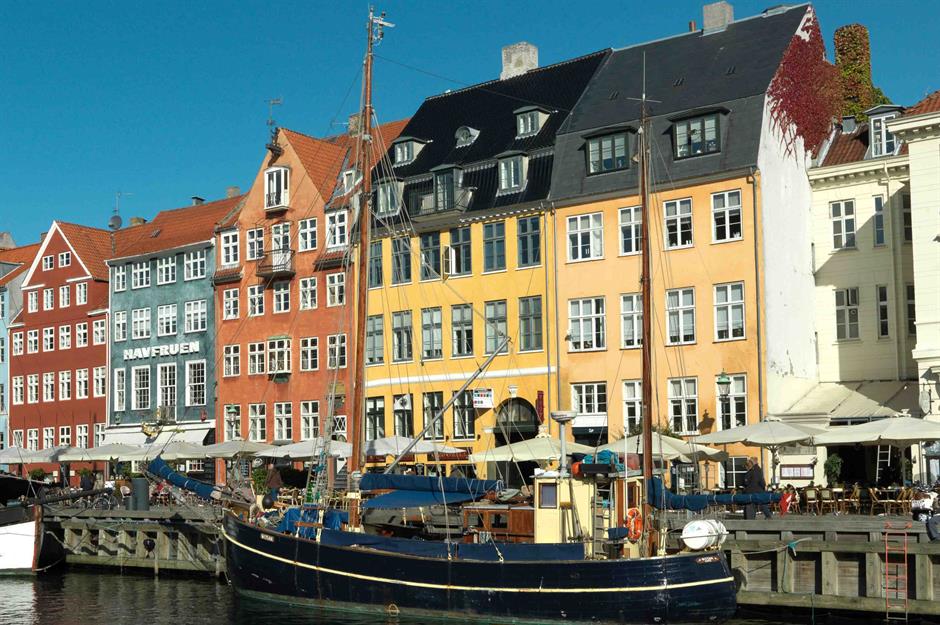
Third place in the Mercer Index goes to Denmark with a value of 82.3. Its Adequacy score is even higher at 82.9, while Sustainability is higher still at 85. Integrity, though by no means poor, is less impressive at 77.6.
The Scandinavian country’s retirement income system boasts a state basic pension with a means-tested supplementary benefit, a fully funded DC scheme that gives lifelong pensions and mandatory occupational DC schemes. The normal retirement age is currently 67.
To improve the nation's Integrity category, Mercer suggests protecting individuals’ pension interests in divorce proceedings, and requiring all pensions to report annually to their members and show annual income predictions on statements.
Sponsored Content
Iceland: 84.0

Iceland is the runner-up in the most recent index, scoring 84.0 points overall and achieving top 10 rankings in all its sub-indices. Its retirement system consists of a basic state pension and a pension supplement, both income-tested according to different rules, and mandatory occupational private pension schemes with contributions from both employers and employees. Voluntary personal pensions complete the picture. The retirement age is flexible, with people allowed to draw their pensions between the ages of 65 and 70.
According to Mercer, there’s still room for improvement. Reducing both government and household debt would help, while divorcing couples should have their individual pension interests protected.
Netherlands: 85.4

Once again, the top-ranking pension system belongs to the Netherlands. With an overall index score of 85.4, it has almost twice as many points as that of lowest-ranked India. The system consists of a flat-rate public pension and quasi-mandatory earnings-related occupational pension schemes. Normal retirement age is 68, but benefits are available up to 10 years earlier or five years later, giving a remarkable degree of flexibility.
The Netherlands shows that, even as populations age, high-quality pensions remain possible. But while you might think such a world-beating system is hard to improve, Mercer still suggests one or two tweaks. These include introducing carers’ pension credits and better protection of accrued benefits. Even the best, it seems, can be made better.
Liked this? Click the Like button above. And click the Follow button above for more great stories from loveMONEY