18 incredible projects that never left the drawing board
Incredible projects that failed to come to fruition
The world could have looked very different if these fantastical megaprojects had made it past the drawing board. Instead, constructions that would have changed the landscapes of cities – and pushed the boundaries of human ingenuity – have been long forgotten.
Read on to discover 18 astonishing developments that never happened, for good or bad...
All dollar amounts in US dollars.
Twin London Bridges, London, UK
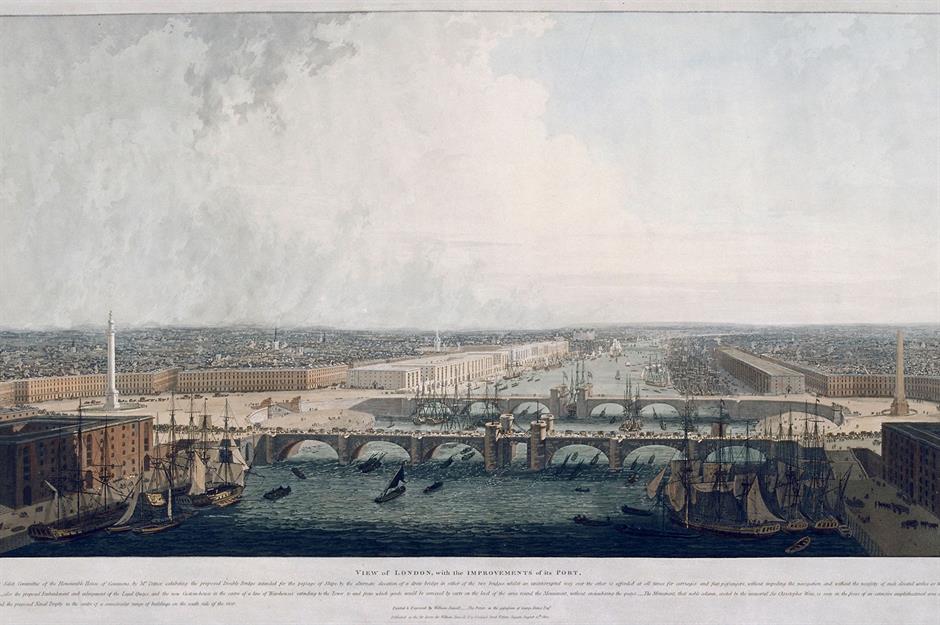
In 1799, a competition was held to design a replacement for the medieval London Bridge. Among the proposals was this idea by George Dance the Younger, who envisaged two bridges 300 feet apart, with one reserved for northbound traffic and the other for traffic flowing south of the river.
Most striking of all were the two sweeping piazzas on either side of the bridges. The proposal was rejected in favor of John Rennie's more conventional design.
Trafalgar Square pyramid, London, UK
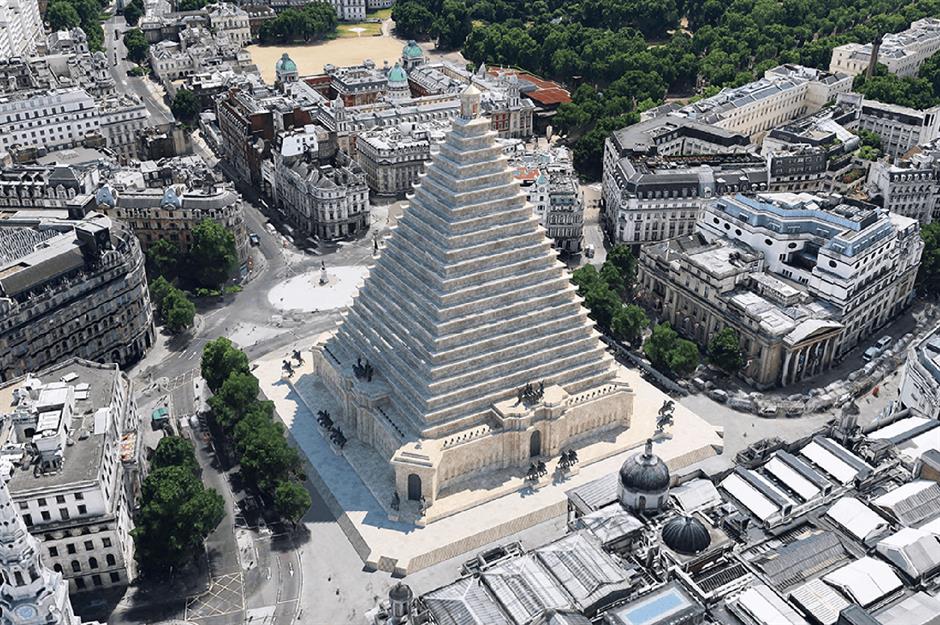
Championed by MP Sir Frederick William Trench, plans for this bizarre 300-foot pyramid on Trafalgar Square made it all the way to a public exhibition in 1815, but the construction cost estimate – the equivalent of around $150 million in today's money – proved too much.
Instead, the land was cleared, and Nelson's Column was erected on the site. This image, commissioned by Barratt Homes, shows how the 22-step pyramid would have looked.
Sponsored Content
Crystal Palace Tower, London, UK
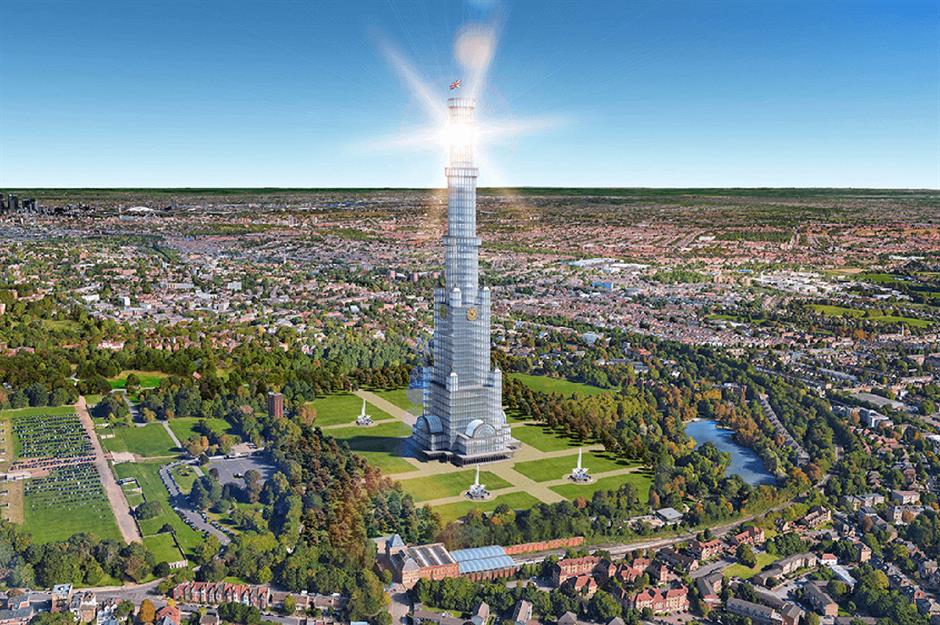
London's vast glass and iron Crystal Palace was built in Hyde Park for the Great Exhibition of 1851 and moved to Sydenham in South London when the exhibition finished. Before the structure was relocated, architect Charles Burton proposed transforming it into a 1,000-foot proto-skyscraper.
The building may have seemed like a good idea at the time, but it almost certainly would have toppled to the ground under its own weight.
Arcade Railway, New York, USA
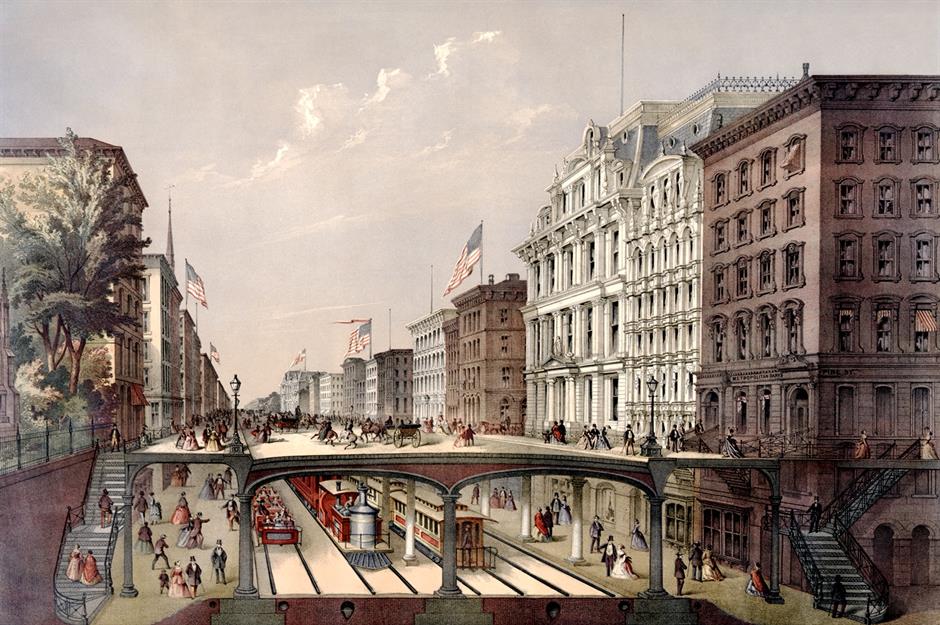
New York's first subway of sorts dates back to an 1867 article in Scientific American Magazine. Dubbed the 'Arcade Railway', the visionaries behind this megaproject called for a repurposing of the city's roads as railways, and the construction of raised canopies for carriages and pedestrians.
However, believing it would harm sales, business owners opposed the idea and the plan was scrapped.
Roosevelt Island Civic Center, New York, USA
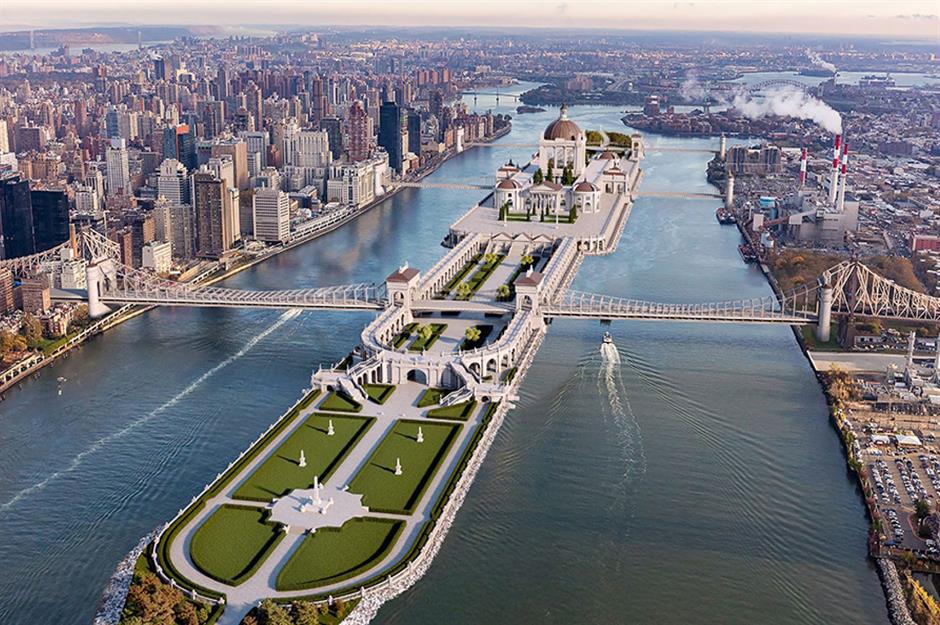
Now home to numerous nondescript condominium blocks, New York's Roosevelt Island was packed with prisons, asylums, quarantine centers, and a workhouse at the turn of the 20th century, when it was called Blackwell's Island. Eager to transform the depressing area, architect Thomas J. George came up with a design in 1904 for a Neoclassical civic complex including a bridge crossing the river.
Unfortunately, it was considered too idealistic and possibly even a publicity stunt for George's firm, which snapped up the contract to design the iconic Art Deco-style City Services Building (now known as 70 Pine) in Manhattan.
Sponsored Content
Coney Island Globe Tower, New York, USA
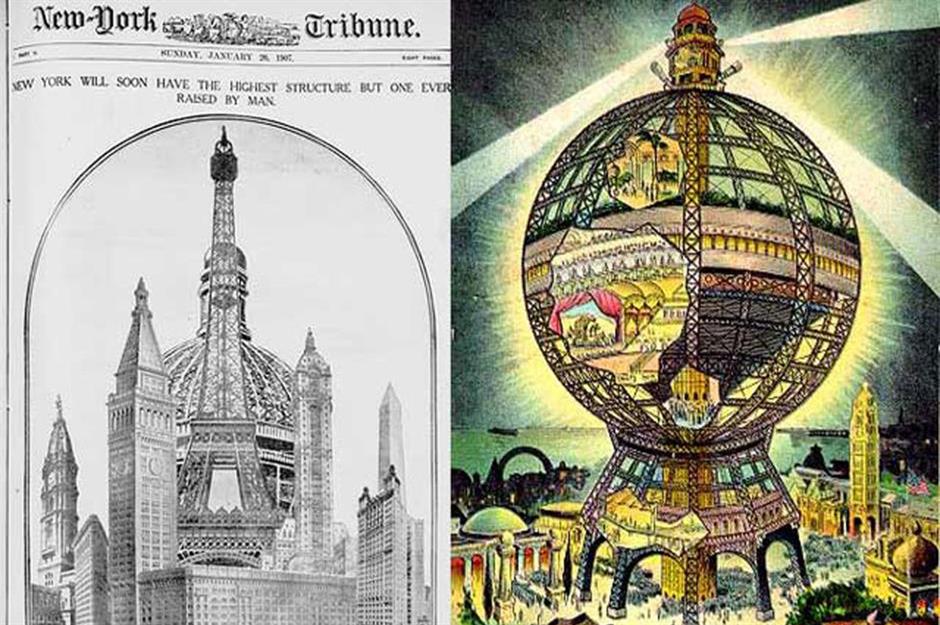
Architect Samuel Friede caused a stir in May 1906 when he published his astonishing plans to build a 700-foot dome in Coney Island. The building was intended to house the world's largest theme park, a hotel, casinos, and a roller rink.
Friede set out to raise $1.5 million – around $54 million in today's money – offering investors unrealistic returns to secure their cash. The project experienced delay after delay, and in 1908, it was revealed to be an elaborate fraud.
Burnham Plan, Chicago, USA
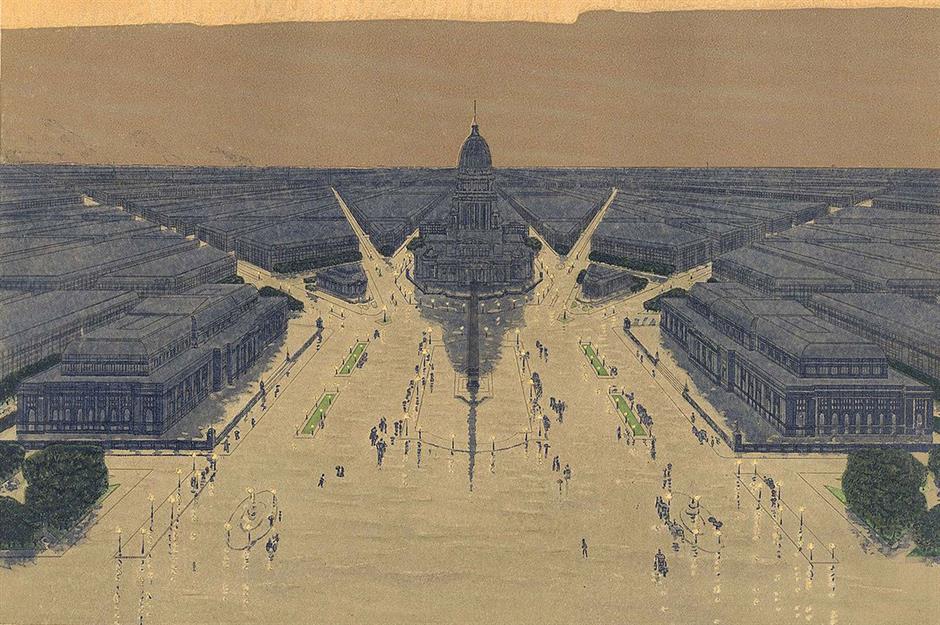
Chicago might have been nicknamed Paris on the Prairie had Daniel Burnham's groundbreaking 1909 plan been fully realized. The eminent architect strove to beautify the Windy City with Neoclassical civic buildings, grand piazzas, broad avenues, and expansive parks.
Some aspects of the plan were implemented, but Burnham's vision fell out of favor during the Great Depression.
Lincoln Memorial pyramid, Washington DC, USA
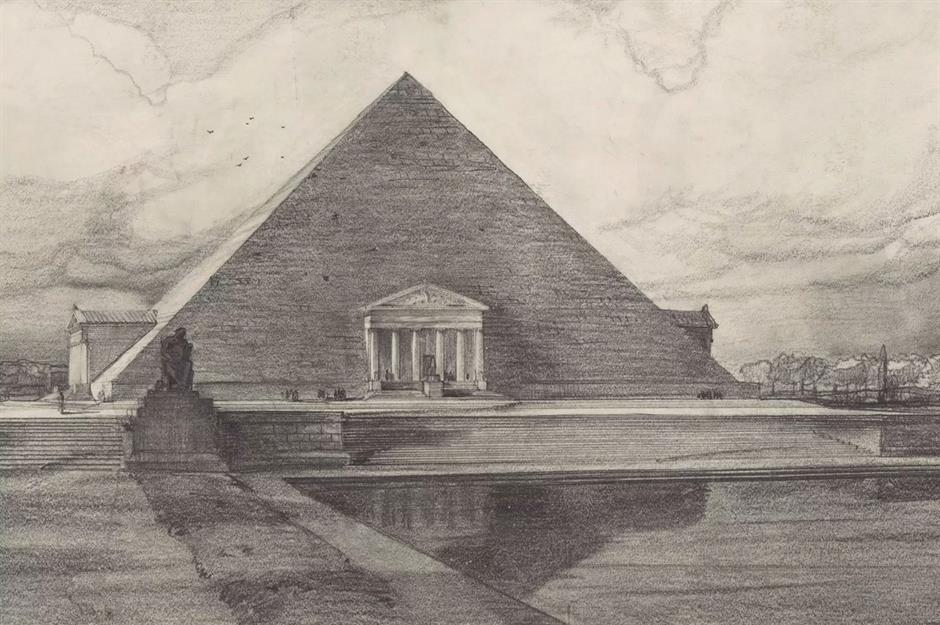
The 1911 competition to design a Washington DC memorial to President Abraham Lincoln was hotly contested but eventually whittled down to two famed architects: Henry Bacon and John Russell Pope.
The latter proposed several jaw-dropping designs, including a ziggurat, a Mayan temple, and this pyramid creation. Bacon ultimately won out with his Greek Doric temple design.
Liking this? Click the Like button above. And click the Follow button above for more great stories from loveMONEY
Sponsored Content
Plan Macià, Barcelona, Spain
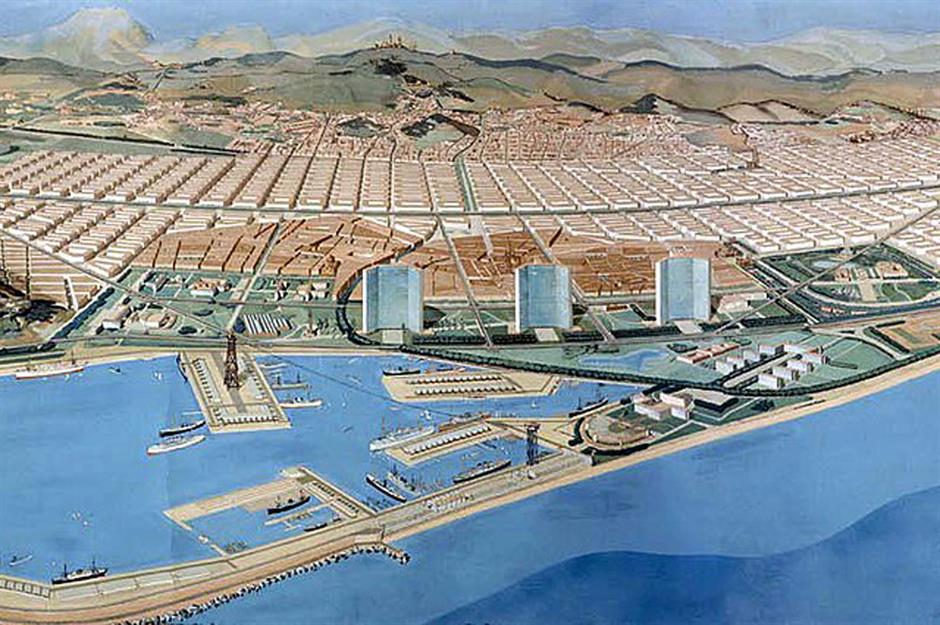
During the early 1930s, Le Corbusier brought his brutalist vision to Barcelona. He planned to demolish the city's Eixample district – which abounds with wonderful Art Nouveau buildings – and replace it with sterile high-rise blocks and expansive green spaces.
The Plan Macià, as the proposal was called, was ultimately thwarted by the Spanish Civil War and the ensuing Franco dictatorship. This resulted in the wilful neglect of the city center, which some might see as a blessing in disguise.
Palace of the Soviets, Moscow, Russia
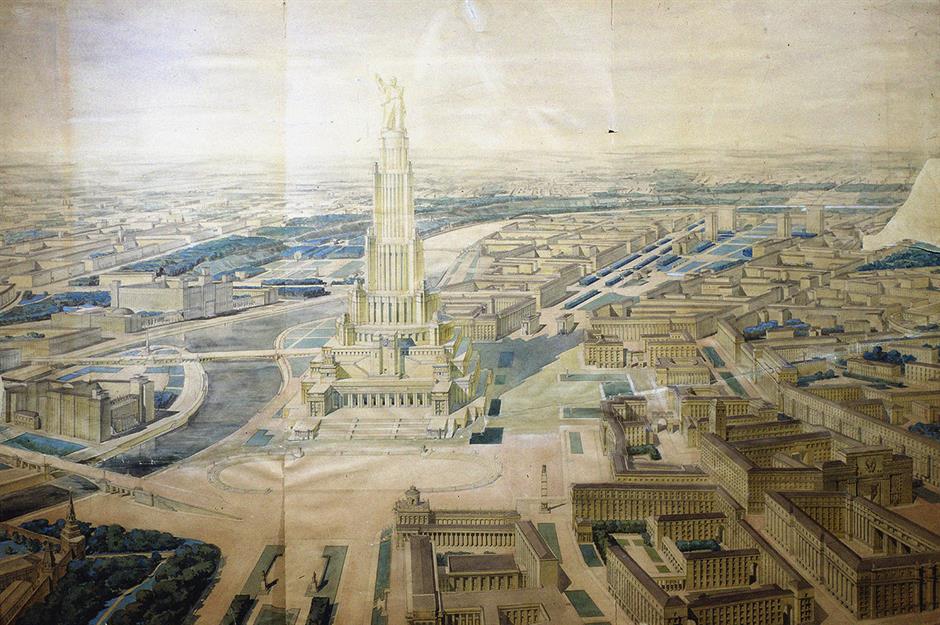
In the early 1930s, Neoclassical architect Boris Iofan won a competition to build Moscow's Palace of the Soviets, a gigantic 1,624-foot structure topped with a colossal statue of Lenin. The edifice was to be built on the site of the Christ the Saviour Cathedral, which was bulldozed in 1931 in preparation for its construction.
Work began in 1937 but stopped during World War II and was later abandoned. The cathedral was painstakingly rebuilt in the late 1990s.
Westminster Airport, London, UK
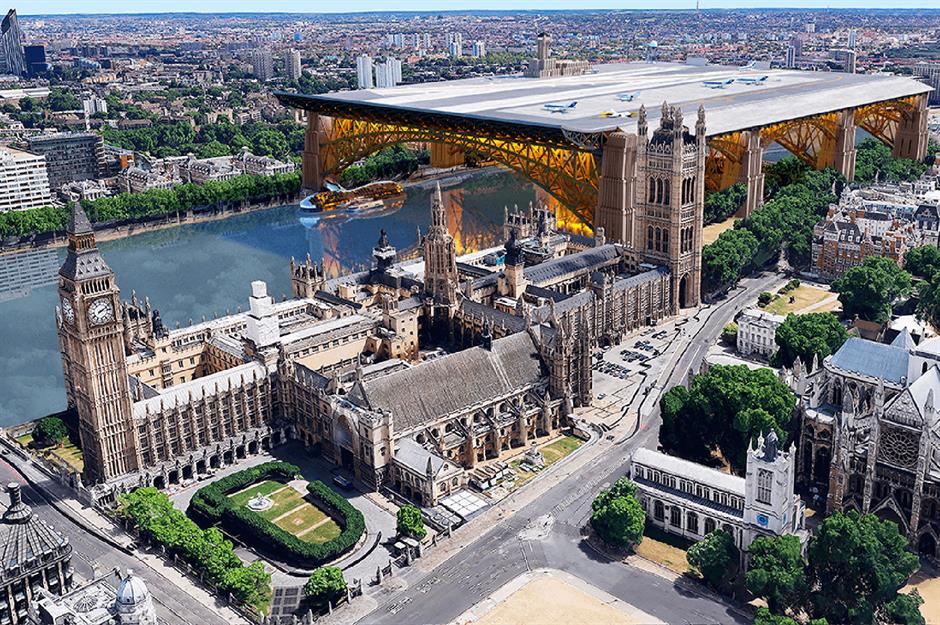
A wacky idea for an elevated airport straddling the River Thames at Westminster appeared in Popular Science magazine back in 1934. This render by Barratt Homes shows how it might have looked.
Though clearly unfeasible, the megaproject was realized in some form with the completion of London City Airport in 1987.
Sponsored Content
Trans-Saharan Railway, Algeria/French West Africa
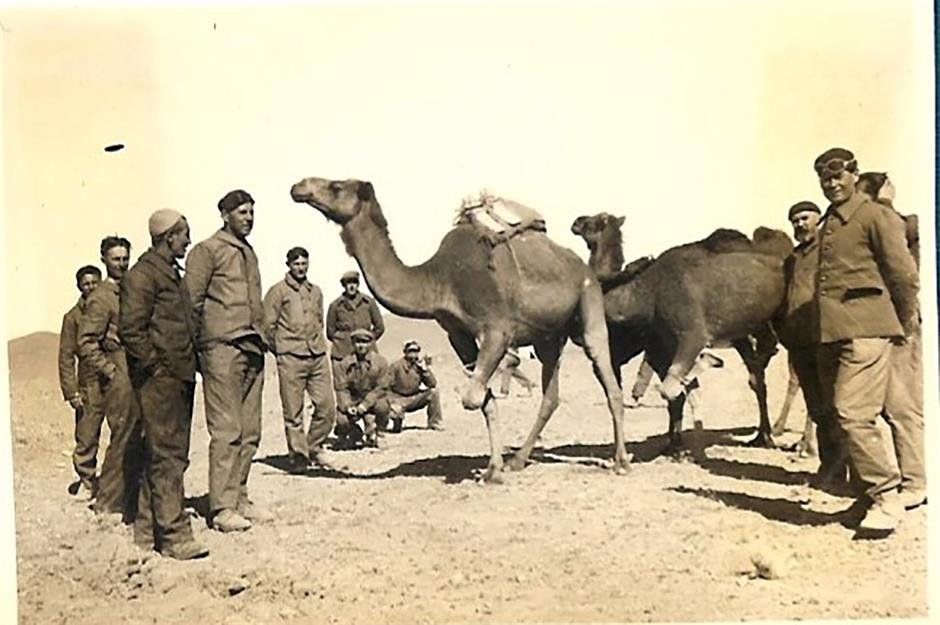
First proposed in the 1870s, plans for a railway traversing the Sahara Desert were embraced by Vichy France during World War II, and work began on the megaproject in 1941.
Collaborating with the Nazis, the Vichy government used forced labor, and many workers died constructing the link between the north and south of Africa. Only a few miles of the line were completed before the project was abandoned in 1944.
Manhattan airport, New York, USA
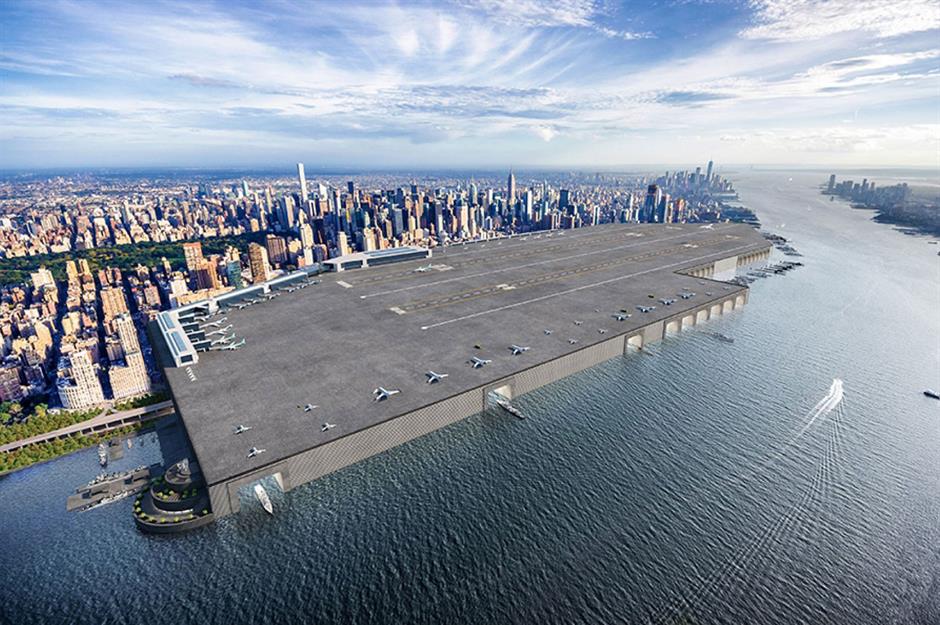
An airport on a roof covering 144 blocks in Midtown Manhattan – what could possibly go wrong? This bizarre plan was the brainchild of real estate developer William Zeckendorf and featured in a 1946 issue of Life magazine.
As might have been expected, the projected $3 billion price tag ($49bn in today's money), not to mention the massive disruption the megaproject would have caused, scuppered Zeckendorf's dream.
The Illinois, Chicago, USA

Soaring majestically into the Chicago sky, this mile-high Illinois skyscraper was designed by renowned architect Frank Lloyd Wright in 1956.
Unfeasible, impractical, and outrageously expensive, Wright's supertall skyscraper was never built. Its spirit lives on in the current tallest building in the world, Dubai's Burj Khalifa, which it partly inspired.
Sponsored Content
Manhattan Dome, New York City, USA

In 1960, trailblazing engineer Buckminster Fuller conjured up a geodesic dome spanning Midtown Manhattan that would regulate weather and the city's ecosystem.
Taking up two miles of the island, the mile-high dome would have warmed the city in winter, cooled it in summer, and cleaned the air. Though a fascinating futuristic idea, the megaproject was completely unfeasible on such a scale. Buckminster Fuller is pictured here during the construction of a similar, much smaller dome.
Regent Street monorail, London, UK
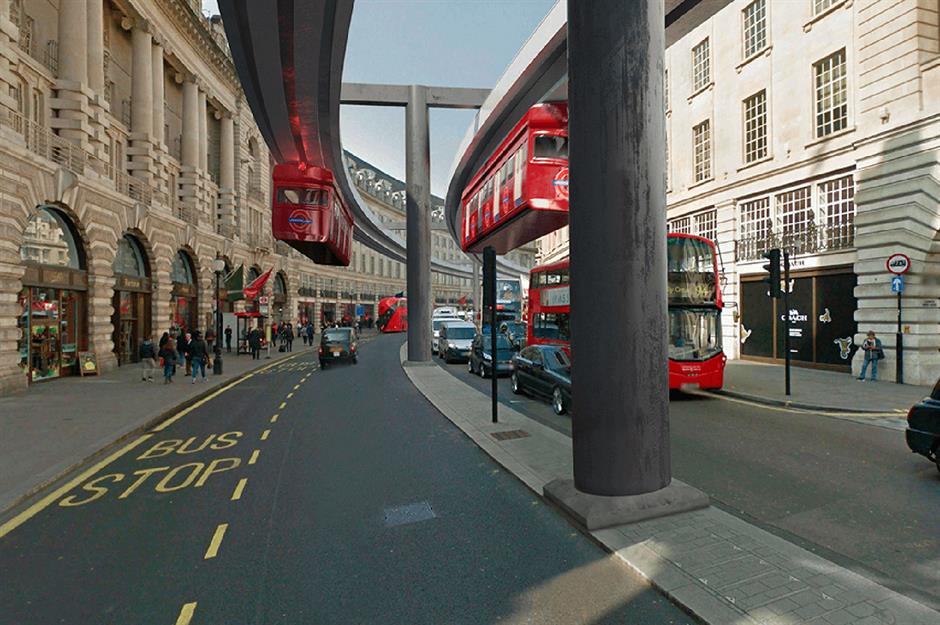
During the 1960s, the use of public transport in London began to fall while more cars on the roads led to a surge in traffic. As a result, plans were floated for a monorail system to ease congestion on the city's busiest streets.
The UK capital appears to have dodged a bullet. Proposals for the clunky, concrete monorail on Regent Street, which would connect Piccadilly and Oxford Circuses, would have blocked the views of the beautiful, elegant buildings that make up the roads. The council ultimately decided against the odd idea.
Nakheel Tower, Dubai, UAE
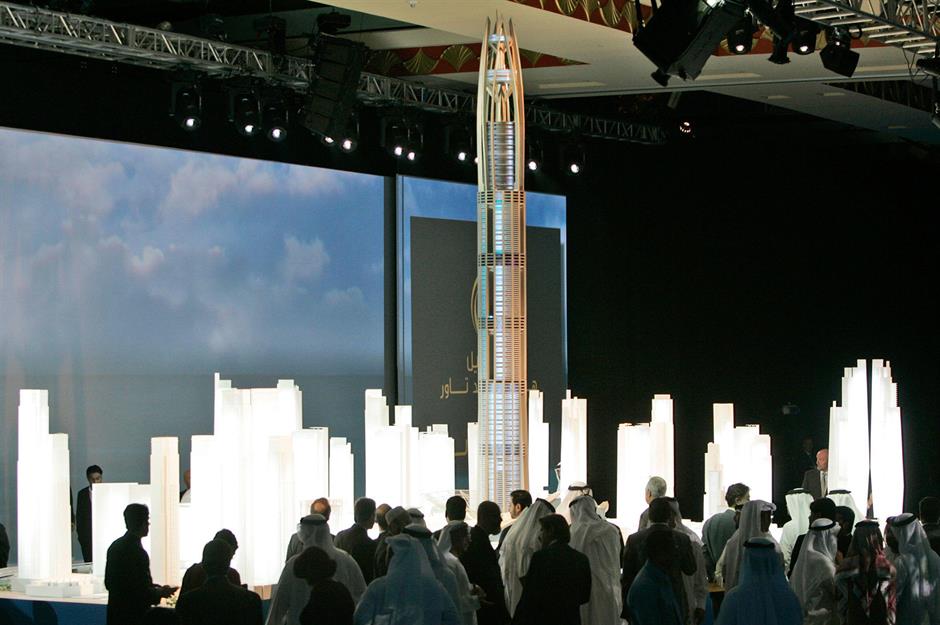
Soaring 3,300 feet into the clouds, Dubai's Nakheel Tower would have been the tallest structure on the planet, easily surpassing the UAE's Burj Khalifa and the first to rise more than a mile and a half.
Proposed in 2002, the 200-story skyscraper had an estimated completion date of 2020. However, it fell victim to the financial crisis, which decimated the Dubai real estate market. It was canceled in early 2009.
Sponsored Content
Sky Mile Tower, Tokyo, Japan

An exceedingly ambitious mega-structure proposed for Tokyo, Sky Mile Tower, which, as the name suggests, would stand a mile tall, was conceived in 2016 by US architecture firm Kohn Pedersen Fox.
The 420-story eco-skyscraper would feature everything from floating farms to feed its 55,000 inhabitants to technology that could harvest water from clouds. However, the chances of it ever being built are very slim indeed.
Liked this? Click the Like button above. And click the Follow button above for more great stories from loveMONEY
Now discover the ultimate megaprojects: 13 cities being built from scratch