11 billion-dollar industries that didn't exist 20 years ago
Blockbuster sectors less than two decades old

Back in 2006, the world still ran on flip phones and desktop internet. The idea of an AI that could solve complex equations, clone a person's voice or create a cinematic video in mere seconds would have seemed ultra-futuristic. And a 'magic' injection that could help you lose huge amounts of weight might have sounded like science fiction.
Yet in just two decades, emerging technologies have created massive new markets worth billions of dollars.
Click or scroll on to discover 11 major industries that weren't around 20 years ago but now define the modern economy.
Market size estimates from Grand View Research. All dollar values in US dollars
Generative AI

Generative AI burst onto the scene in November 2022 with the launch of ChatGPT, which stunned users by showing AI could write essays, generate images and even produce working software code in seconds. Two decades earlier, the deep-learning techniques behind these systems were still being figured out in research labs.
Generative AI has become the fastest-adopted technology in history. Needless to say, growth is poised to be explosive. Worth $22.2 billion (£16.8bn) in 2025, the sector is projected to reach a phenomenal $324.7 billion (£240.9bn) valuation by 2033.
Commercial drones

Commercial drones were just getting off the ground in 2006. In that year, the US Federal Aviation Administration issued its first permit for a commercial drone operation, marking a pivotal step towards civilian use of unmanned aerial vehicles. It also saw the founding of Chinese drone maker DJI, which would go on to dominate the global consumer and professional market.
Fast-forward two decades and commercial drones are used across numerous industries and by hobbyists worldwide, with the sector estimated to be worth over $30 billion (£22.3bn) in 2025.
Sponsored Content
Influencer marketing

The influencer marketing industry traces its roots to the mid-2000s, when early 'mommy bloggers' built loyal online audiences and began partnering with brands to promote products. These bloggers pioneered a new model of advertising based on personal recommendations rather than traditional ads.
Social media turbocharged the trend, creating a new class of influencers across platforms such as Instagram, YouTube and TikTok. Nowadays, brands routinely pay creators to promote products to their followers, turning influencer marketing into a major concern worth over $34 billion (£25.3bn) in 2025.
Ride-hailing
Ride-hailing became a thing in the late 2000s as smartphones made it possible to connect drivers and passengers instantly through an app. The first platform to gain real traction was Uber. Launched in San Francisco in 2009, it replaced the traditional taxi dispatch model with a real-time, algorithm-driven marketplace, something that would have been impossible before the launch of the iPhone in 2007.
Uber and its rivals like Lyft and DiDi have gone on to conquer the world. Last year, the sector was valued at $47.6 billion (£35.6bn), and it's expected to grow by an impressive 18.6% on average a year through to 2033.
Liking this? Click the Like button above. And click the Follow button above for more great stories from loveMONEY
Weight-loss drugs
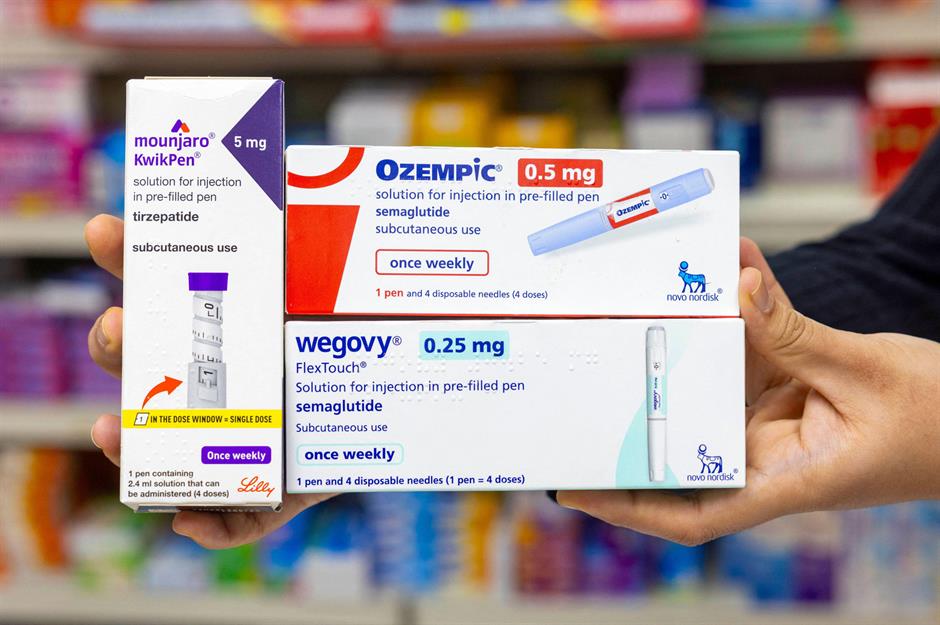
The modern weight-loss drug boom centres on GLP-1 receptor agonists, weekly injections that suppress appetite and drive dramatic weight loss. Drugs such as Novo Nordisk's Ozempic and Wegovy, and Eli Lilly's Mounjaro and Zepbound, have turned the discovery into one of the biggest pharmaceutical success stories in decades.
Originally developed as diabetes treatments in the 2000s, the drugs went mainstream in the early 2020s, buoyed along by wow-factor clinical trials and intense media buzz. Last year, the market was worth an estimated $70 billion (£52bn), with the figure set to surpass $200 billion (£148bn) by 2033.
Sponsored Content
Mobile-first payments

Another industry made possible by the arrival of the iPhone in 2007 is mobile-first payments. With smartphones boasting digital wallets, services like Apple Pay, Google Pay, and Venmo arrived, allowing users to tap their phones, scan QR codes, or send money instantly. This would have been unimaginable in the era of cash, cards, and desktop banking.
Billions of people pay directly from their phones these days, and the global market is now estimated to be worth over $100 billion (£74.3bn).
Streaming

Streaming barely existed as a way to watch entertainment 20 years ago. That changed in 2007 when Netflix launched its online service, allowing movies and TV shows to be watched instantly over the internet rather than downloaded or played from DVDs.
The model rapidly reshaped the entertainment industry, spawning rivals such as Amazon Prime Video, Disney+ and HBO Max, and ushering in the era of binge-watching and streaming wars. Last year, the industry was worth an estimated $157 billion (£116.6bn), with the number expected to top $400 billion (£297.2bn) by 2030.
Mobile apps

Yet another industry born from the iPhone, the mobile app economy began in 2008 with the launch of Apple’s App Store, which allowed third-party developers to distribute software directly to smartphones. Google soon followed with its Android marketplace, and the new ecosystem quickly took off.
Less than two decades later, apps power everything from messaging and gaming to banking and shopping. The mobile app industry is now estimated to be worth over $300 billion (£226bn), fuelled by billions of smartphone users and revenues from subscriptions, advertising and in-app purchases.
Sponsored Content
On-demand food delivery

The arrival of the iPhone in 2007 and the smartphone revolution it sparked transformed food delivery as well. Instead of phoning a local restaurant, customers could suddenly browse menus, order and track meals in real time through apps. Platforms such as Uber Eats, DoorDash, Deliveroo and Grab turned takeaway into a global, app-powered marketplace.
On-demand food delivery is now a monster global industry with an estimated value of $400 billion (£301bn).
Cloud computing

The year 2006 has been dubbed the 'big bang moment' for cloud computing. Amazon launched its game-changing Amazon Web Services (AWS) platform exactly two decades ago. Before this, companies typically had to buy, run and maintain their own physical servers and data centres.
Cloud computing changed that model by letting businesses rent computing power, storage and software over the internet instead. The industry has grown spectacularly over the past 20 years, with its value flirting with the trillion-dollar mark in 2026.
Cryptocurrency

The cryptocurrency industry began in 2008 when the mysterious figure Satoshi Nakamoto published the Bitcoin whitepaper, outlining a decentralised digital currency that could operate without banks or governments. The first Bitcoin was mined the following year, launching a brand new financial sector based on blockchain technology.
What started out as an experimental digital currency has since grown into a vast ecosystem of cryptocurrencies and blockchain projects. Last year, the crypto market hit a peak valuation of over $4 trillion (£3.2tn), more than the GDP of the UK. An astonishing figure for an industry that wasn't even on the radar 20 years ago.
Liked this? Click the Like button above. And click the Follow button above for more great stories from loveMONEY