Inside the diamond mining town consumed by sand dunes
Tour the diamond-mining ghost town swallowed by sand
Diamond rush
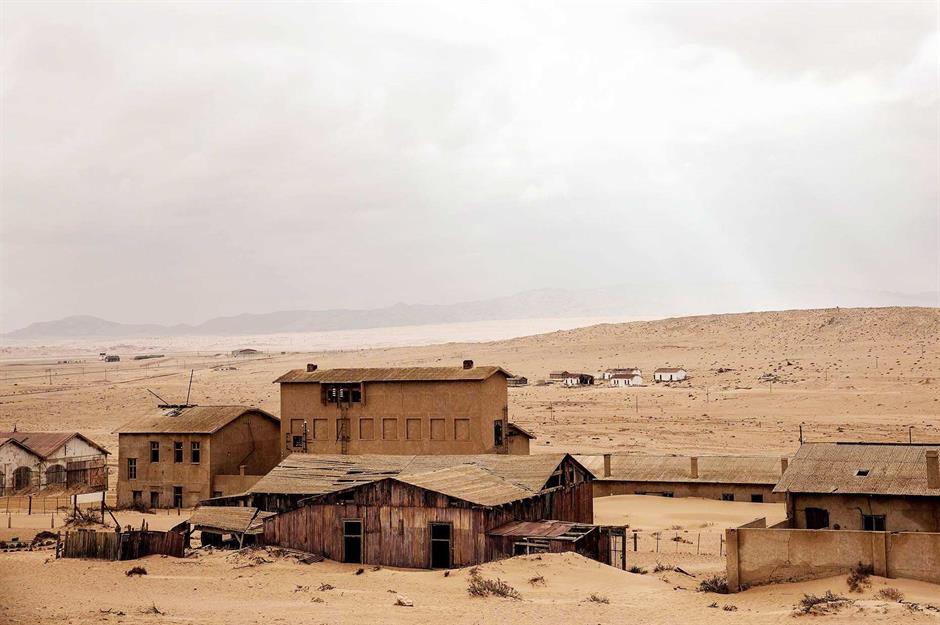
In 1908, local railway worker Zacherias Lewala discovered rough diamonds while digging track in a desolate part of Namibia, which was under German colonial rule. The find sparked a diamond rush in German South West Africa, with the authorities claiming the spoils. Indigenous tribespeople were displaced or hired as cheap labor and a fully-fledged town soon sprang up in the middle of the desert.
Boom town
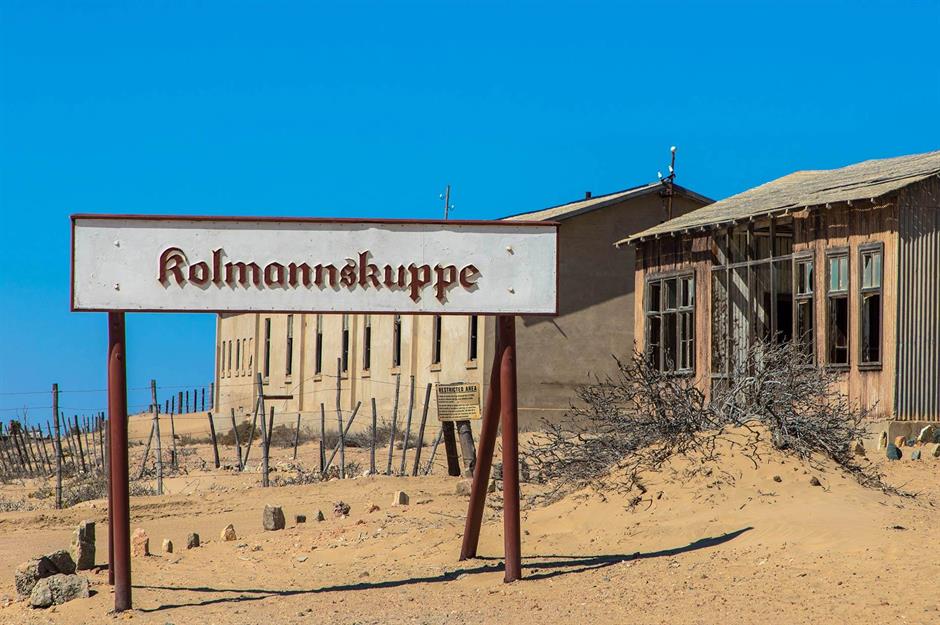
The abandoned ghost town was originally named Kolmannskuppe (German for 'Coleman's Head') after a nearby hill where a transport driver called Johnny Coleman was forced to abandon his wagon while lost in a sandstorm in 1905. By 1912, the town was producing a million carats a year and its German inhabitants, which numbered around 340 at the settlement's peak, were becoming very wealthy indeed.
Sponsored Content
Idyllic oasis
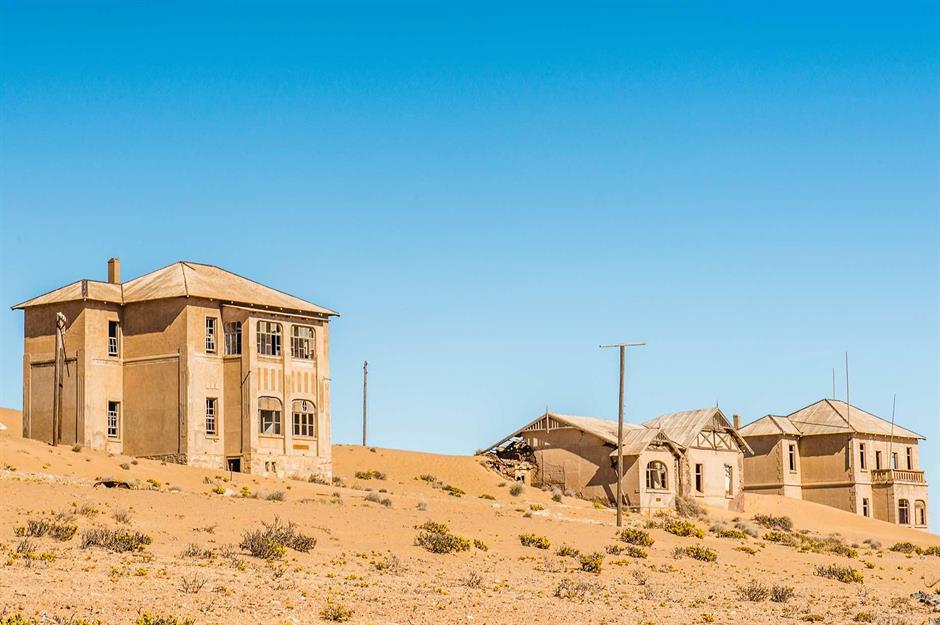
The town's denizens effectively recreated a German village in the desert, with the architectural style of the buildings closely resembling equivalent edifices back home. Meanwhile, water brought in by rail enabled residents to grow lush plants, creating a verdant haven in the desert. The settlement even had a form of public transport, a taxi on rails pulled by mules, plus a railway station and premium amenities such as an outdoor swimming pool.
Shopping street
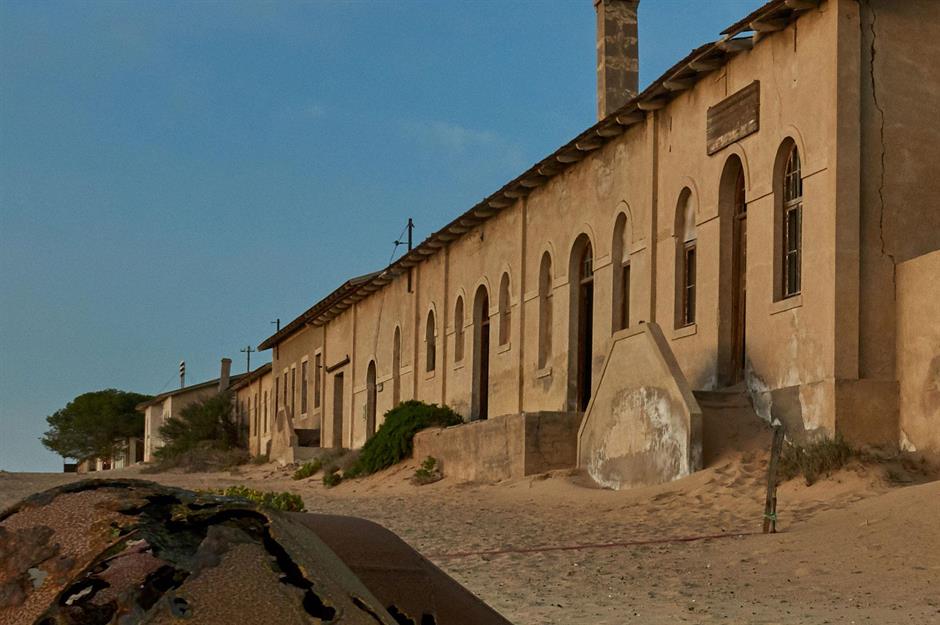
Kolmannskuppe Ladenstrasse, the community's shopping street, was constructed near the entrance of the town. The moneyed residents could afford to splash out on luxuries and the thoroughfare had a post office, butchers, bakery, general store and an ice-making facility, which supplied each household with a huge block of ice per day.
Luxury goods
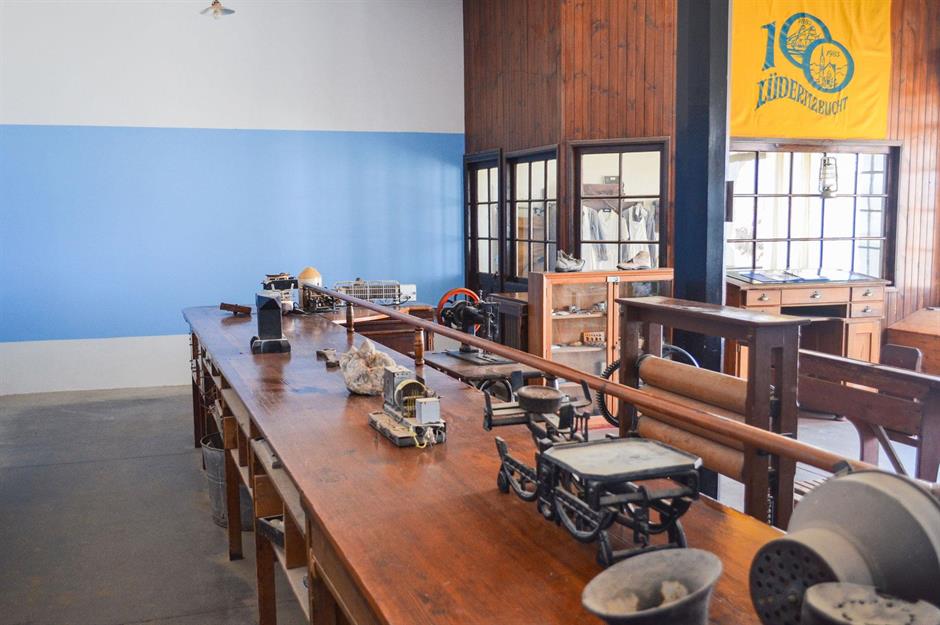
The general store and adjacent shopkeeper's residence have been restored and function as a museum these days. A purveyor of all sorts of items from the mundane to the exotic, the shop was run by one of the richest women in the region at the time, since customers often paid her in diamonds in lieu of hard cash. An old ledger shows some of the expensive imported treats stocked in the store, including caviar, Camembert cheese and chocolate.
Sponsored Content
Modern hospital
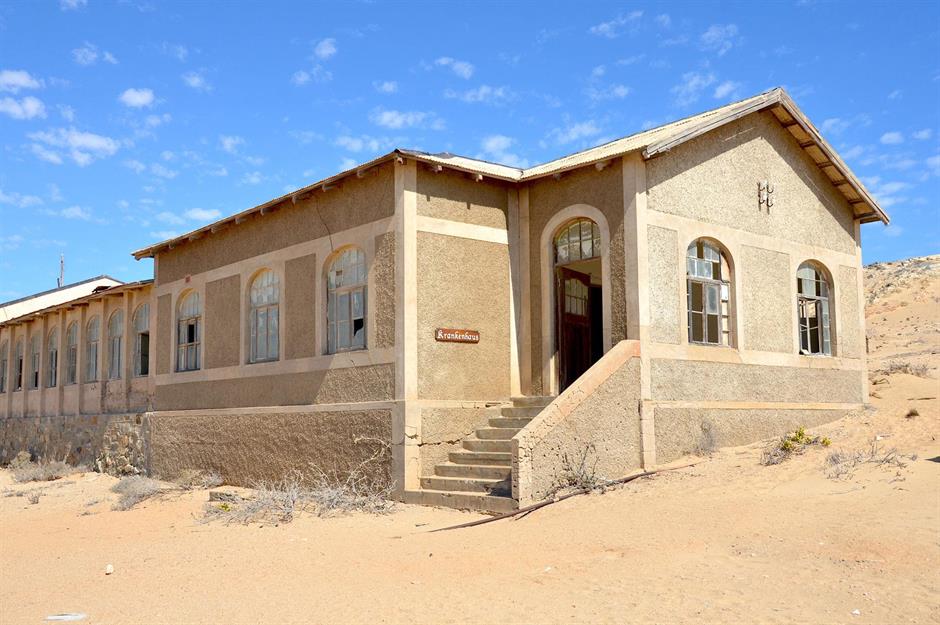
At the end of the abandoned shopping street stands the town's hospital. Once a state-of-the-art facility that could accommodate up to 200 patients, it was kitted out with all the latest medical equipment. Perhaps the most impressive is the early X-ray machine – a first in the southern hemisphere – which was said to have been procured to scan workers for ingested stolen diamonds.
Curious prescriptions
One of the town's two physicians, Dr Kraenzle reportedly advocated treating ailments with champagne and caviar of all things, and would regularly prescribe patients an evening glass of bubbly and a sandwich loaded with the fishy delicacy to revive their health. The hospital even had a wine cellar to store all those bottles of pricey fizz.
New name
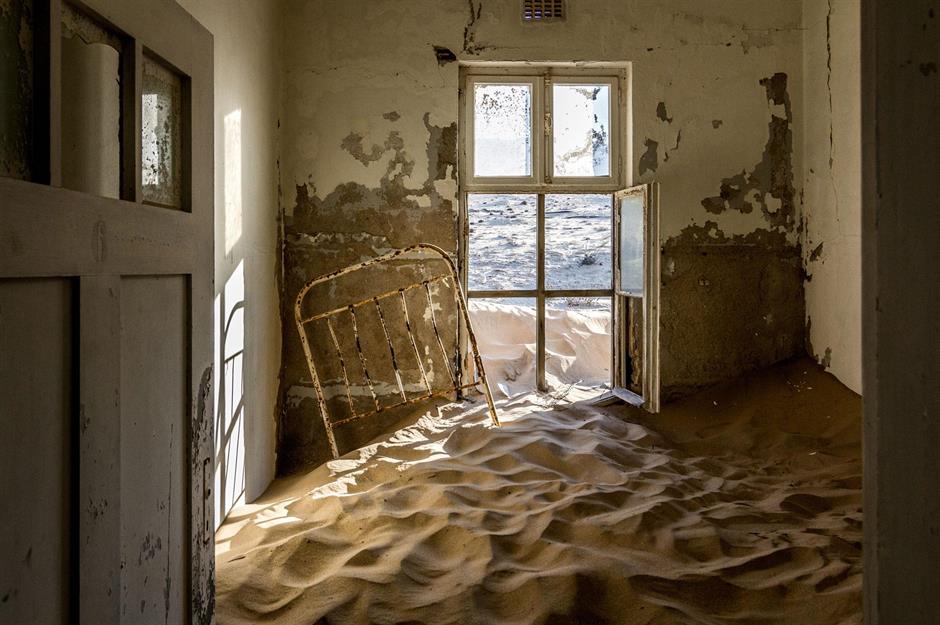
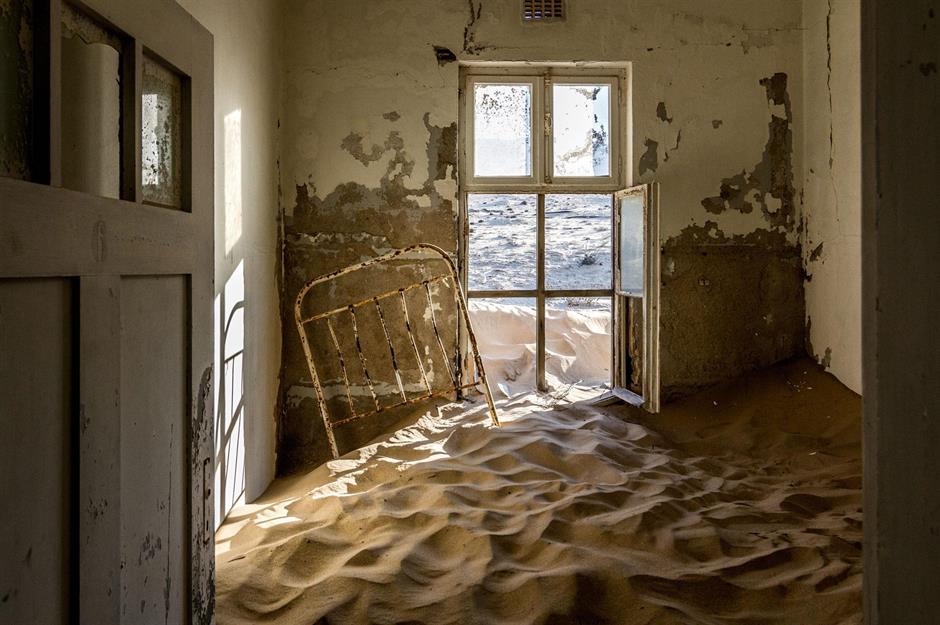
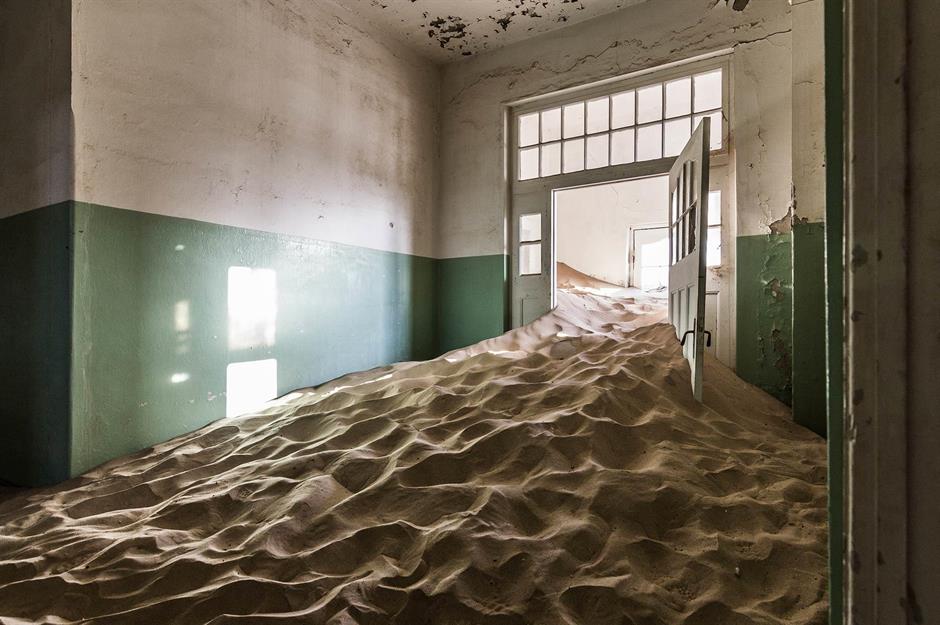
Today, the medical facility is engulfed in sand, which pours in through the building's broken windows. In 1915, the German colonial troops were defeated and Kolmannskuppe became part of the Union of South Africa, with mining resuming after the First World War. Sometime later, Kolmanskop, the Afrikaans version of the town's name, was adopted.
Sponsored Content
Boarding house
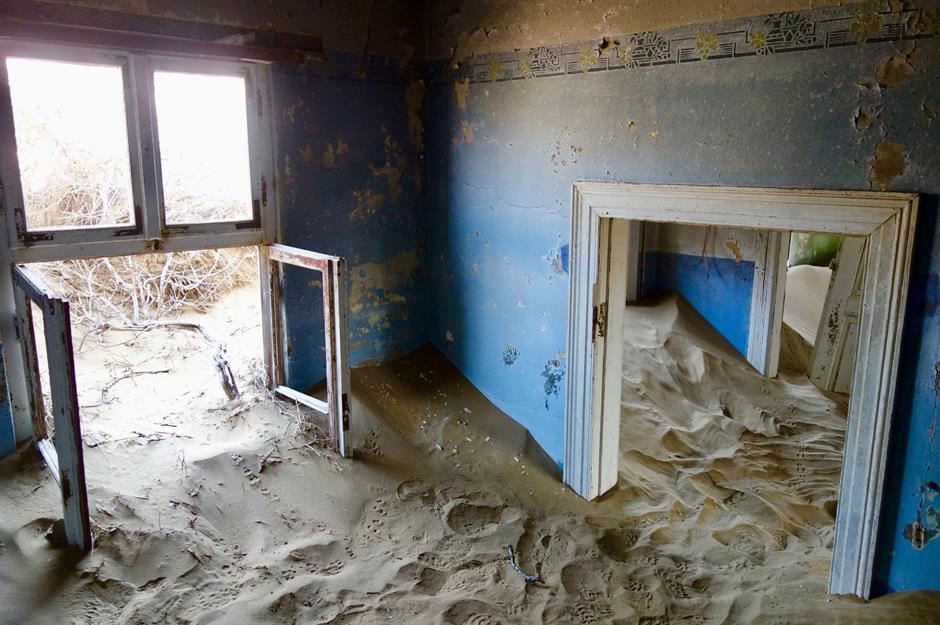
Just across from the hospital is the town's once-swish boarding house, which is said to have housed unmarried German miners. The 800 or so local Ovambo contract workers on the other hand reportedly had to make do with altogether more modest huts located to the south of the settlement. Nowadays, the interior of the boarding house is almost full to the rafters with sand.
Leisure complex
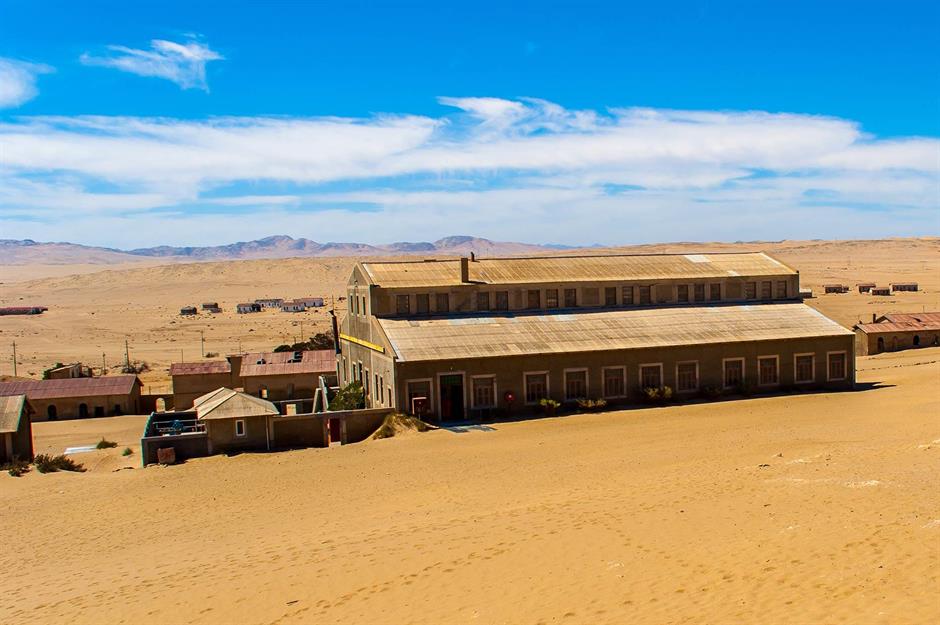
The main school was built around the corner – a stone's throw away from the settlement's grandest building, the sprawling kasino and turnhalle. Constructed in 1927 using a steel frame imported from Germany, it served as a multipurpose entertainment and leisure complex for the town's residents and was no doubt the scene of hours of fun. One of the few buildings in the town that has been saved from the encroaching desert, the structure contains a cavernous main hall where concerts and parties took place.
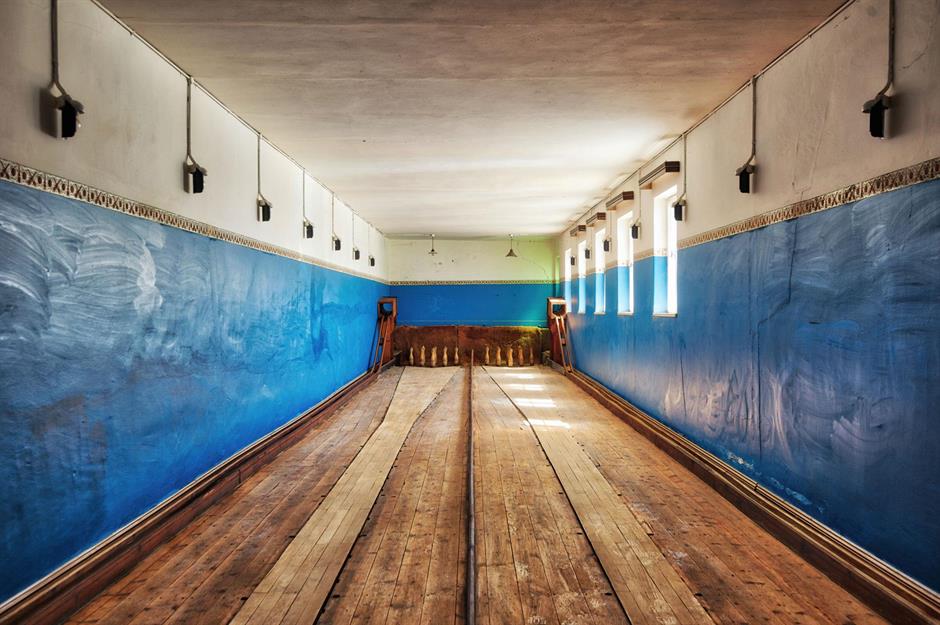
Skittle alley
Sponsored Content
Opulent amenities
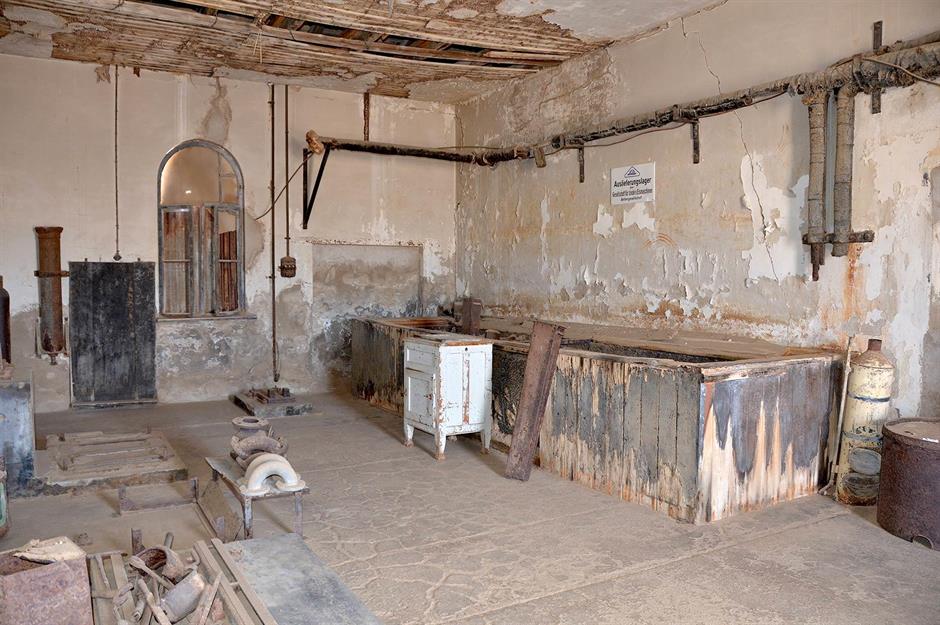
As well as the kasino and turnhalle, the thriving town was also home to an ice factory – a real luxury in the sweltering desert. Fresh water was brought in by rail and used to make delicacies including lemonade for the residents, all while many tribespeoples had extremely limited access to drinking water. The remnants of this once-opulent enterprise still remain and you can still make out the tools and equipment that workers here would've used way back when.
Millionaires' row
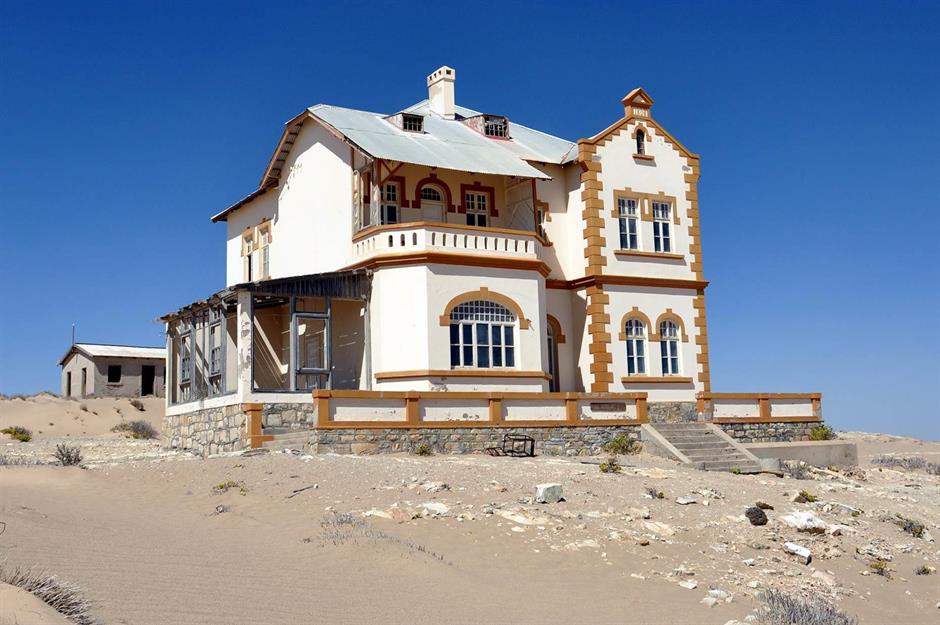
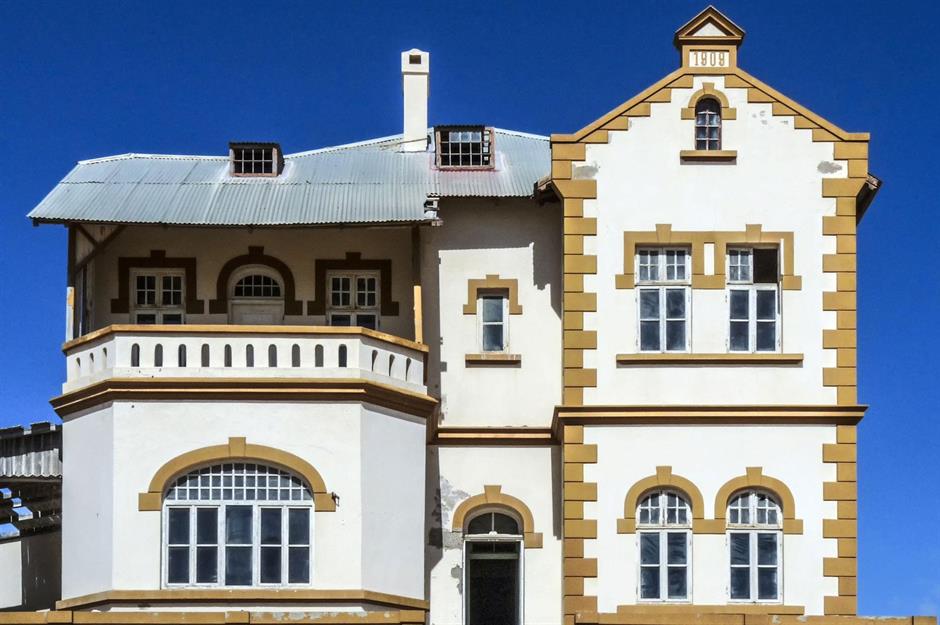
Behind the kasino and turnhalle is the town's very own millionaires' row. German architect Herr Ziegler designed the mansions along the street and this beauty, which was built for the director of the mine, Hans Hörlein, is one of the finest. Traditionally German in style, it impresses with arched windows, architraves and a large balcony.
Restored mansion
Sponsored Content
Architect's house
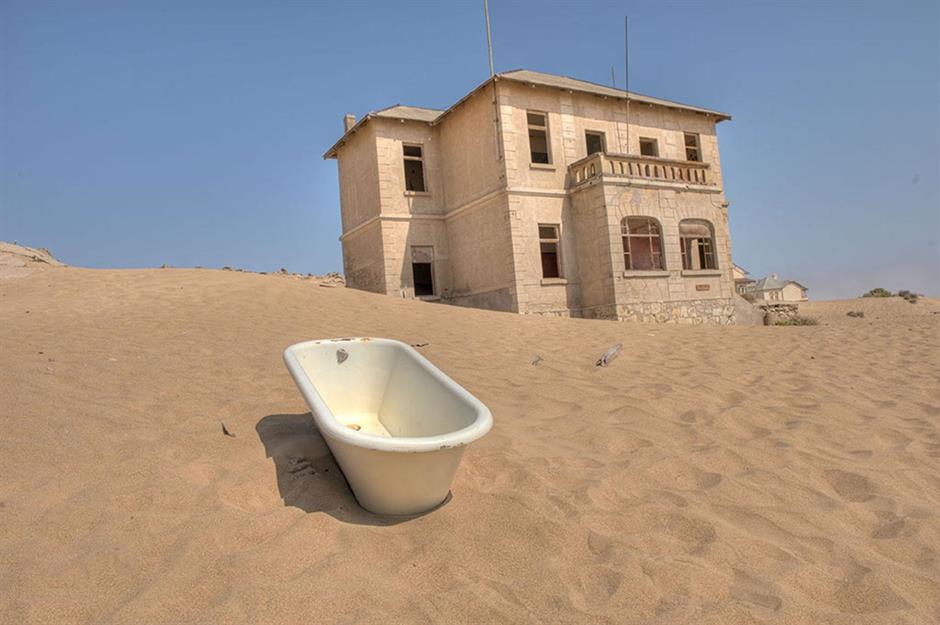
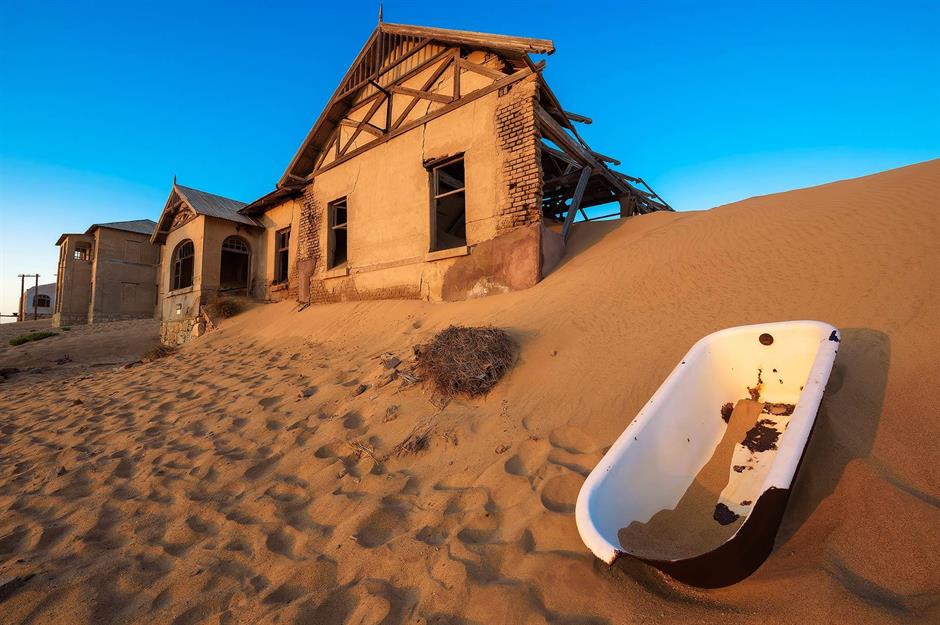
The next house along was built by the town architect as his personal residence. In contrast to the traditional German style of the other buildings in the town, the property resembles a jaw-dropping neo-classical mansion. The house isn't in the best of states, but it remains standing and the roof seems to be intact, though a bathtub has somehow worked its way onto the dune outside.
Submerged in sand
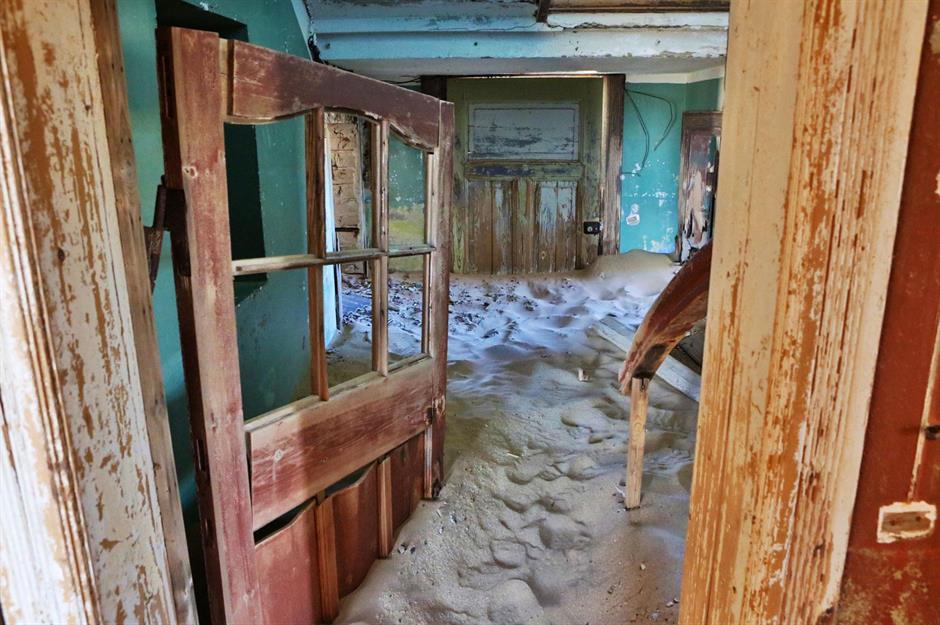
Desert life
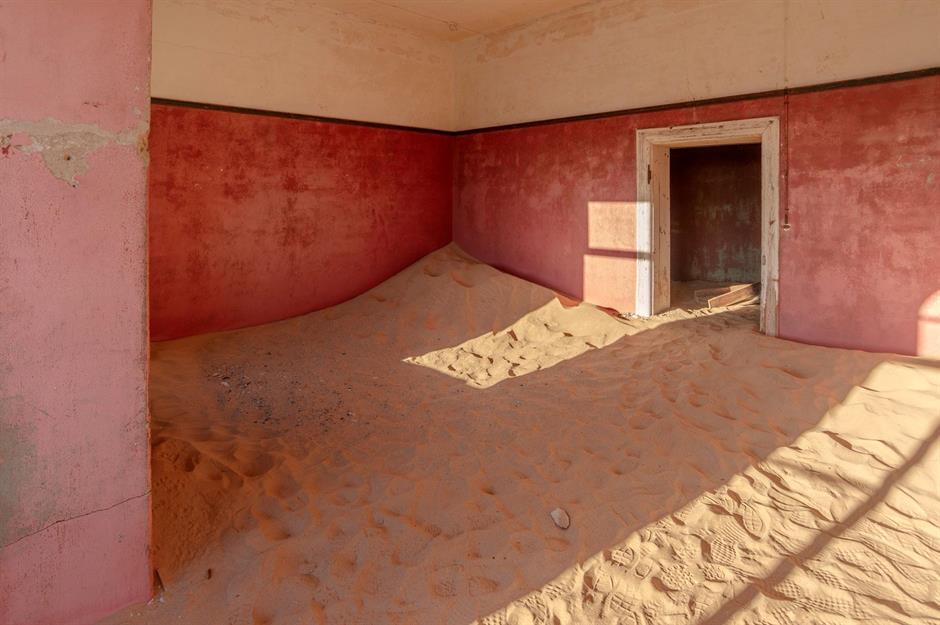
The sand in this room, which was possibly the parlor, is even more of a problem, almost reaching all the way up to the ceiling. The residents must have had a constant struggle ridding their homes of the stuff, which gets absolutely everywhere, but they adapted – and in other ways too. For instance, one family who wanted a pet suited to the desert climate bought an ostrich. The bird would drive the inhabitants to distraction, apart from at Christmas when it was used to pull a sleigh.
Sponsored Content
Bookkeeper's residence
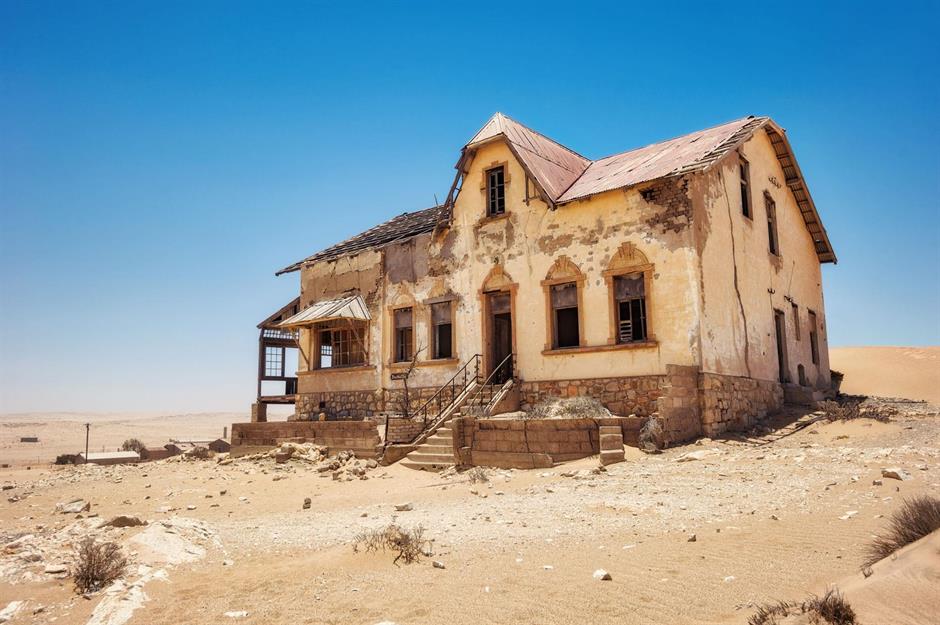
Further along the dirt road, the home of the town's bookkeeper sits adjacent to the architect's residence. The accountant was clearly very well off, as this sizable mansion shows. While the house hasn't been completely invaded by sand, years of neglect have certainly taken their toll on the abandoned property.
Missing roof
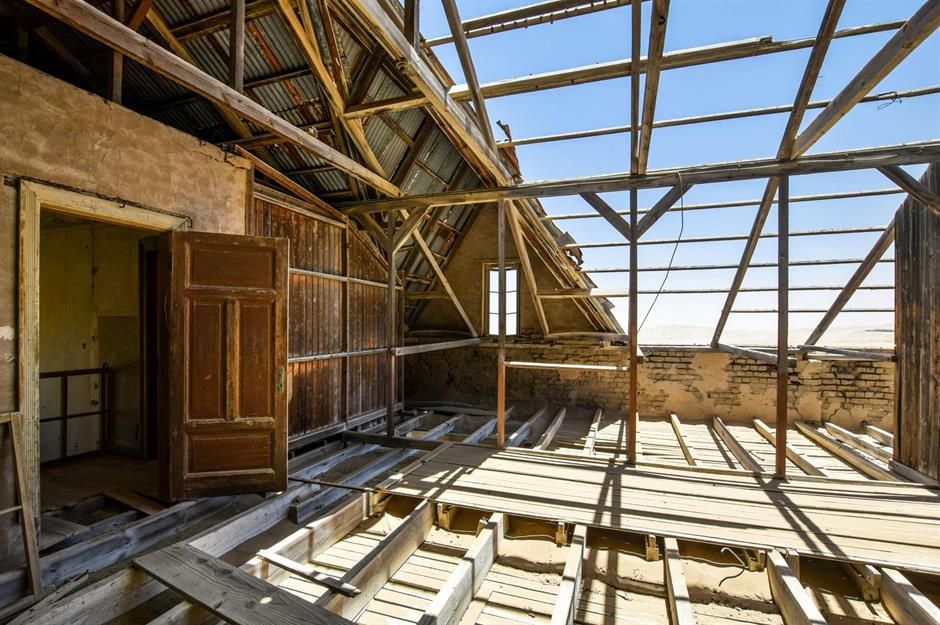
Schoolmaster's residence
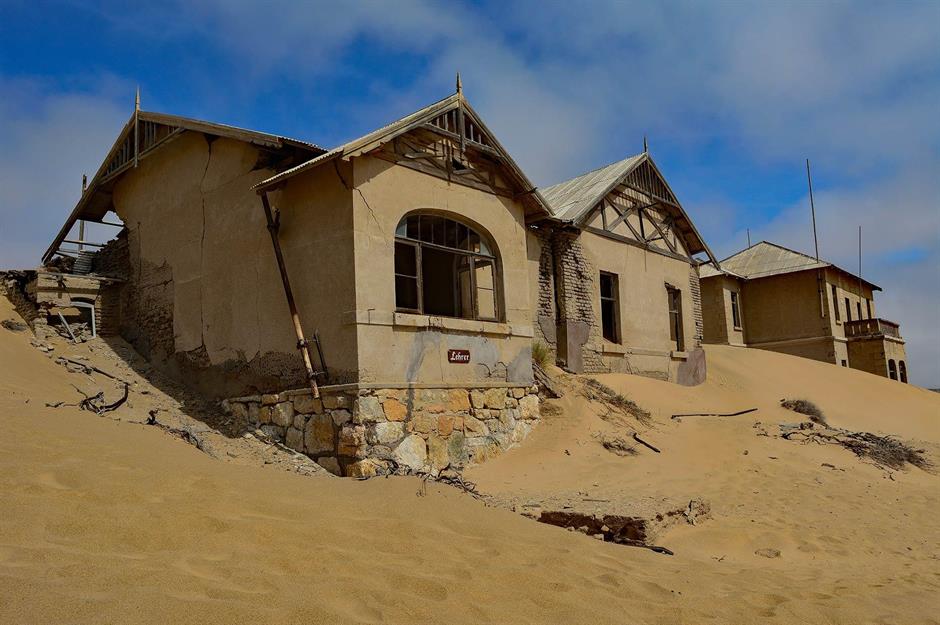
Here, it's clear that time has also taken a toll on the schoolmaster's residence. For many years it was the home of German schoolmistress Mrs Hussmann. The derelict yet charming building has a rustic feel with its half-timbered gable and part-stone façade.
Sponsored Content
Fighting a losing battle
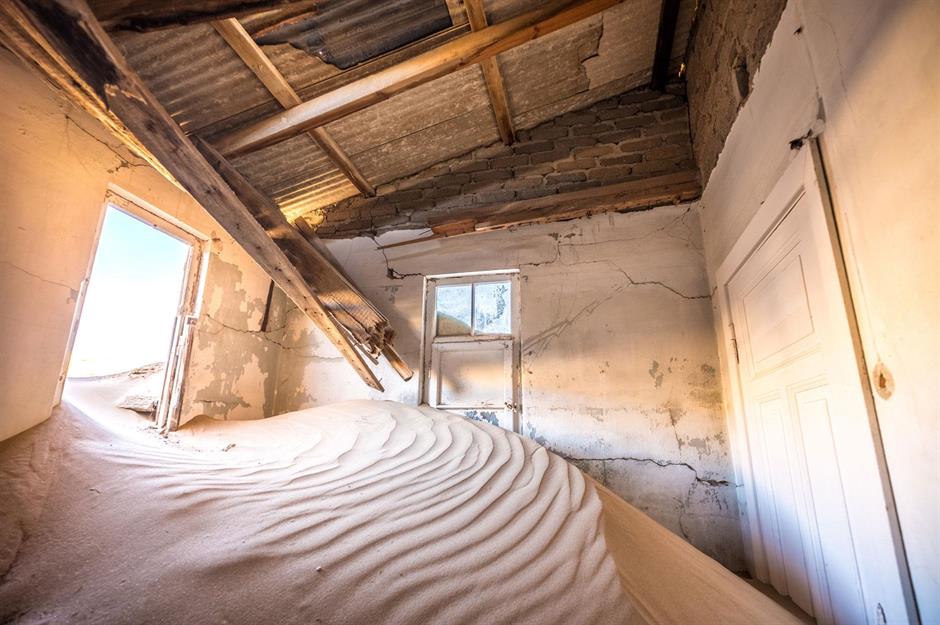
Peering inside the tumbledown building, Mother Nature has most definitely won the battle here. Sand fills the space and apart from the intricate patterns the wind has made on the dune's surface, the interior is no pretty sight. It's almost impossible to imagine what the room looked like when Mrs Hussmann called this space home.
Consumed by the dunes
Quartermaster's house
Sponsored Content
Original features
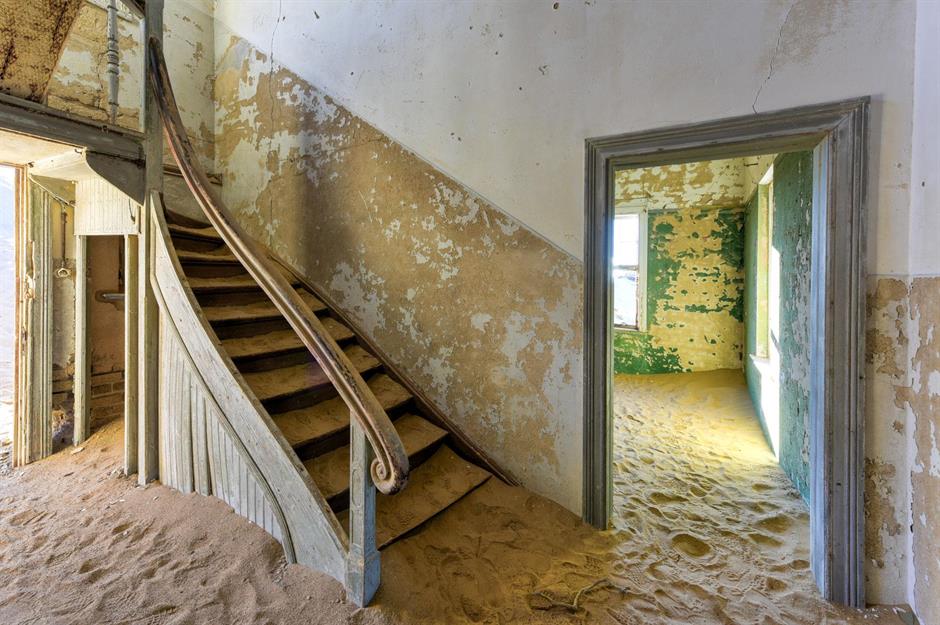
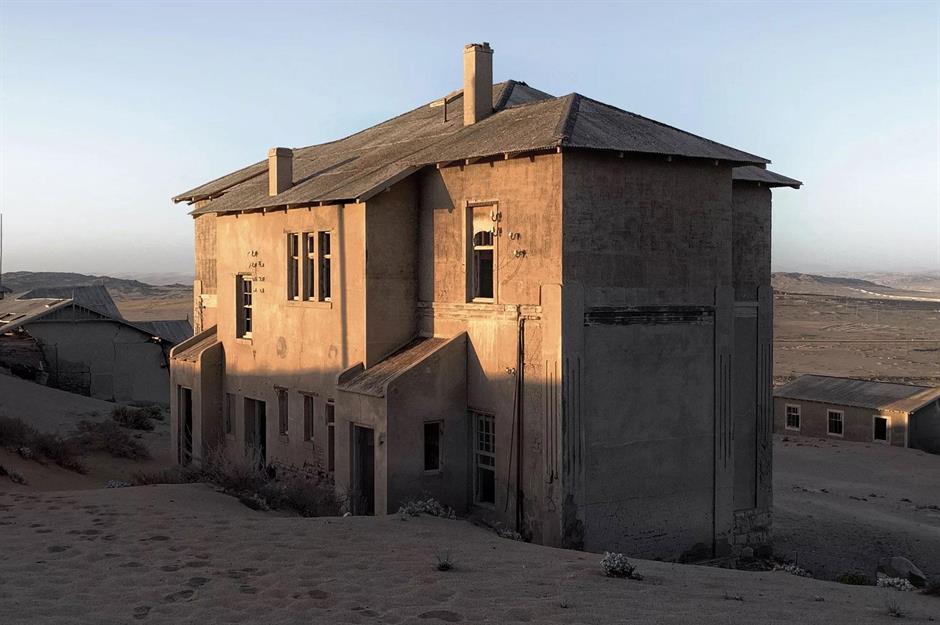
The floors of the interior are covered in sand but the rooms aren't inundated. Many of the original features have survived, including the delicate Jugenstil wallpaper and elegant sweeping staircase. In 1928, a year after the kasino and turnhalle was completed, the most bountiful diamond fields ever were discovered some distance south of Kolmanskop.
Kolmanskop's decline
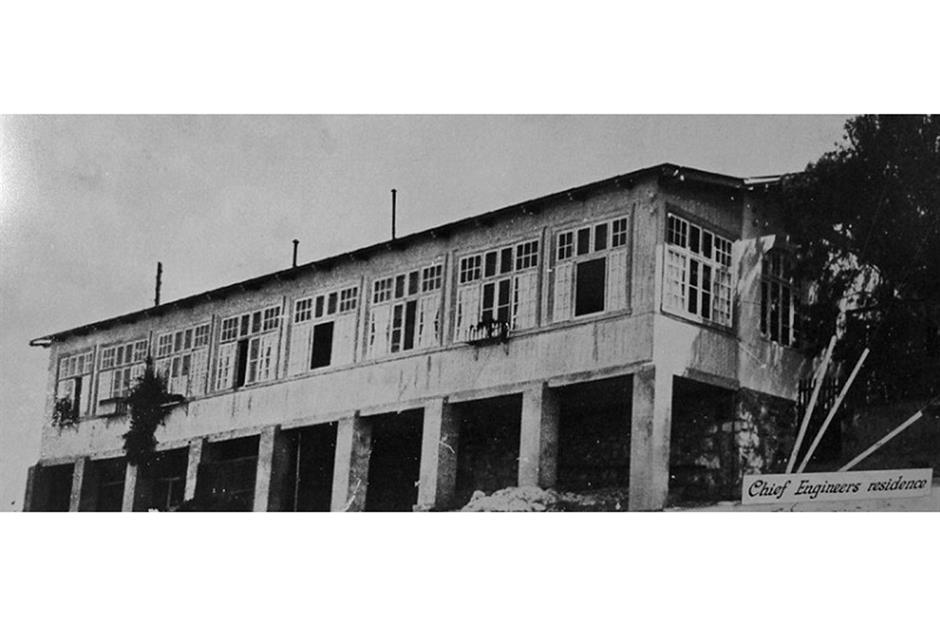
Tourist attraction
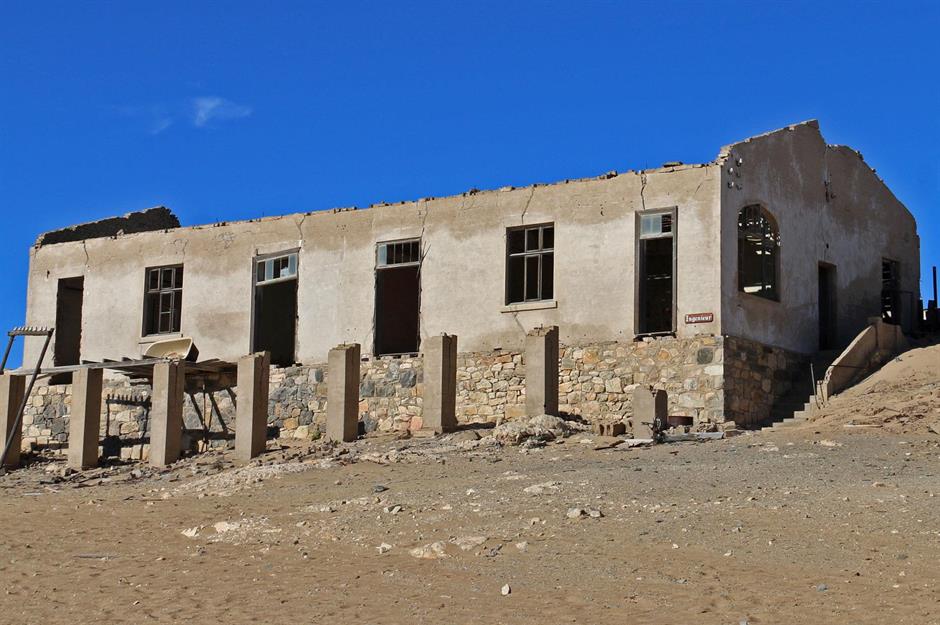
Today, the home is a total wreck. Located within a restricted area, Kolmanskop lay forlorn and forgotten until 2002 when a local firm called Ghost Town Tours was given permission to run visits to the settlement for tourists. It now attracts 35,000 people a year and has been featured in movies, TV shows and even a Vogue magazine fashion shoot.
Sponsored Content
Succumbing to the sands of time
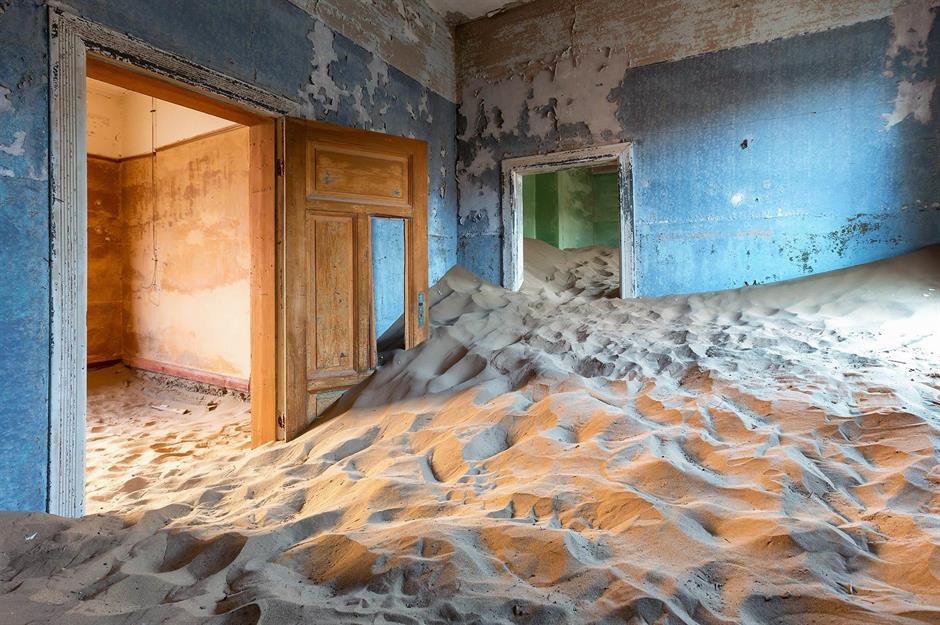
Yet the sand doesn't stop blowing in and Ghost Town Tours, which has overseen the restoration of several of the historic buildings, is just about managing to keep the desert at bay. While the opulence of this fascinating mining outpost might be a thing of the past, its buildings stand as a monument to a truly remarkable settlement that, for a time, thrived in the barren desert against all odds.
Loved this? Like and follow us on Facebook for more fascinating ghost town tours
Comments
Be the first to comment
Do you want to comment on this article? You need to be signed in for this feature