You won't believe the treasures found in construction sites
Buried treasures uncovered by building work
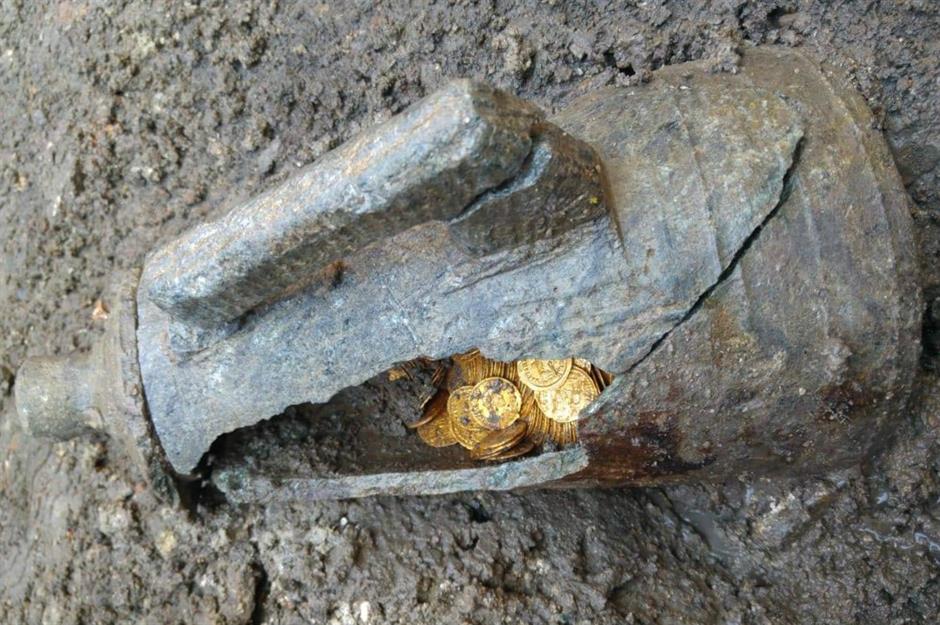
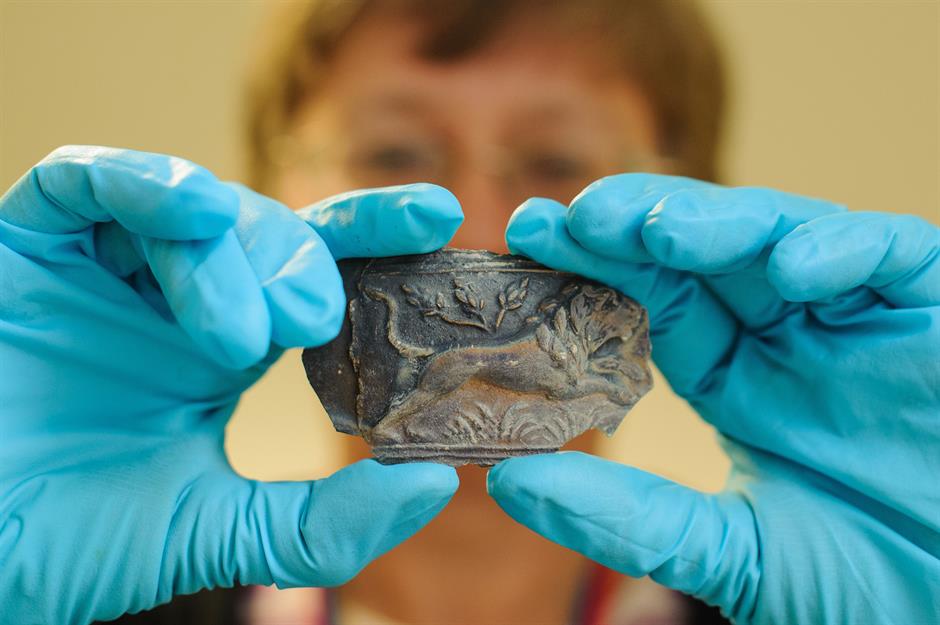
Hildesheim Treasure
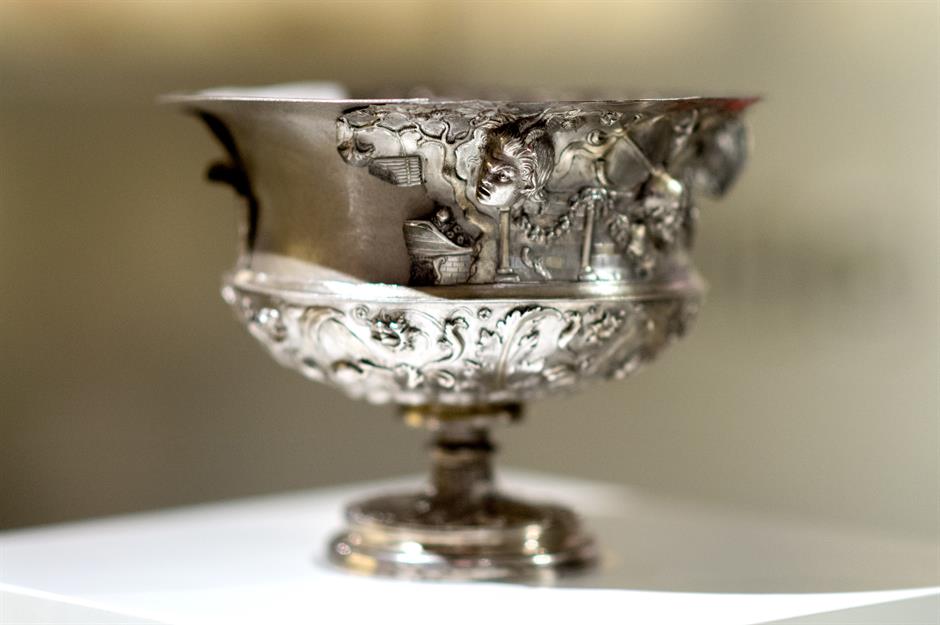
This Roman drinking vessel was part of the so-called Hildesheim Treasure discovered by Prussian soldiers when they were expanding their shooting range at Hildesheim Galgenberg, in what is now Germany, back in 1868. The trove consisted of more than 70 silver items for eating and drinking, and is thought to date back to the reign of Emperor Augustus, around the birth of Christ. One of the drinking vessels was recently identified as having belonged to a high-ranking military official called Bochus.
Oseberg ship
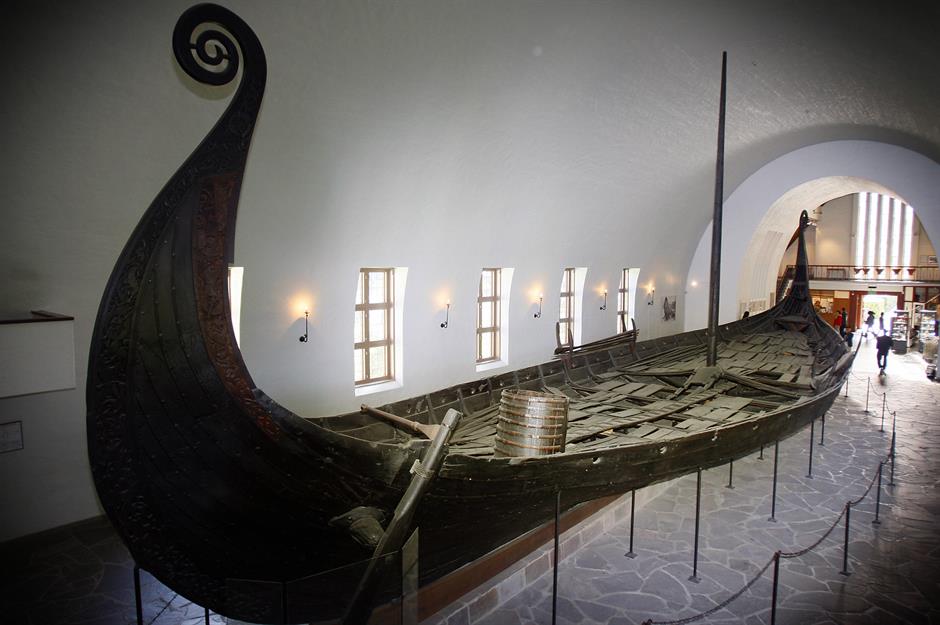
In 1903, Norwegian farmer Oskar Rom discovered a Viking-era ship after he dug into an ancient burial mound on his land. It took 21 years for archaeologists to prepare and restore the ship, as it needed to dry out fully before being put together, and the reconstruction remains on show at the Viking Ship Museum in Oslo. Also found on the ship were the skeletal remains of two women, as well as those of various animals, and other artefacts including bedposts and a cart.
Sponsored Content
York Helmet
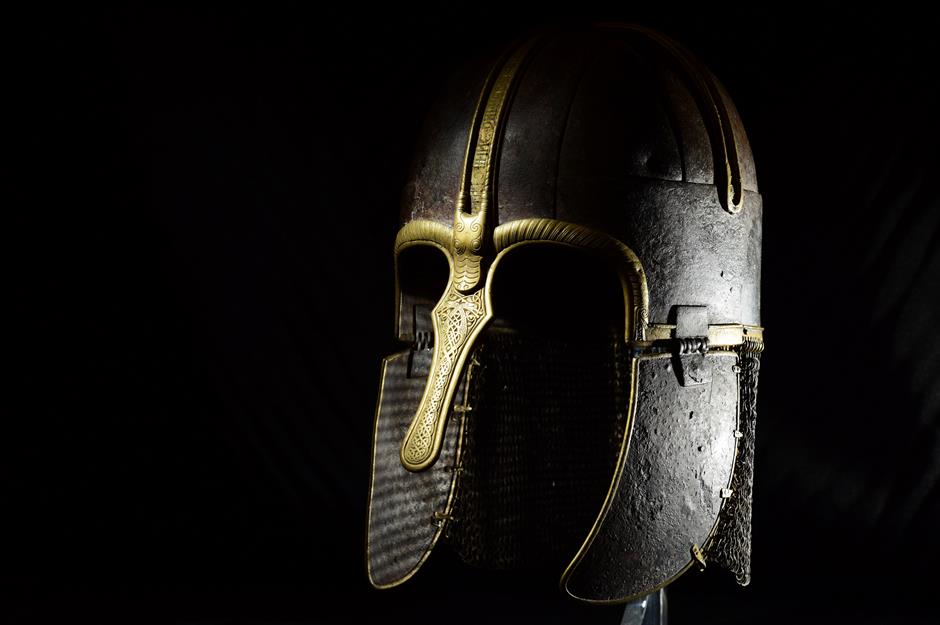
The 8th-century Anglian York Helmet was discovered by a mechanical digger operator as construction started on a shopping centre in York, England back in 1982. It is one of only three complete examples from the Anglian period found in England and bears Anglo-Saxon and Irish influences. On the crest is an inscription in Latin, which translates as: "In the name of our Lord Jesus Christ, the Holy Spirit and God; and to all we say amen. Oshere". It is thought that Oshere was its owner.
Lopen Mosaic
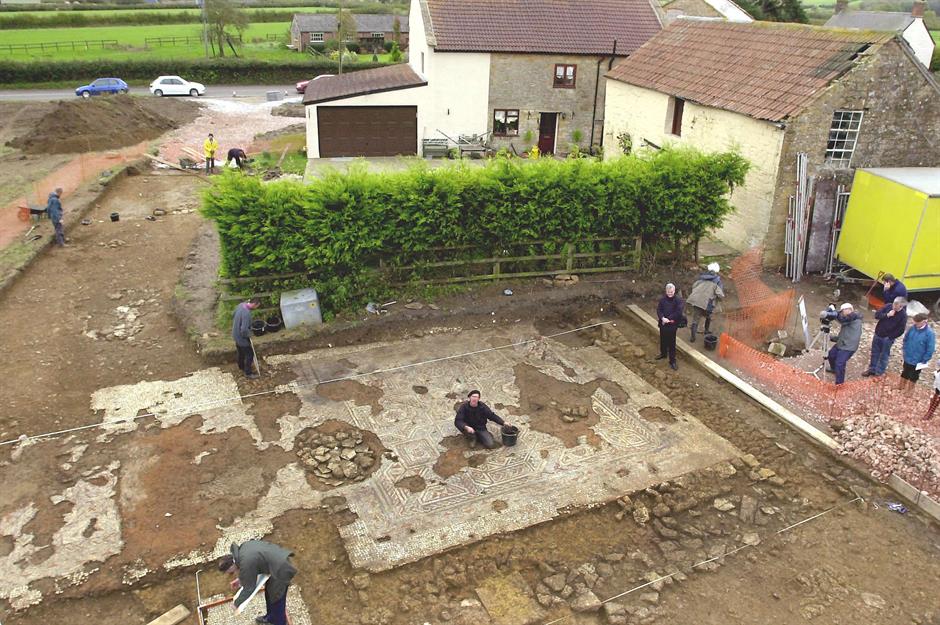
The Roman-era Lopen Mosaic was unceremoniously uncovered by a bulldozer during the building of an access road in the tiny village of Lopen in Somerset, England in 2001. Featuring a pattern of squares, wine vessels, leaves and a dolphin, experts believe it was laid as part of a Roman villa belonging to a wealthy landowner in the 4th century BC. Speaking at the time, English Heritage's chief archaeologist Dr David Miles said it was an expensive design, "the equivalent of a Persian carpet".
Metro marbles
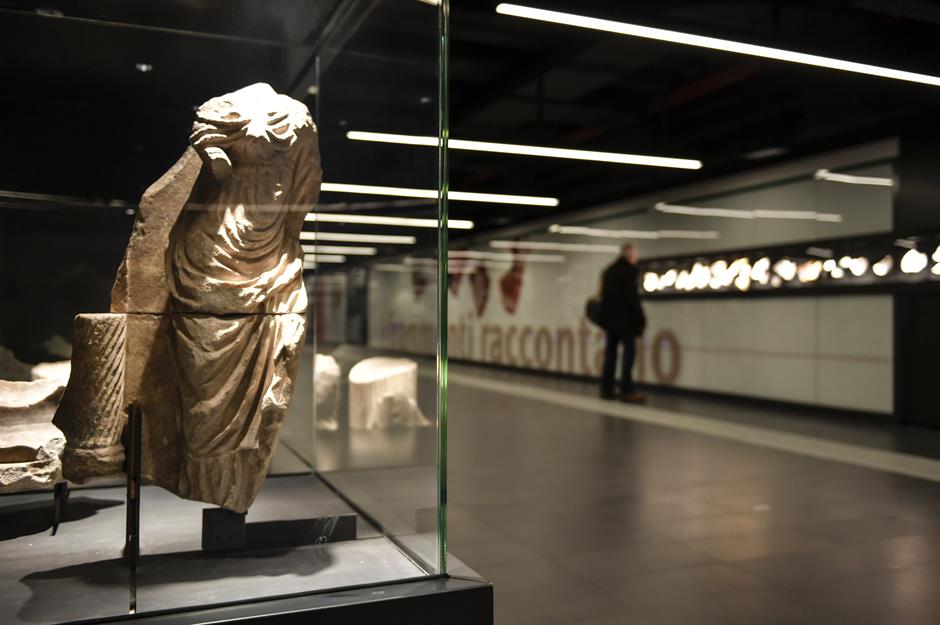
Roman marbles are just some of the artefacts that were recovered during the decades-long construction of a new underground rail line in the Italian capital Rome. Since building began in 2000, everything from an iron spearhead to a delicate perfume bottle and bronze fish hooks have been uncovered. Commuters were able to admire many of the treasures on a daily basis in San Giovanni metro station, where they have been on display since 2017.
Sponsored Content
Newbridge chariot
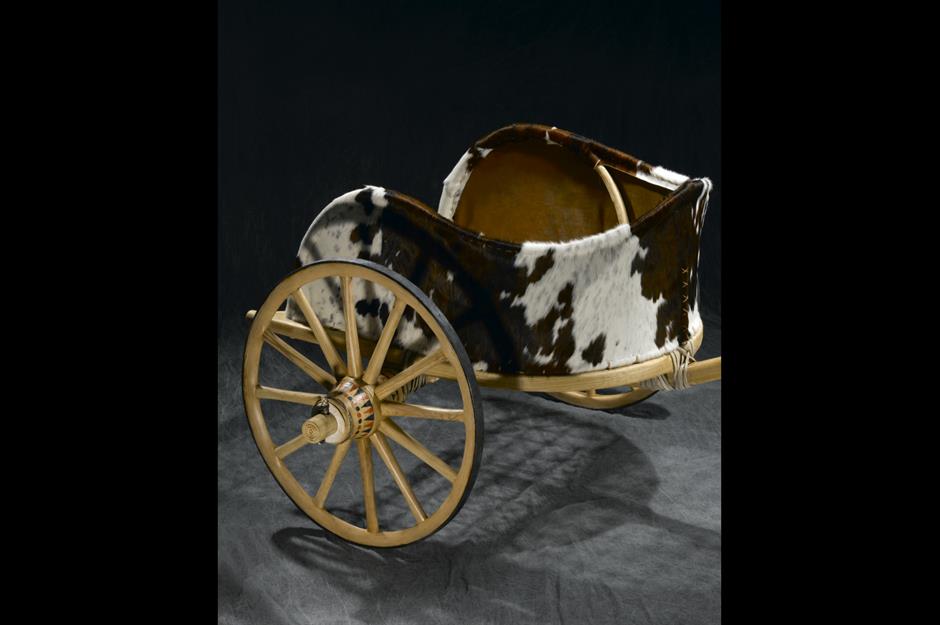
The remains of an Iron Age chariot burial were found at Newbridge, Scotland ahead of building work starting on the Edinburgh Interchange in 2001. After careful recovery of the wheels, which were lifted out in soil blocks for full excavation back in a lab, the preserved wood was radiocarbon dated to between 475-380 BC – making it the oldest chariot burial in Britain. This reconstruction, pictured, was built in 2007 by Robert Hurford several years after the chariot's discovery.
Missing porcelain
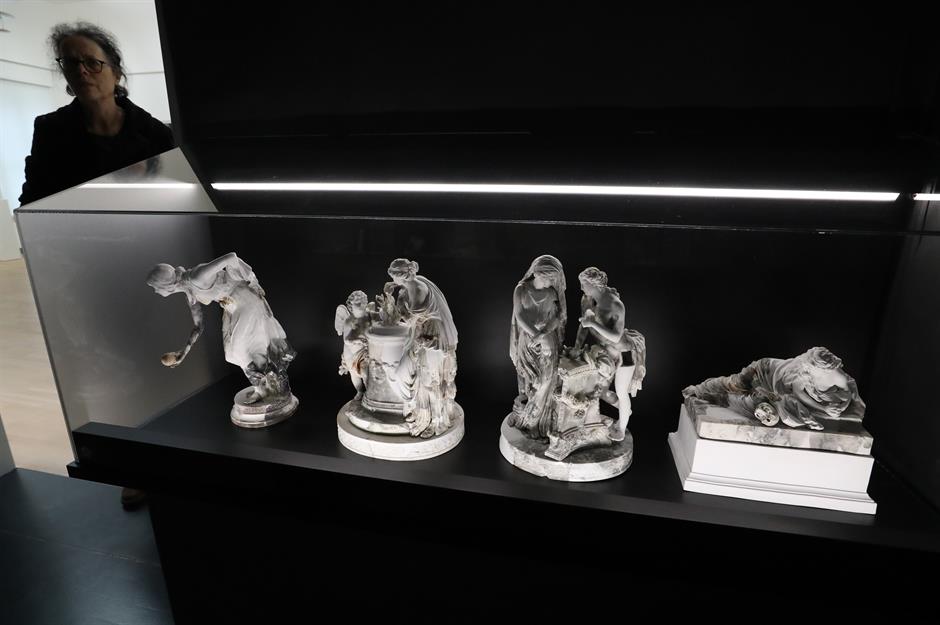
Back in 1890, the municipal art collection in the German city of Neubrandenburg comprised of more than 10,000 pictures, sculptures and pieces of porcelain housed in the former ducal palace. But the palace burned down and collapsed during World War II and it was only during building work on an underground car park in 2006 that parts of the porcelain collection were found again. Sixteen figures were restored with the help of porcelain manufacturer Meissen.
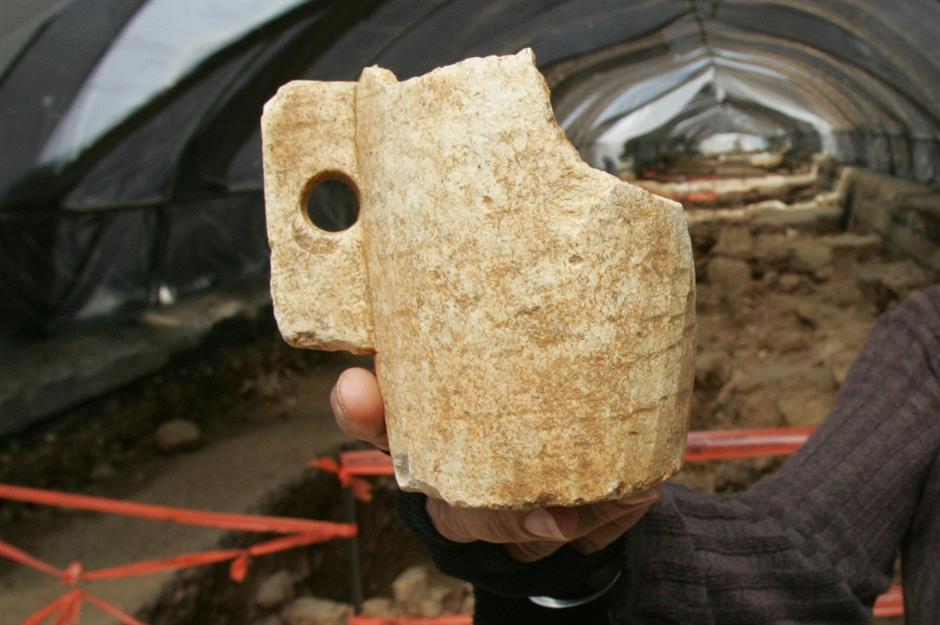
Jewish cup
Sponsored Content
Ceramic 'dummy eggs'
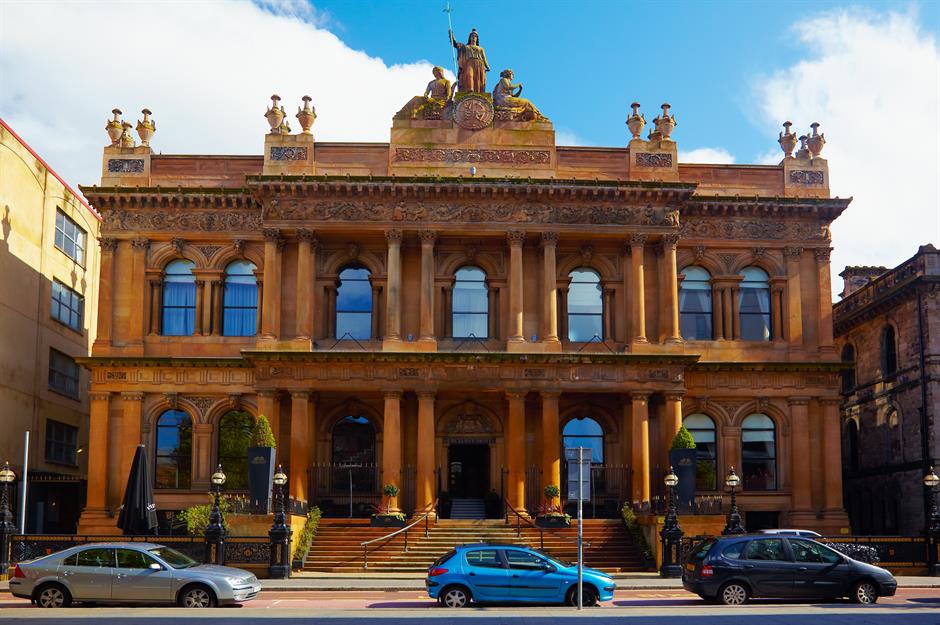
Guests entering Belfast's Merchant Hotel may be surprised to see a series of small ceramic eggs on show as they enter the five-star establishment. The 30 eggs were found alongside fragments of crockery from the 17th century in 2008, ahead of a £16.5 million ($32.7m) refurbishment to create a lower ground-floor spa. Experts think these curiosities are likely to have been replica "dummy eggs" that were put in coops to encourage hens to lay.
Body of Richard III
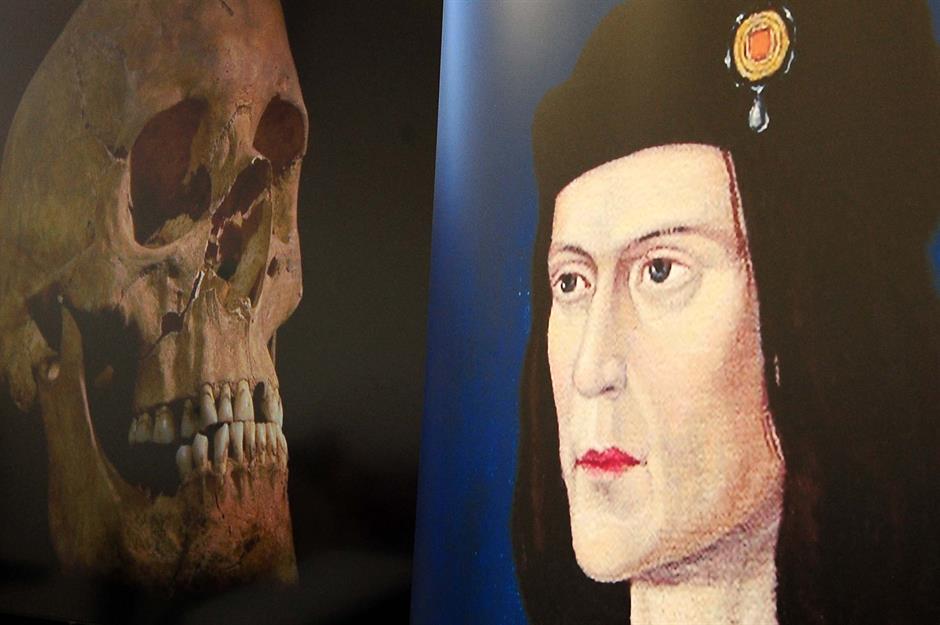
Discovered somewhat after the fact, English King Richard III eventually received a ceremonial burial in 2015 – three years after his bones were found under a car park in the city of Leicester more than 500 years after his death. Richard III died while facing the forces of Henry Tudor during 1485's Battle of Bosworth Field and his body was hastily buried at what was then Greyfriars Church. His body was discovered by archaeologists in 2012 and it was later decided he should be reburied in Leicester Cathedral.
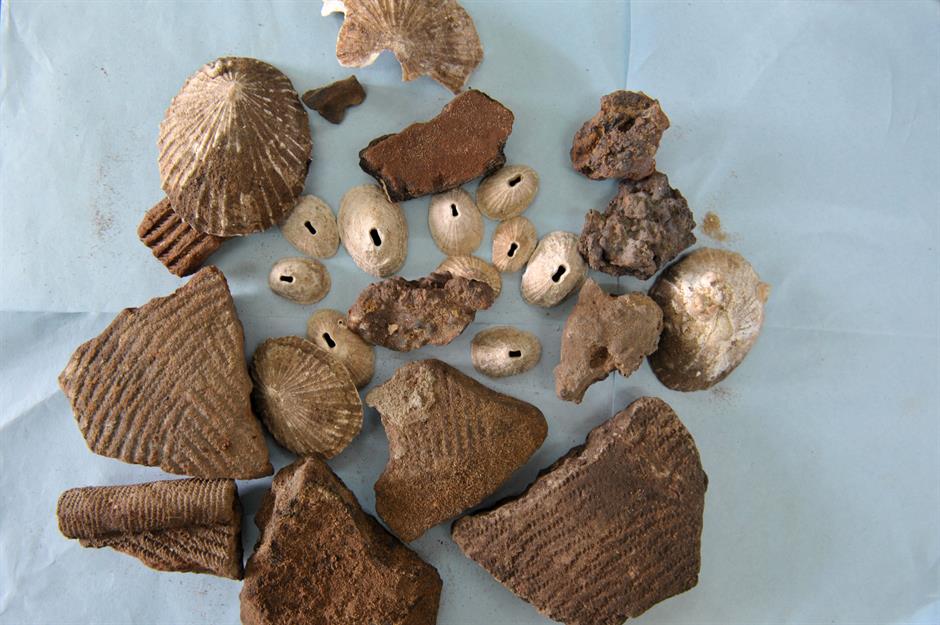
Ancient jewellery
Sponsored Content
Roman beaker
Lost Caravaggio
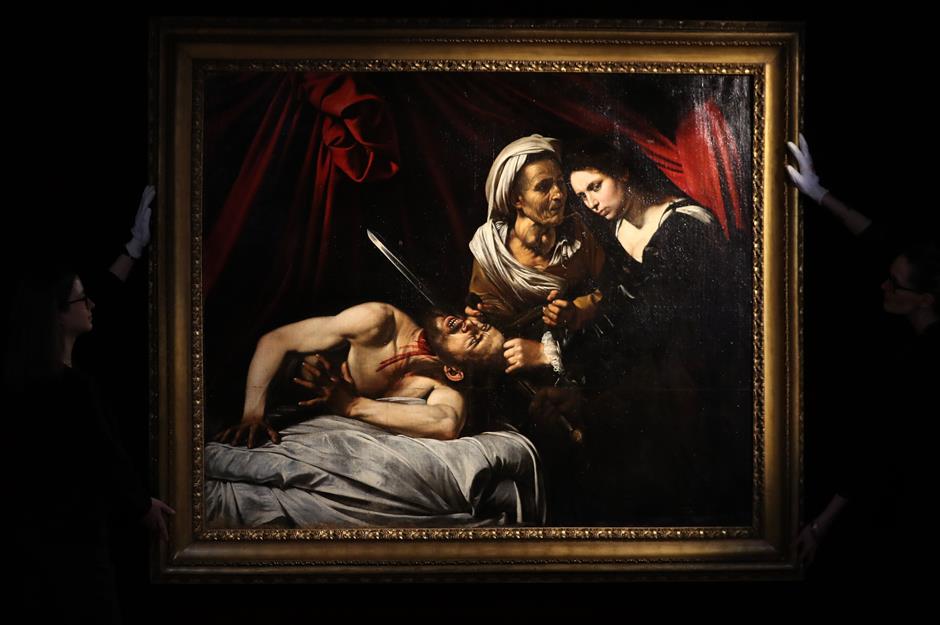
A painting believed to be the second version of Judith Beheading Holofernes by Italian master Caravaggio was found in a loft in Toulouse after the owners went to investigate a leak in the roof in 2014. The artwork was due to go to auction in France last year, but despite ongoing debate over whether it was indeed painted by the artist himself, it was snapped up two days before bidding had even started. Details of the private sale haven't been revealed, but the piece was valued at $170 million (£128m) just before it sold. Another version, known to be by Caravaggio, hangs in Rome's National Gallery of Ancient Art.
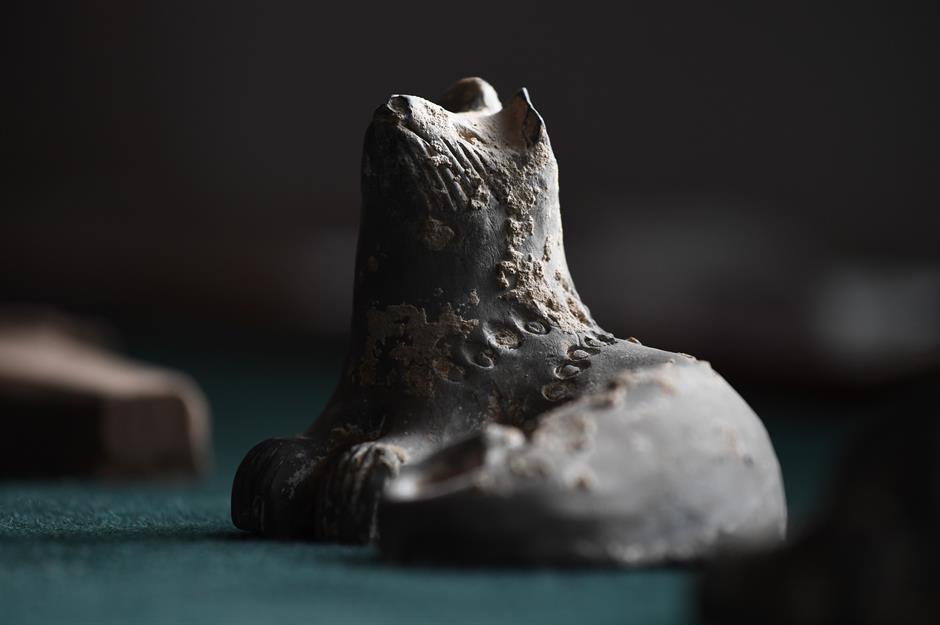
Chinese dog figurine
Sponsored Content
Celtic coins
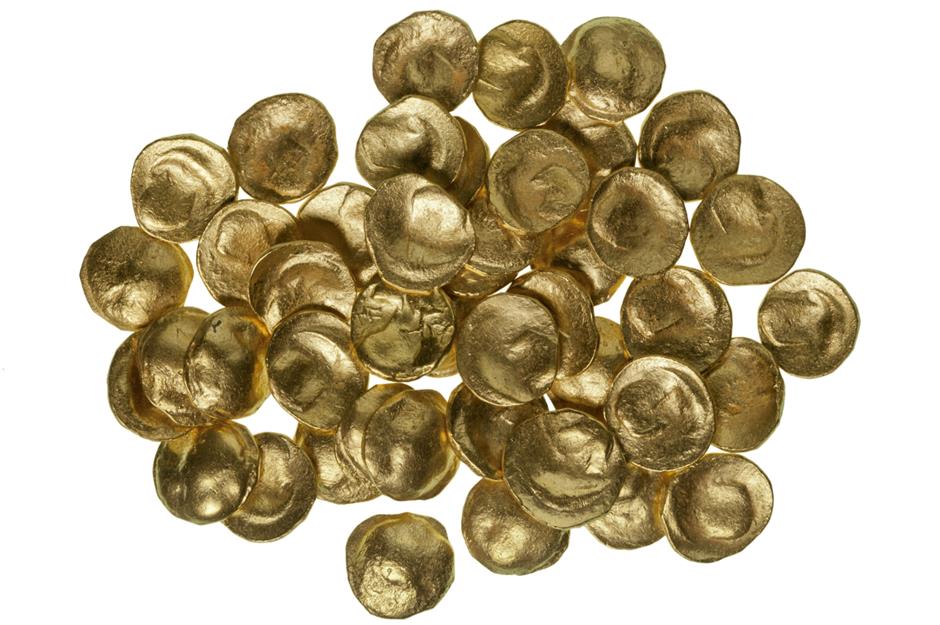
A Celtic pot of gold was found ahead of the building of a machinery hall in Traun, near the Austrian city of Linz, in 2016. The 44 gold coins are thought to have been made during the Iron Age in the region now known as Bohemia, in the present-day Czech Republic, and are likely to have ended up in Austria through trade. The coins were found lying close together, suggesting they were once in a bag or other container.
Seaport shipwreck
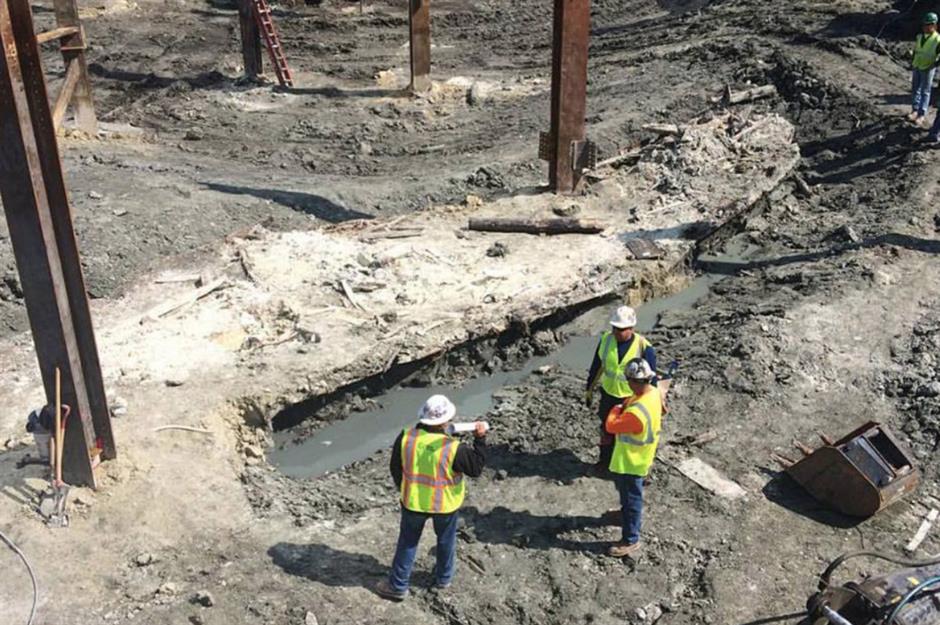
Sunken Buddha
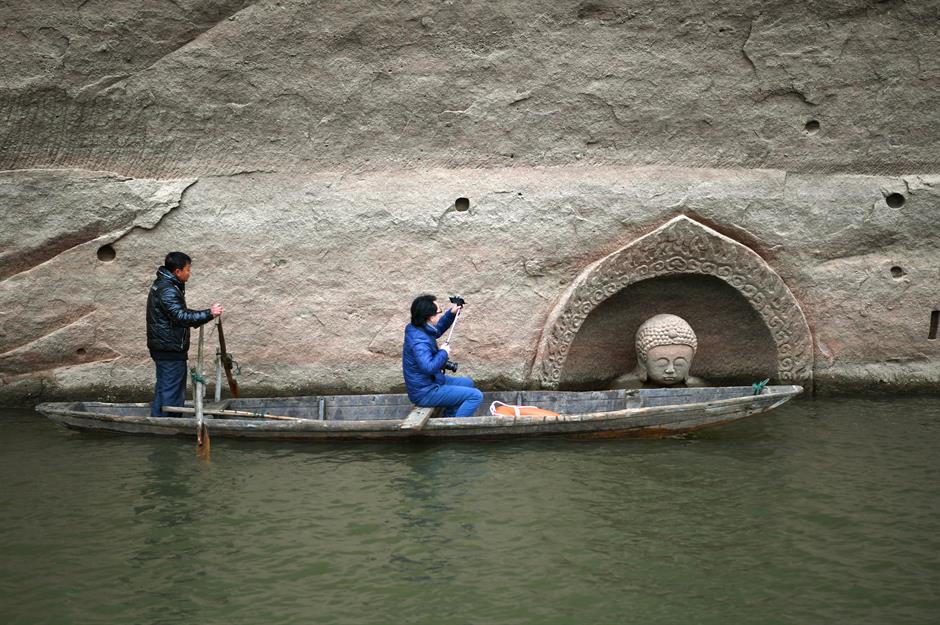
A 600-year-old Buddha was discovered during renovations at Hongmen reservoir in China's eastern Jiangxi Province in 2017. The head of the statue emerged after water levels dropped by more than 32 feet (10 metres) during work on a hydropower gate. It was thought the statue could date back to the early Ming Dynasty, which lasted from 1368-1644.
Sponsored Content
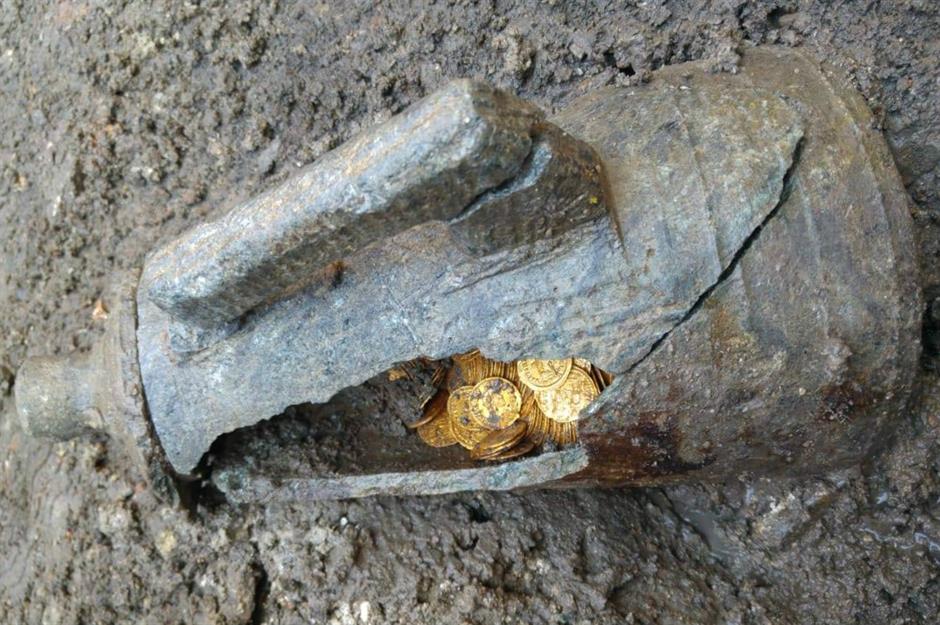
Pot of gold
Hidden painting
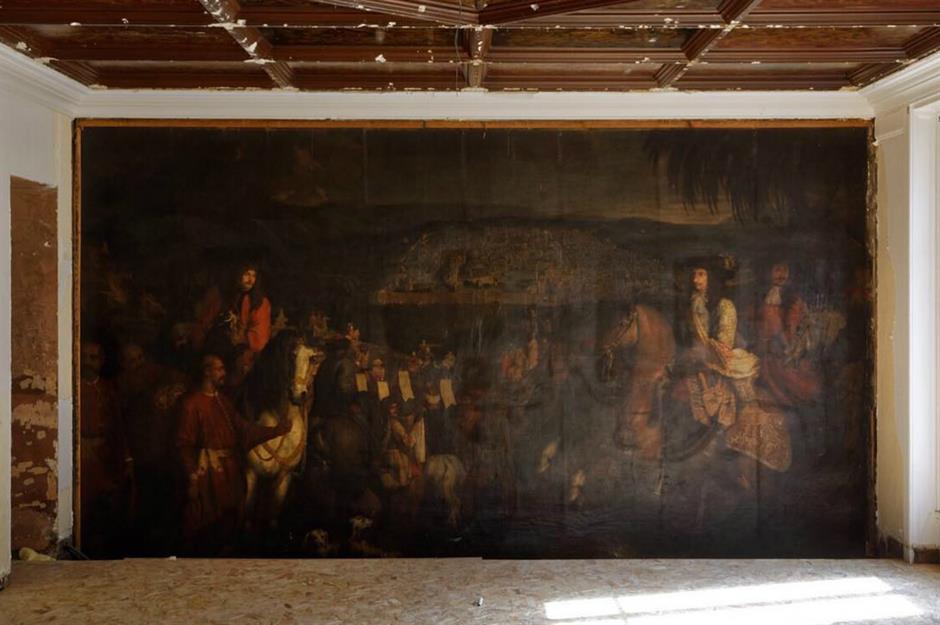
A 17th-century oil painting was found hidden behind a wall by workers converting a Paris office into a luxury boutique for fashion brand Oscar de la Renta in January 2019. The artwork is thought to have been created during the reign of King Louis XIV in 1674 by Arnould de Vuez, a leading artist of the day, and shows the Marquis of Nointel, Louis XIV’s ambassador to the Ottoman empire, riding to Jerusalem. Experts now think the painting may have been hidden there to hide it from Nazi looters.
Triceratops bones
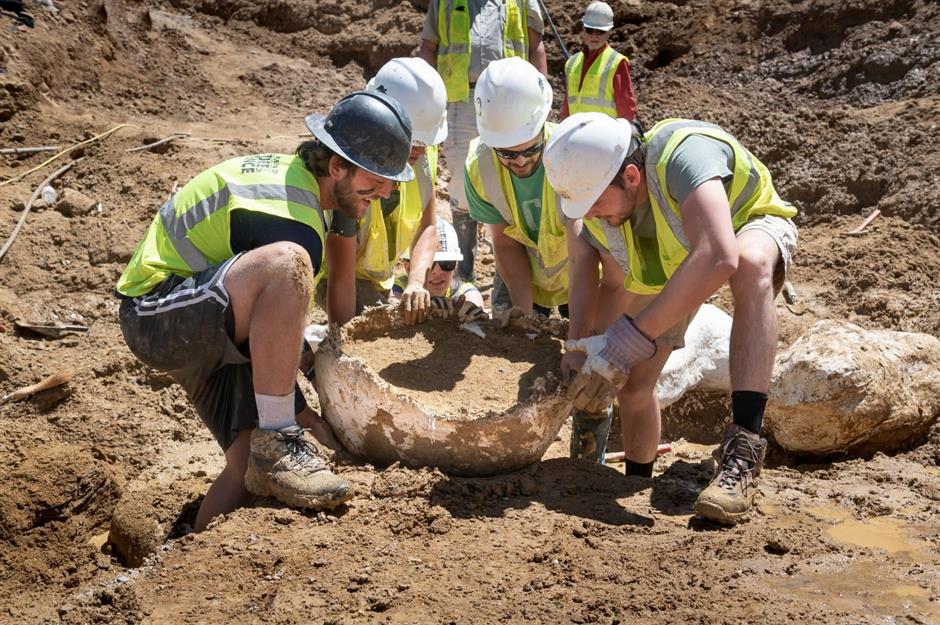
In 2019, construction workers digging on a site in Highlands Ranch just south of Denver make a prehistoric discovery: the partial skeleton of an adult triceratops. The dinosaur fossils, dated at 68 million years old, were uncovered by paleontologists from the Denver Museum of Nature & Science. The Denver area is a bit of a dino hotspot, particularly for triceratops. The fossils are now being studied by experts at the Denver Museum of Nature & Science and some are on display there.
Sponsored Content
A hidden 'key'
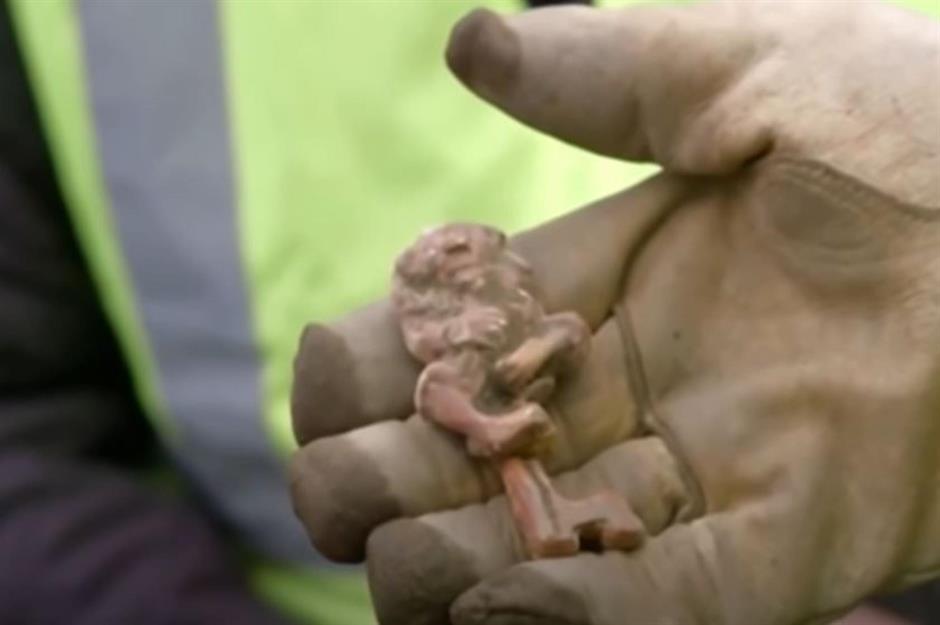
In 1982 author Byron Preiss released a book called The Secret. It contained 12 puzzles, each featuring a poem that had to be paired with a painting, which would lead to a treasure 'casque' containing a key buried in a park. Two had already been found. In 2019, Jason Krupat thought he had figured out that one was buried in Langone Park in Boston. He visited the park and was shocked to see construction work underway. "I got up the courage to walk onto the site and find the foreman, and I said, 'You’re going to think this is crazy, but I think there’s buried treasure in this park,'" Krupat told the Boston Globe. His hunch was correct and the discovery was filmed for TV show Expedition Unknown, which had highlighted the still buried treasures in a previous episode. The 'casque' contained a key, which was later exchanged for a green gemstone called a peridot, valued at $1,000 (£712), in a ceremony in New York attended by Preiss's widow (he died in 2005). Three down, nine to go...
Stash of stolen cash
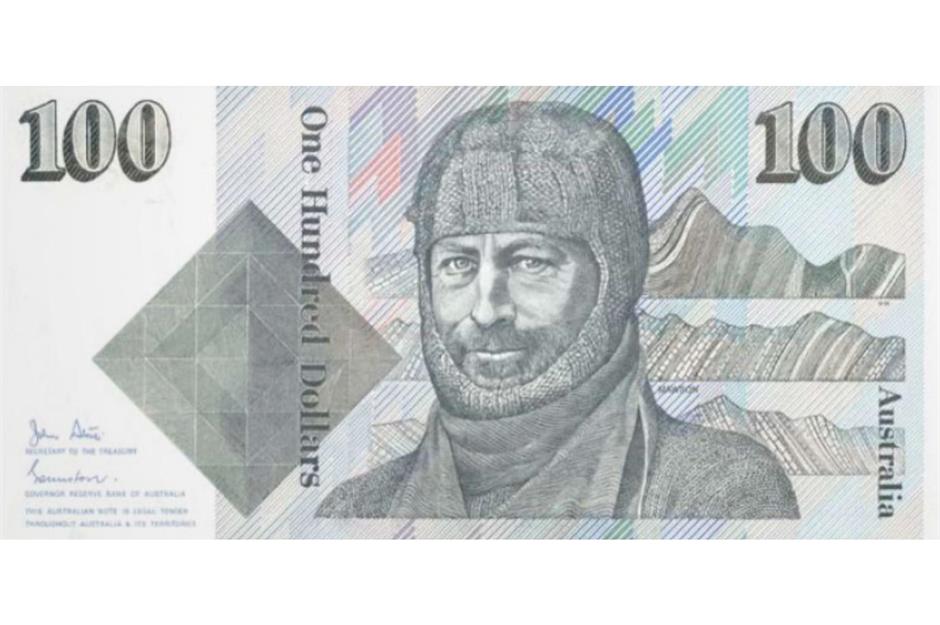
In late 2019, builders on the Gold Coast in Queensland, Australia dug up a number of tightly sealed containers on a site they were clearing at Runaway Bay. More and more packages revealed themselves and concealed inside lay AU$200,000 ($152k/£100k) worth of old bank notes that were phased out of circulation in 1996. The final hoard is worth around AU$488,000 ($341k/£272k) in today’s money. Real estate records show the plot was likely vacant in the 1980s, making it a possible hiding spot for the Gold Coast bank robber Brenden Abbott, who is currently still serving a 23-year prison sentence.
17th-century coins
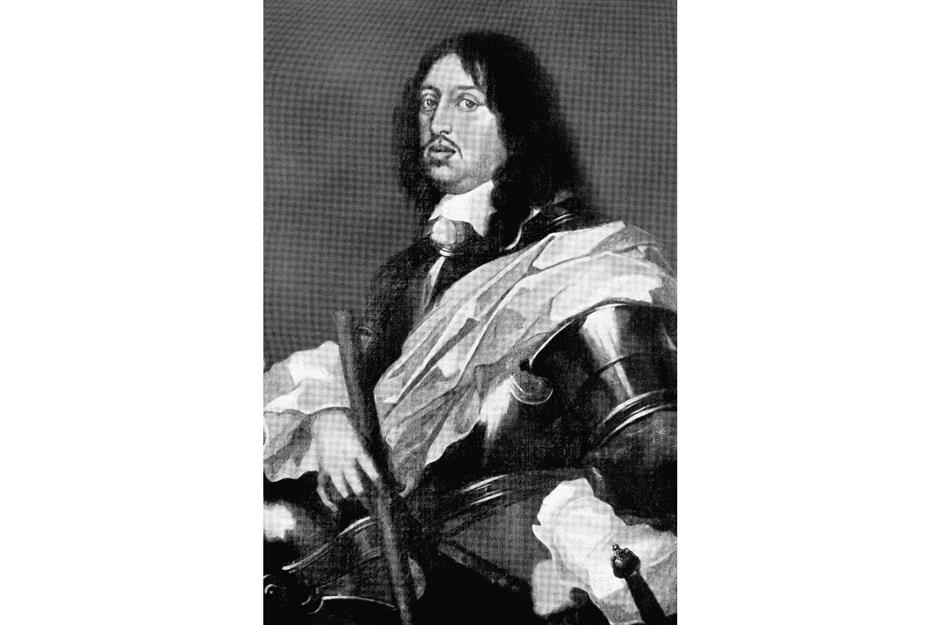
In June last year road resurfacing in Poland led archaeologists to a hoard of 507 silver coins dating back to the 17th century. The collection includes denominations from across Europe, decorated with the likes of Charles X Gustav of Sweden (pictured) and Frederick William I of Prussia. Metal detectorists unearthed the coins in the city of Ełk, which was located along a major trading route spanning from north-eastern Poland to Königsberg, the historic Prussian name for what is now Kaliningrad in Russia.
Sponsored Content
Aboriginal artefacts
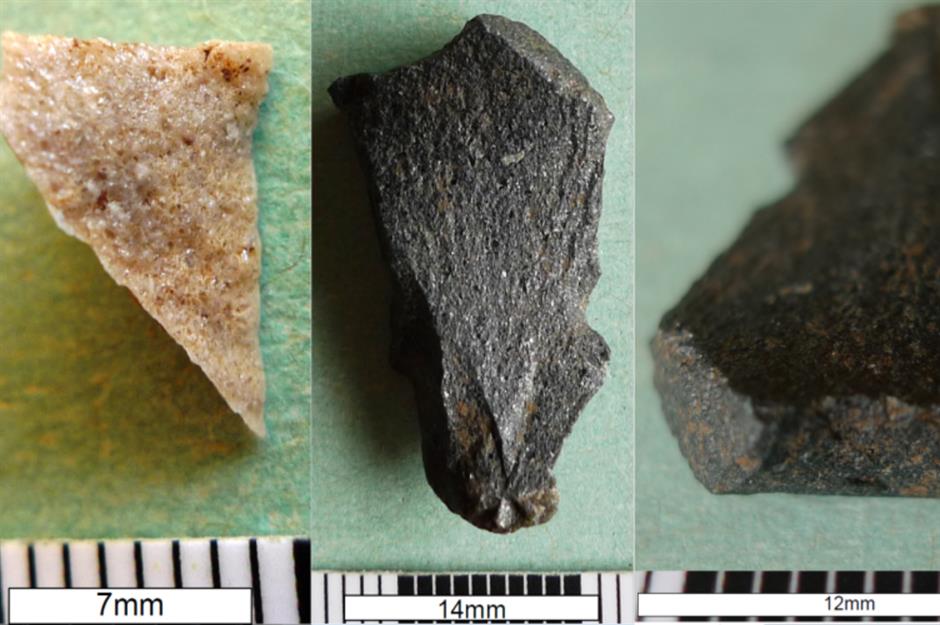
Also in June 2020, 271 Aboriginal artefacts were discovered at the redevelopment site of the Griffith Base Hospital in New South Wales, Australia. It is thought that some of the small stones used as cutting and scraping tools – known as bipolar flakes – have been there for thousands of years, which suggests that a camp may have existed on the site. Some tools are thought to have been transported there through the moving of gravel to the construction site over the years. The AU$250 million ($173.5m/£138.5m) hospital development has been paused as the tools are fully excavated from the site.
Treasure from various centuries
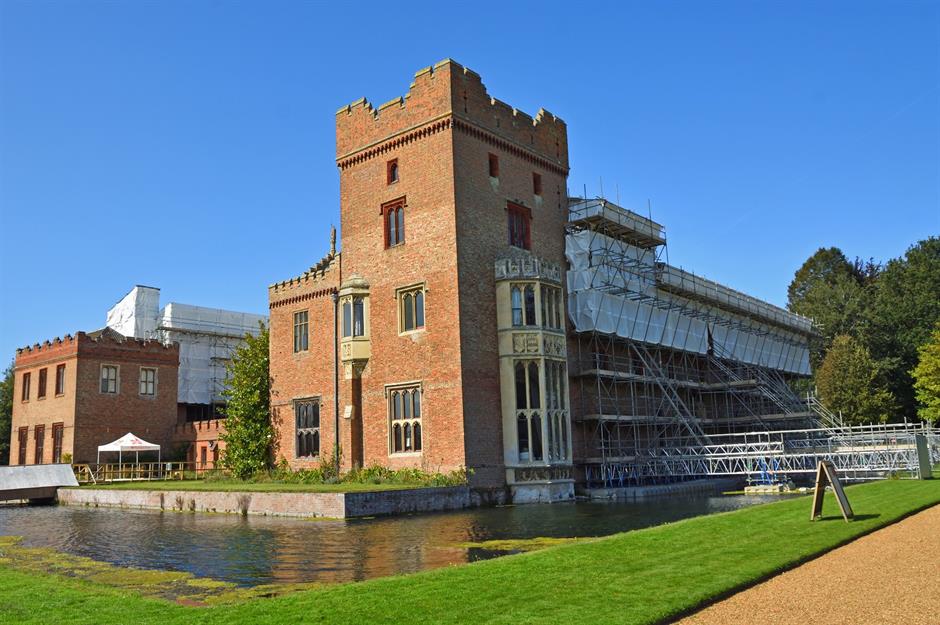
Last summer a £6 million ($7.8m) renovation of Oxburgh Hall in Norfolk, England was underway to preserve the roof of the Tudor house, which many consider a treasure in its own right. But when a builder working on the project spotted a shimmer of gold, it led to the unearthing of various different hidden treasures. Soon a rare 15th-century illuminated manuscript was discovered, as well as rats' nests packed with 200 individual samples of expensive textiles dating back to the 16th and 18th centuries. Handwritten music from the 16th century and chocolates from World War II were also revealed.
A 12th-century Islamic bathhouse
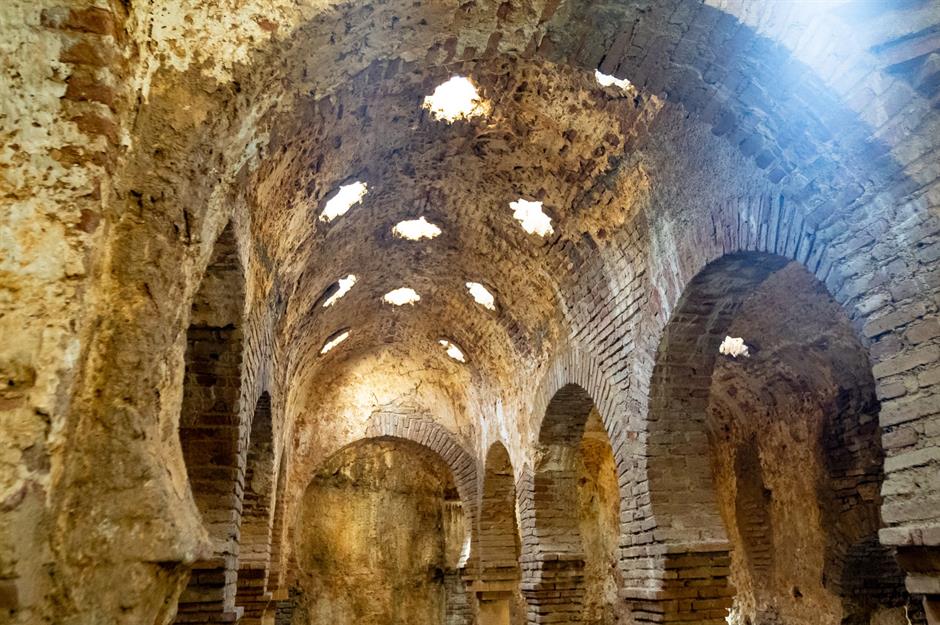
A tapas bar in Seville, Spain was discovered to be the former home of a 12th-century Islamic bathhouse during renovations in July last year. Local legend had always suggested that the Cervercería Giralda bar’s site could have been an ancient hammam, but many put its incredible Islamic revival style down to a 1920s architect, Vicente Traver, rather than authentic decoration created around 900 years ago. Once archaeologists uncovered the star-shaped skylights, similar to those found at the Arab Baths of Ronda (pictured), also in Spain, they knew that had unveiled genuine Almohad Caliphate empire architecture. The ancient building has since been conserved and plans to reopen to customers soon.
Sponsored Content
Treasure troves
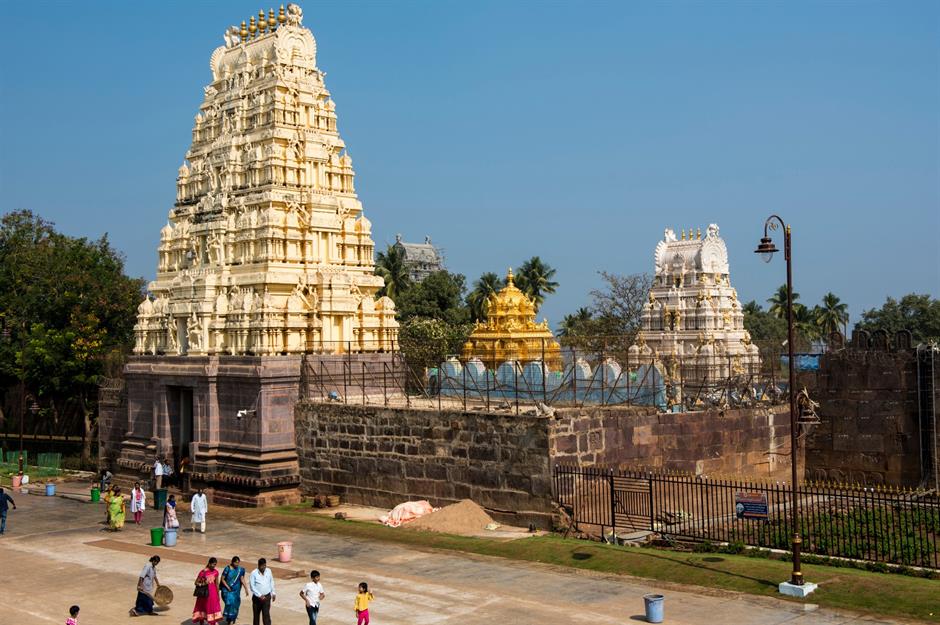
In September last year, authorities working on renovations in the vicinity of the Srisailam Temple in Andhra Pradesh, India came across more than stone and rubble. Workers found 264 silver coins, a copper coin, and three copper plates with inscriptions, known as tamra patras. The coins were dated between 1800 and 1913, which was an era of British rule in India. The site has proven to be quite the treasure trove, as just one month later a brass box was unearthed containing handfuls of gold and silver coins, as well as three gold rings. Other treasures previously found during renovations include five gold bangles, more than 170 coins, and an array of kitchenware, such as plates and tumblers. Authorities at the temple have announced that a museum will be built on the site to display everything that has been found there over the years.
A Victorian bathhouse
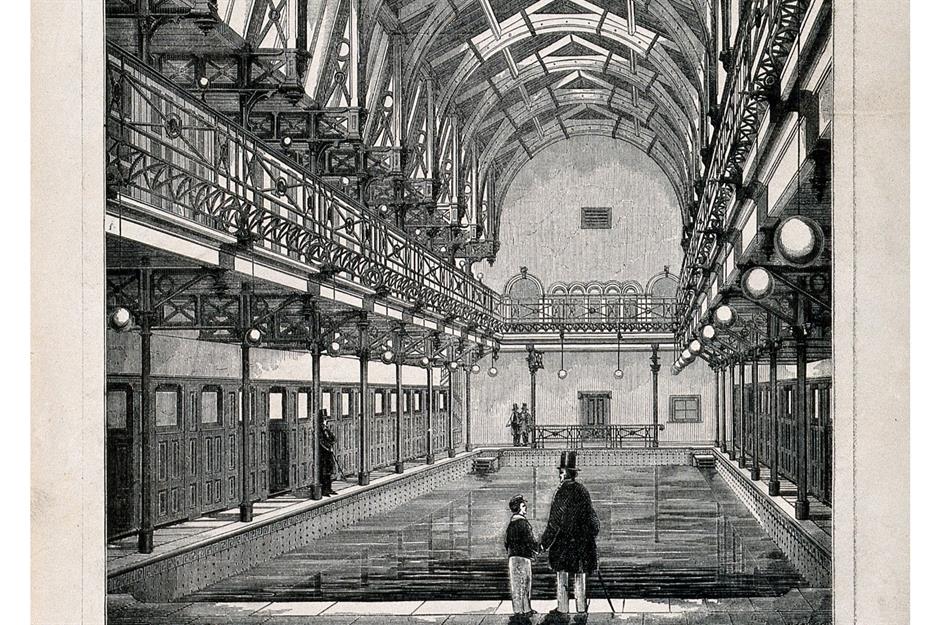
Another car park discovery was made in Manchester, England this January when the area was being cleared for a public park. During the removal process the remnants of a Victorian bathhouse that first opened in 1857 were unearthed. Experts had expected to find remains of Mayfield Baths (pictured) on the plot, but the extraordinary condition of the tiling came as a shock as the area suffered heavy bombing during World War II. The bathhouse’s two pools – one for men and one for women – would have been an essential amenity for textile workers in the area, who would have lived in cramped and insanitary conditions. The recovered tiles will now be included in designs for the £1.4 billion ($1.95bn) regeneration of the neighbourhood.
Now read about the stolen treasure that was miraculously recovered
Comments
Be the first to comment
Do you want to comment on this article? You need to be signed in for this feature