The truth about property and wealth in Britain

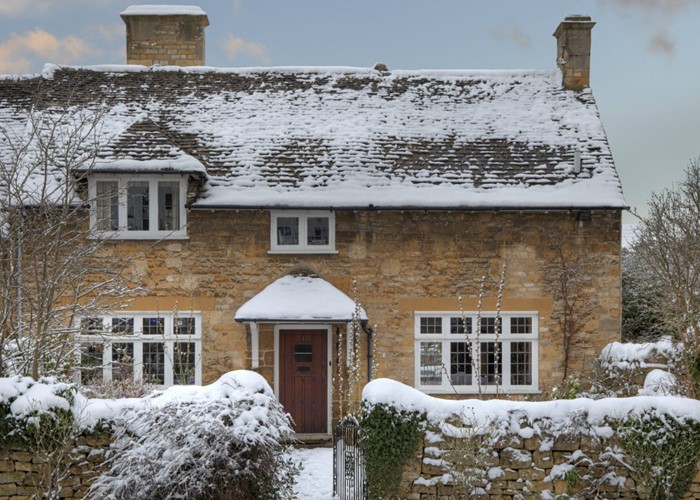
Who wants to be a self-employed, degree-educated, London homeowner? New research from the Office for National Statistics provides some fascinating facts about property and wealth in Britain, reports Malcolm Wheatley.
Got a university degree? If so, you've a better than 80% chance of owning your home. Not got a university degree? Then the odds are pretty much 50-50 that you won't own your home.
Self-employed? Then welcome to the ranks of Britain's better-off homeowners. On average, the typical value of your property will comfortably exceed £300,000 -- well above households headed by someone who is merely employed. Their property, on average, is worth just £172,500 -- a shocking differential.
And you live in London? Then your property, on average, will be worth £300,400. A property owner in Scotland, though, will have a property worth less than half that -- just £149,000.
A peek behind the curtains
These are among some of the insights to emerge from one of the most fascinating new areas of research to be carried out by the Office for National Statistics in years. Entitled 'Wealth in Great Britain', it highlights the results of two years of research into household wealth in England, Scotland and Wales.
Never before has an official government agency -- even if it is, technically, these days quasi-independent -- probed so deeply into who owns what.
In property-loving Britain, it's the chapter on property ownership that will probably be the most eagerly-thumbed. And given the extent to which it reveals what a divided nation we are, I'm not surprised.
What do we own?
While almost a third of us rent our homes, 68% of UK households own their main residence -- 37.7% through a mortgage that they're paying off, while remaining 30.1% own it outright. 6.4% of households own other property in the UK besides, while 3% of us also own land or property overseas.
How much is that property worth? Predictably, the wealthiest parts of England in terms of net household property wealth were London and the South East of England. London had an average net property wealth of £300,400, while the South East had an average net property wealth of £265,000.
Again, the differentials are huge. In England, the region with the lowest average net property wealth was the North East, with an average property value of £157,500 -- that's around half the value of a London home. Yorkshire and Humberside came next, where average property values were only slightly higher, at £161,100.
The picture in Scotland was broadly similar, with an average property value of £149,000 -- again half the London level -- while residents of Wales enjoyed average property values of £172,000 -- roughly on a par with the Midlands and the North West of England.
65% of households in Scotland owned property, while 73% of Welsh households did. In England, the level of property ownership was higher, but more variable: in the South East, for example, 74% households owned property -- whereas in London, that figure fell to just 57%.
How is it paid for?
With almost four in ten households having a mortgage, and a further 4% of households having a mortgage on a second property (or properties), what sort of mortgages do people hold -- and, critically, how large are the balances?
68% of households reported having straightforward repayment mortgages, while a further 13% of mortgages were endowment mortgages. Worryingly, given the concern frequently voiced about repayment mechanisms, 8% of households had interest-only mortgages, while a further 7% had a combination of endowment and repayment mortgages.
The average mortgage outstanding -- excluding any arrears -- stood at £87,000. Where households had a second mortgage on other property, this stood at £130,000. Against that debt, of course, can be put the value of any endowment policies, where held.
And among households with an endowment mortgage, the average value of the endowment -- assuming expected investment returns did in fact materialise -- stood at £38,000.
Who owns it?
Perhaps predictably, the households with the most property wealth were the older ones. The age group with the highest average net property wealth was those aged 55 to 64, whose property assets amounted to £271,400. This group was closely followed by those aged 65 to 74, with a mean value of £253,500, and the 75 to 84 age group, with property assets worth £224,100. No real surprise there.
Much more interestingly, the research also broke down property ownership by employment status and education.
First, it turns out that education is a good predictor of property ownership status: the proportion of households owning property varies from 52% for those with no educational qualifications, to 83% for those with degree level education or above.
Furthermore, those with degree level education or above had the most property wealth, with an average level of wealth tied-up in property assets of £258,000, compared to an average property holding of £183,100 by those without qualifications.
Finally, employment status -- and the nature of people's jobs -- had a significant impact on property wealth.
Apart from a small number of householders categorised as 'other inactive' -- namely people not retired, working, studying or running a business, and so presumably comprising resting rock stars and celebrities -- the self-employed had the highest net property wealth, with an average value of £303,500. Employee-headed households had an average net property wealth of £172,500 -- considerably lower than the 'self-employed' category.
Type of job mattered, too. The households with the lowest net property wealth were those headed by people described as having 'routine' occupations, possessing an average property value of £134,900. Households headed by those in higher managerial occupations, on the other hand, had the highest net property wealth, with an average value of £304,000.
Wealth-building starts early
So what do we make of all this? Some of the figures simply confirmed commonly-held views. Everyone knows that property in the South East is more expensive than properties in the North East -- although perhaps the sheer size of the gap is surprising.
But other findings were much more of a surprise. It seems my parents were mostly right after all with their advice: do well at school, and get a good job. Or, as I'll tell my own kids: do well at school -- and start your own business.
Use lovemoney.com's innovative new mortgage tool to find the best mortgage for you online.
Get mortgage help from lovemoney.com
If you need help getting the best mortgage use our resources.
First, adopt this goal: Cut the cost of your mortgage and pay it off early
Next, watch this video: Getting through the mortgage maze
Then, why not have a wander over to Q&A and ask other lovemoney.com members for hints and tips about what worked best for them?
Comments
Be the first to comment
Do you want to comment on this article? You need to be signed in for this feature