The best and worst types of properties

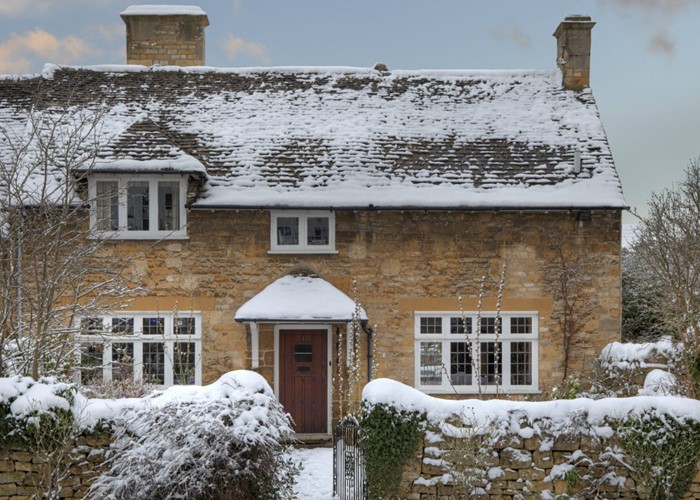
Not all homes are equally desirable and some dwellings gain value faster than others. We find the best and worst property types to buy.
Recently, I've been doing a lot of digging into what is perhaps the UK's most closely watched index: the Halifax House Price Index (HHPI).
My number-crunching has already produced The best and worst properties to own, which analysed price trends among new and old properties and also for first-time buyers and home-movers. Also, I revealed regional variations in house-price rises in The best and worst areas to buy property.
Today, I'm going to look at price trends among different types of dwelling, from flats and bungalows through to terraced and detached properties. The HHPI figures broken down by property type run from Q1 1983 to Q3 2009. Thus, yet again, I have 26½ years of data to sift through. Here's what I found:
(Note that this survey covers only property values and ignores the rental income and expenses involved in having a buy-to-let property. Thus, it is more relevant to owners than investors.)
All UK properties
Let's start with the headline figure, which covers residential properties of all types in the UK:
|
Period |
House price |
|
Q3 2009 |
£175,506 |
|
Q1 1983 |
£29,615 |
|
Change |
£145,891 |
|
Change |
493% |
|
Yearly growth |
6.9% |
As you can see, the typical cost of a typical home has risen by close to 7% a year since 1983. This means that, on average, house prices have doubled every decade. However, as we know, booms do turn into busts, so the path to housing wealth is rarely as smooth as it appears in these figures!
Now let's see how different types of property have performed in this 26.5-year period:
Flats and maisonettes
|
Period |
House price |
|
Q3 2009 |
£148,326 |
|
Q1 1983 |
£24,522 |
|
Change |
£123,804 |
|
Change |
505% |
|
Yearly growth |
7.0% |
At the cheap end of the housing spectrum, prices have outperformed the market as a whole by a tiny margin. This is hardly significant, so we can safely assume that flats have gained in value at roughly the same rate as the market as a whole.
Bungalows
|
Period |
House price |
|
Q3 2009 |
£185,506 |
|
Q1 1983 |
£31,725 |
|
Change |
£153,781 |
|
Change |
485% |
|
Yearly growth |
6.9% |
Slightly higher up the price ladder are bungalows, which show a similar price trend to the overall market. However, as they cost more initially, the absolute gain of nearly £154,000 is higher than that for flats (close to £124,000)
Terraced houses
|
Period |
House price |
|
Q3 2009 |
£146,176 |
|
Q1 1983 |
£21,206 |
|
Change |
£124,970 |
|
Change |
589% |
|
Yearly growth |
7.6% |
At last, some decent deviation from the norm. Terraced houses -- the 'starter homes' often regarded as the backbone of the market -- have done much better than average. Indeed, since Q1 1983, they have risen by 589%, versus 493% for the market as a whole. Thanks to these extra 96 percentage points, the humble terrace has done its owners proud.
Semi-detached houses
|
Period |
House price |
|
Q3 2009 |
£163,621 |
|
Q1 1983 |
£27,091 |
|
Change |
£136,530 |
|
Change |
504% |
|
Yearly growth |
7.0% |
Semi-detached houses cost quite a bit more than flats, bungalows and terraced houses, but have performed broadly in line with the top-level index, rising by 7% a year. In 26½ years, the price of the typical semi is six times what it was in 1983. Although not as impressive as the growth for terraced homes, that's still a very tidy return.
Detached houses
|
Period |
House price |
|
Q3 2009 |
£279,016 |
|
Q1 1983 |
£45,211 |
|
Change |
£233,805 |
|
Change |
517% |
|
Yearly growth |
7.1% |
Finally, we reach the top end of the market: detached homes, which are usually the largest and most expensive on offer. Indeed, the typical detached property across the UK today costs over £279,000, or more than ten times the average salary. For the record, the price of top-end homes has gone up a little faster than the market as a whole.
And the winner is...
In summary, there is remarkably little difference between the price trends based on property type. The typical value of flats, maisonettes, bungalows, semi-detached and detached houses has increased by 6.9% to 7.1% a year since Q1 1983.
The only stand-out winners from this survey are terraced homes, which have produced a 7.6%-a-year return to patient owners since 1983. Then again, there are millions of terraced homes in the UK, so this extra gain might reflect the liquidity and demand in the market for modest or starter homes.
Finally, don't read too much into this survey. House prices vary enormously based on location, age and the underlying demand in an area. Also, the mix of housing evolves over time as new properties are built and older homes demolished. In addition, property 'densification' needs to be taken into account, as homes become smaller and developers cram as many properties they can into a given space.
More: Try our magnificent mortgage service | The top 10 property mistakes | The best and worst areas to buy property
Comments
Be the first to comment
Do you want to comment on this article? You need to be signed in for this feature