How to cut your inheritance tax bill

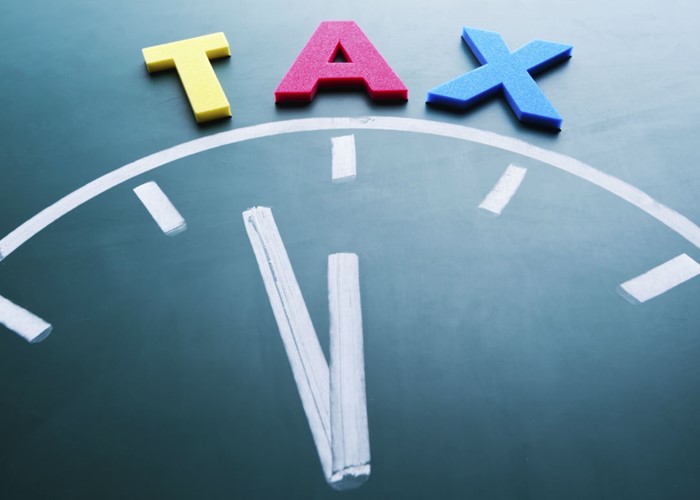
Few taxes are more hated than Inheritance Tax, but research suggests Brits are paying way too much of it. A little bit of planning can go a long way, as John Fitzsimons explains.
Family get togethers tend to be relatively placid affairs in my house. That is, unless the topic of Inheritance Tax (IHT) is brought up. There is nothing in this world that provokes such an outpouring of anger and resentment among the older members of the Fitzsimons clan.
And they are far from alone in feeling short-changed at the prospect of the assets they leave behind being taxed before their loved ones get hold of them. According to recent research by Unbiased.co.uk, IHT is Britain's second biggest tax wastage area.
Even scarier, the research suggests Brits will waste £2 billion due to poor inheritance tax planning this year alone.
But there are things you can do to cut your IHT bill down. Here are my top tips to save your family from overpaying the 'death tax'.
When do you pay IHT?
Your family will have to pay a whopping rate of 40% if your estate is valued above the IHT threshold when you die. The threshold stands at £325,000 or £650,000 for couples. This amount is known as the nil rate band. Normally this amount rises each year in line with inflation, but the governemtn have frozen the nil rate band for the next four years.
But, with the huge growth in property prices over the last few years, the tax now applies to more people than ever before.
However, there are exemptions which mean that even if your estate is valued in excess of the threshold, you will not be liable for the tax. These include leaving your estate to your spouse - though this only applies in the case or a marriage or civil partnership and not to long-term partners - and any donations you make to a UK charity during your lifetime or in your will.
Give your money away!
There is also a gift allowance, which you should take advantage of to avoid overpaying. According to HM Revenue and Customs, "If you survive for seven years after making a gift to someone, the gift is generally exempt from Inheritance Tax, no matter what the value."
So if you have a lump sum of savings that you know you will be passing on to your loved ones, it may be worth passing it on now to avoid the tax.
Find out how to cut your tax bill without the effort of complex tax planning.
This also applies if you want to hand your property over to your children. However, if you continue to live in the house, you MUST pay a market rent.
In fact, even if you give the property away, and no longer live there, you may be hit with a tax charge if you visit the property too regularly!
Alternatively you could also put the money into a 'bare' trust, where the beneficiary cannot get hold of the money before a certain age - particularly good if the money is for grandchildren - though again you must survive for seven years after paying into the trust.
It's a very good idea to have with chat with a financial adviser, who specialises in IHT planning, on the best way to go about this, as creating such trusts can be complex.
If you are a little wary of taking the gamble of surviving a further seven years, there are annual exemptions you can take advantage of instead. In this case, you can give away up to £3,000 in each tax year without being liable, as well as giving away any unused portion of the previous year's exemption.
In other words, a couple that has not given anything away in the past two years can give away a total of £12,000 this year.
There are a number of other gifts which are also exempt from IHT:
Wedding/civil partnership gifts
Gifts for weddings or civil partnership ceremonies are exempt up to certain levels. Parents can give cash or gifts worth £5,000, grandparents and other relatives can give gifts worth up to £2,500, while other guests can give gifts worth up to £1,000.
However, be very careful with this as the gift has to be made - or at least promised - before the ceremony itself. A gift made after the ceremony that has not been promised will not be exempt.
Small gifts
Small gifts up to the value of £250 can be given to as many people as you like in any single tax year.
Regular gifts/payments
Gifts made out of after-tax income, excluding capital such as your savings, are exempt from the tax. These include regular gifts for birthdays, Christmas and anniversaries. But you will have to demonstrate that your standard of living is not reduced as a result of making these payments, or the taxman will step in.
Recent question on this topic

- bubu2000 asks:
How to make a good will when your spouse is not British?
- MikeGG1 answered "So far as your will is concerned, you seem only to have UK assets, so any solicitor should be able..."
- ckm4328 answered "No problem to go to a UK solicitor. If both you and your husband have assets in the UK you should..."
- Read more answers


Make a will!
If you die without having a will in place, the State decides who inherits your money and assets. This can be a very complex and stressful process, and leave your family members in a sticky position, so bite the bullet and do it. This way, you can transfer your assets to your various remaining family members within the nil-rate band (remember, for this tax year that's £325,000 or £650,000 for couples), saving them from footing an inheritance tax bill.
Another tip is to write your term life insurance policy in trust, as Jane Baker explains in Escape This Inheritance Tax Trap.
To SIPP or not to SIPP
Self-invested personal pensions (SIPPs) may also give you a route around paying IHT, though it remains the greyest of grey areas. If you die before withdrawing assets from your fund, members of your family may inherit the money without paying the tax, so long as the Inland Revenue decides that investment in the SIPP was not designed to avoid paying inheritance tax.
AIM high with your investing
My final tip is in the murky world of investment. Interestingly enough, any 'unquoted' shares you own - i.e. those in companies traded on the Unlisted Securities Market or the Alternative Investment Market - qualify for 100% exemption from IHT after you have held them for two years.
As you can see, IHT is not only a vastly unpopular tax, it is an arbitrary and complex one too. But there are plenty of ways to get avoid getting stung.
Good luck!
Compare all sorts of financial products at lovemoney.com
This article is a lovemoney.com classic which has been updated for 2010.
More: How to get a tax refund | Ten ways to avoid Capital Gains Tax
Comments
Be the first to comment
Do you want to comment on this article? You need to be signed in for this feature