Three reasons not to borrow a loan today

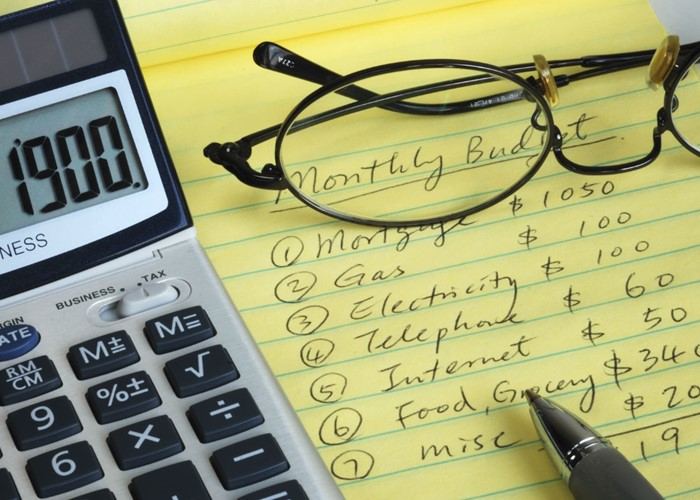
Thinking of taking out a loan? Here are three reasons why it's a bad idea at the moment.
Banks are hoarding cash. This is good news, because it was banks lending too much money (indeed, money that didn't exist) that caused the massive credit bubble, then the crunch and finally the Great Recession.
We want banks to rebuild their destroyed balance sheets. However, this does have knock-on consequences for us. Banks are lending less money and they want to profit more from what they lend. This combination of less choice and more conservative lending policies means we're paying more to borrow.
1) Reductions in the Base Rate are having no effect
The Base Rate is the rate at which the Bank of England lends money to the banks. Usually, as the Bank of England Base Rate changes, so does the cost of new loans. If it reduces this cost, banks usually pass on much of the reductions to customers. However, although the Base Rate has fallen from over 5% to just 0.5%, unsecured loan costs haven't come down.
Take a look at this table:
The cost of borrowing versus Base Rates
|
Date |
Bank of England Base Rate |
Cheapest unsecured loan |
Difference |
|
March 2010 |
0.5% |
7.4% |
|
|
August 2001 |
5.0% |
7.9% |
2.9% |
Based on loans without onerous catches that are available to new customers.
This table shows that eight and a half years ago, we paid around 3% above the Base Rate if we had great credit records and shopped around. This is quite normal. When the Base Rate was 3.5% in 2003, for example, we could get loans for 6.3%, or 2.8% above the Base Rate.
Now we're paying a massive 7.4% above the Base Rate.
2) Loans are getting more expensive in real terms
We did have a great period a few years ago where competition and crazy lending policies allowed us to borrow much more cheaply. In 2006 the Base Rate was 4.75%, but we could get loans for just 5.5%, less than 1% above the Base Rate. To put it another way, the Base Rate was nine times higher back then than it is today, but we were still paying less to borrow.
We're more than paying for that cheapness now though. With prices of the goods and services we buy falling, a best-buy loan at 7.9% today is far more expensive, in real terms, than a 7.9% loan in August 2001. Any debt interest you pay is more damaging to your wealth when things are becoming cheaper. It's particularly hard as wages stall or even shrink when prices are falling. (Conversely, when prices are rising, wages tend to go up, which makes an 8% loan easier to pay off as time goes by.)
Secured loans are even worse. Not only have the interest rates on new loans not come down, but existing customers haven't seen their rates reduced. This is despite the fact that almost all secured loans have variable interest rates. 'Variable' does not mean that rates come down when the Base Rate does, although they will likely go up when the Base Rate rises again!
3) Loans are less flexible now
The terms of many loans are now less flexible, too. Many lenders won't allow you to take payment holidays at the start (although, as I wrote here, that's usually a good thing). Lenders are being even more conservative in that the best rates out now are available to existing customers with good records only. Typically you need a bank account with one of the top providers to get around 8%. In some cases this is less of a barrier than others, e.g. with Sainsbury's loan at 7.9%, where you just need a Nectar card. Similarly, Alliance & Leicester's loan at 7.9% is now available to both new and existing customers. But these deals may not be around for long.
For the past few years we've often been able to borrow at lower rates than we can save, which is contrary to the old banking rule of three: lend money at three percentage points higher than you pay in savings interest in order to guarantee a profit. Where we are now not only restores sense to banking, but it's become the rule of five in order to correct the binging of the past decade.
Eventually, confidence will return as the economy begins to grow again, and banks will feel happier to lend more and compete harder with lower rates, provided inflation doesn't spiral out of control.
Good luck.
More: The never-ending costs of buying your first home | Buy now, pay later at no extra cost!
Compare unsecured loans through lovemoney.com
This article has been updated from an earlier version published last year.
Comments
Be the first to comment
Do you want to comment on this article? You need to be signed in for this feature