P800 refund: how to reclaim tax you're owed

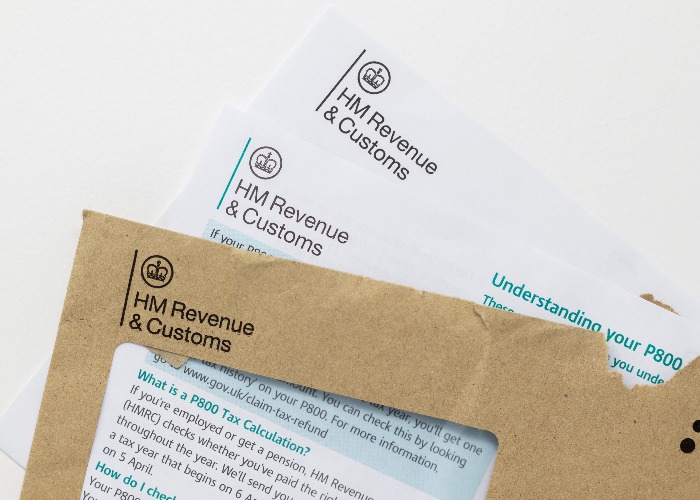
Here’s all you need to know about the P800 for 2024/25 and what to do if you've overpaid tax for previous years.
Sections
HMRC tax refund P800 letters
Your employer gives HM Revenue & Customs (HMRC) details of how much income you receive, how much tax you have paid and the value of benefits you may have received during the tax year.
Early in the new tax year, HMRC carries out an automatic check using this information to see if you have paid the right amount of tax.
If HMRC doesn't think you have paid the right amount of tax, it will send you a P800 tax calculation.
This will show you what tax HMRC thinks you should have paid.
This process takes the taxman a fair while, so those affected will likely only hear from the taxman at some point between June and September 2025 regarding the 2024/2025 tax year.
HMRC will never send these notifications by email, so watch out for HMRC tax refund scams.
You should receive a P800 notification through the post.
It may well be possible to claim your refund online, however.
What to do when you get a P800 letter for 2024/25
Check your P800 tax calculation carefully, as HMRC may have inaccurate information, or may not have the full information to correctly calculate your tax.
If you are due a repayment your P800 should tell you whether you can claim your refund online or whether HMRC will send you a cheque in the post.
However, if HMRC thinks you haven't paid enough tax, it will write to you explaining they will collect underpaid tax through your tax code or telling you how to repay.
How to work out if you’ve overpaid tax
If you have tax deducted from your earnings, or pension, through the PAYE (pay as you earn) system, you should receive a P60 from your employer, or pension company, every year.
This document outlines your income and deductions for the tax year just ended.
If you have more than one source of employment, you should get a P60 from each employer. The same goes for people who have more than one pension.
You should always check your P60s thoroughly to make sure your tax code, and any tax that has been deducted, is correct.
You can learn more about how tax codes work here.
If your employer or pension company hasn’t been informed of your tax code by HMRC, they may have put you on what’s known as an emergency code, which could mean paying more tax than you need to.
There are several reasons why an emergency code might apply.
- You have started a new job but didn’t get a P45 from your previous employer.
- You have started your first job after the beginning of the tax year, and you haven't received any taxable state benefits, State Pension or a company pension.
- You have started a new job but you have had another job(s) or received taxable state benefits during the year.
- Your tax code has changed during the year. This could happen if you started to receive company pension benefits or claim the State Pension, for example.
- You have started a new job but you were previously self-employed.
An emergency code usually ensures you receive the basic personal allowance and therefore means you will earn some of your income tax-free.
But it doesn’t make any provision for other reliefs or allowances you may qualify for.
You’re on an emergency tax code if your payslip says your tax code is one of the following:
- 1257L W1
- 1257L M1
- 1257L X
The W1 (week 1) or M1 (month 1) section of the code indicates that each week or month is being dealt with separately to give you an equal amount of net pay each time you receive your salary.
But this doesn’t take account of any tax you might have paid earlier in the tax year, which could mean you’re paying too much.
If you think you’re paying emergency tax, check with your tax office and ask them to send you and your employer the correct tax coding.
This will enable the right amount of tax to be deducted from your salary going forward. This will also give you the chance to claim any overpaid tax from HMRC.
How to claim a refund if you're employed
If you have overpaid tax during your employment and the end of the tax year in which you overpaid has passed, you can make a claim for a refund.
If the error occurred during 2024/25, you will need to wait for the P800 tax calculation and the P800 will explain how to get a refund.
You can make a claim using the online bank transfer service or request a cheque online.
Alternatively, you can claim via your personal tax account, through the HMRC app or by contacting HMRC and asking them to send you a cheque
HMRC says you'll get your money within five working days if you’ve claimed online, or six weeks if you’ve asked HMRC to send you a cheque.
As a final point, if your tax calculation letter already says you’ll get a cheque, then you don't need to do anything.
The taxman says you'll receive your cheque within 14 days of the date on your letter.
How to claim a refund if you're self-employed
If you've made a mistake on your Self Assessment tax return and overpaid you've normally got 12 months from 31 January after the end of the tax year to correct it.
This is known as an 'amendment'. For example, you have until 31 January 2026 to make an amendment for your 2024/25 tax return.
You can only amend your return after this date if you received your return late (after 31 October). In this case, you must correct any mistakes within 12 months of the deadline for sending your return back.
If you sent your tax return on paper, you don't need to send in the whole tax return again.
Just write to HMRC and attach the pages that you want to change, clearly marked 'amendment'. You'll find the address on your tax return, your tax calculation or your Self-Assessment Statement.
If you sent your tax return online, you can make the amendment online.
There's more information on claiming a self-assessment refund on the HMRC website.
Be aware of time limits
Finally, you should know that the time limit for reclaiming overpaid tax has been cut back to four years. So, make sure you don’t miss the opportunity to get your tax back.