The end of free banking: winners and losers

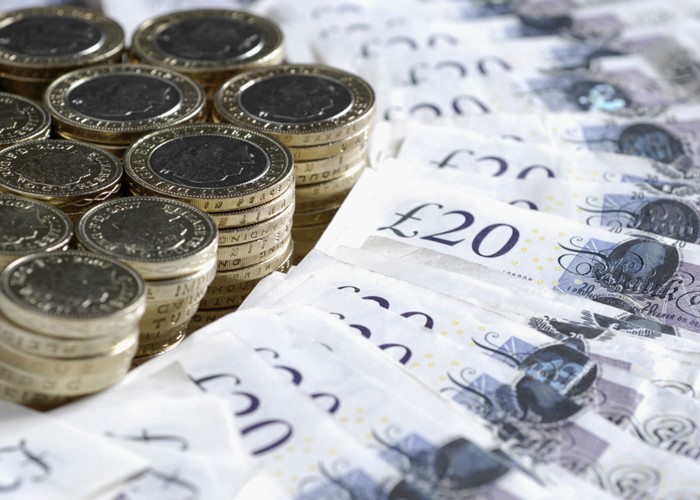
Free banking looks to be on its deathbed. We look at who will win as a result, and who will be left out of pocket.
Banks want to end free banking. I'm not sure if that means customers should too.
Some politicians have bought the idea. Andrew Tyrie, head of the Treasury Select Committee, said: “It’s clear that almost everybody seems to agree that we must get to the point where customers know how the banks are charging and give account holders a genuine choice.”
He was responding to Bank of England director Andrew Bailey, who called free banking a “dangerous myth”. Bailey will become the head of the Prudential Regulation Authority, which replaces the Financial Services Authority in promoting a stable financial system.
Is charging fees the answer?
They've called free banking dangerous and said that it makes current account costs unclear. They have leapt from there to the conclusion that charging fees will make things better.
This politician's logic is a bit like the syllogism about all dogs having four legs, my cat does too, which means my cat is a dog. The politician's equivalent is:
We must do something!
This is something!
Therefore we must do it!
Is “free” banking dangerous?
Anyone who's in their overdraft knows they're not getting free banking. It's no dangerous secret for them.
What's dangerous is when they don't understand how high their debt charges and interest are, and the impact it will have on them long after their debt is gone, and for the rest of their lives.
Charging a current account fee, in addition to overdraft costs, won't make it any clearer.
The danger for people in credit also doesn't stem from a lack of account fees. It's that many of them don't take inflation seriously by shopping around for better interest rates.
For more, read Why your current account matters.
When “free” really is bad
Charging fees could make some things better. For starters, people might take shopping around for lower fees more seriously than they do trying to get a better interest rate.
Also, in some areas, such as financial advice, hidden costs are truly dangerous. Barclays is pulling out of the advice business, because the regulator is banning “free” advice from 2013. Advisers will no longer be allowed to take commission from the products they sell, and must charge fees instead.
Until now, Barclays has been convincing its customers that its products are great largely by telling them they're “free”. It has done this for so long that it can't now easily tell customers that the cost is just the same as they've always paid.
A banking fee will complicate things
The change from “free” investment advice to charging a fee is genuinely helpful for customers, since it exposes the full cost of extremely complicated and expensive investment products.
Adding a fee to ordinary bank accounts is a very different matter.
As it stands now, people in credit must merely compare what each bank will pay them in interest and cash gifts. People in their overdrafts must just compare the debt costs.
If banks start charging account fees as well, we'll have to compare both the banking fees and interest. One bank might offer you a low fee, but another might offset a higher fee with a better interest rate. Which is best for you?
Some banks might introduce complex, tiered rates of fees depending on your bank balance or the number of other products you own.
If the banks really crank up their smooth marketing operations, they'll throw in additional benefits – mostly useless ones, I would imagine – in order to justify even higher fees.
To add to the difficulty in comparing accounts, some banks might charge by transaction instead of a monthly fee.
Not everyone is pleased with the end of free banking
Consumer groups haven't been fooled. They've responded quickly with sensibly wary comments. Which? executive director Richard Lloyd said: “The idea that if banks charged more, they would stop trying to mis-sell other financial products is completely unfounded.”
Consumer Focus head Mike O'Connor said: “What mustn’t happen is that consumers end up with the worst of both worlds – paying for accounts but still enduring unfair charges, opaque and complex products, mis-selling and poor customer service.”
The most damning indictment
The most damning indictment of this idea, in my book, is that the British Bankers' Association seems to be in favour of abolishing free banking. It even sponsored a report that was very supportive of doing so.
In my experience, if this bankers' mouthpiece is happy with something, customers need to be deeply wary about it. Scarily, unless the timing is a big coincidence, the banks' report might even be the basis upon which this idea is gaining approval from Government.
The head of the British Bankers' Association, Angela Knight, referred to the fact that other countries, “both in Europe and elsewhere”, pay fees.
I can't speak for most of Europe, but I have four German current accounts and they operate like UK bank accounts, charging no fees. In any event, it's a naff argument saying “Everyone else has fees, therefore we should too.”
The winners and losers
The bankers' association wants to discuss the matter with the regulator, but let's say that the regulator stops listening to the bank lobby and instead starts listening to the consumer organisations.
If we're very lucky, the result will be that the many loopholes are closed. In that event, ending free banking would be fairer for the nation.
The main winners would be struggling debtors, who currently shoulder most of the cost of banking services through extortionate debt interest and penalty fees.
The losers would be people in credit, because they'd start paying more.
If charging current account fees does – somehow – lead to banks charging more fairly on other products, customers might benefit from cheaper insurance and investments.
More losers will be people who rarely switch. Banks will surely continually change their fees, so if you don't switch every few years you're going to suffer. But that's nothing new.
More on banking:
Five more ways to transfer money abroad
Santander 123 account vs Halifax Reward account: the most rewarding current account
Five bank accounts that give you something for nothing
Comments
Be the first to comment
Do you want to comment on this article? You need to be signed in for this feature