Car insurance: putting telematics to the test

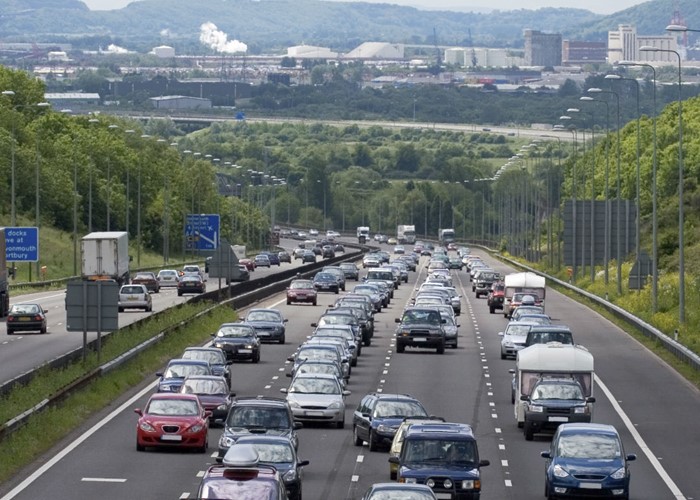
Telematics technology promises to cut the cost of car insurance for good drivers. We decided to test that claim.
Telematics systems that track driving habits can lower car insurance premiums for safe drivers and have been available since 2008.
Yet this concept has failed to set the insurance world alight. Trading privacy for perks seems to have held people back and stalled a revolution in the sector. But with the claims culture forcing premiums to rise and the EU ruling on gender soon to come into force, could this be the most precise and fair way to lower the cost of car insurance for everyone?
As a young driver who has experienced the horror of massive insurance premiums, I decided to test out the technology for myself to see if my actual individual driving habits could improve the cost of my car insurance.
Autosaint
I generally think I am a good driver so I was happy to take on the challenge from Autosaint to drive around with a telematics tracker in my car for ten days.
Autosaint is a niche insurer which offers provisional, newly-qualified and young drivers low premiums, in return for responsible driving through the use of in-vehicle telematics technology.
Interestingly, Autosaint offer a low premium to this risky age group from the outset, so it is up to the driver to live up to that trust or risk a rise in premium determined at a quarterly review.
Irresponsible driving alters the premium, but alerts and suggestions on how to improve driving are in place through an online dashboard, as well as email/text alerts to avoid that happening.
Autosaint builds a risk profile through a scoring system. Drivers are scored out of 100 and if a number of bad driving incidents occur (categorised into speeding, harsh braking and harsh accelerating) points are deducted.
If a driver scores below 60, the premium will be adjusted in the quarterly review, but those scoring 60 and above will continue to benefit from the cheapest premium offered at the start of the policy and at renewal are offered even larger discounts.
My results
Using my online dashboard, I can see I drove 220 miles on the ten days I was being monitored, consisting of around ten journeys ranging from three to 52 miles.
My overall score for the journeys I had completed was 99 which is a score that is deemed ‘EXCELLENT’.
The report that came through in my email told me: "Driving this well means not only that you are driving safely but we won’t need to increase your insurance premium at your next quarterly review."
Great news! Because I drove safely for a great proportion of the time if I had a policy with Autosaint I could expect my premium to remain low at the next evaluation.
But what was I doing wrong 1% of the time?
Where I went wrong
Although my score looks as if my driving was near perfect, the little black box did record some bad driving in a number of incidents. In total I had 12 ‘Events’ which the Autosaint Dashboard flags as something to work on and offered advice to help improve my driving habits.
Of the 12 incidents, six were harsh braking events, two harsh acceleration events and four were speeding events.
Did I deserve a lower score?
It is clear from the fact that 12 incidents were recorded against my driving that I am in no way a perfect driver.
I am sure there were a few cases that were just plain bad driving on my part as many of the journeys I did were familiar routes, but having this technology has made me really think about these incidents and why they may have occurred. Generally, I found that my preoccupation with driving carefully (as I knew I was being tested) was thwarted by the behaviour of other road users.
The fact I tested the technology for a week probably explains my score. Given three months I am sure the score would have come down to account for speeding incidents and the harsh braking, but not so low that it would be under 60 and thus affect any premium offered by Autosaint.
Potential game changer
My car is a 2003 Vauxhall Corsa Sxi three door hatchback. Using the example of a 24-year-old driver, with a full licence and one month's experience, car insurance premiums from other insurers could be as high as £4,317 for a year's comprehensive cover (from Fresh). However, with Autosaint, that premium drops all the way down to £2,488, a saving of almost £2,000, thanks to the telematics box.
Obviously, Autosaint is not going to be an option for many of us as they only deal with very new drivers. But similar technology is employed by a number of other insurers (the Cooperative, the AA, Insurethebox, I-kube) for drivers of all ages. So the potential benefits of telematics are open to all, if we are willing to take the plunge.
Is it the future?
I think if more people used telematics it would bring unprecedented transparency to car insurance rates, benefiting good drivers and forcing bad drivers into making changes.
Of course with this particular system from Autosaint, there are only three determining factors deciding whether you are a good driver; speeding, braking and accelerating. Many would argue that the true measure of a good driver involves far more information than a tracking system can provide and I would agree. However, for now, the system is useful for pinpointing any existing bad habits and suggesting steps to improve which may be invaluable for a less experienced driver.
The obvious downsides to these sorts of policies is that some don’t allow you to drive at night (as this is when a lot of accidents occur), the low mileage limits are not beneficial to a driver that needs to travel great distances for work or college and of course the privacy issues.
Would you consider this technology to help lower your car insurance premiums? Or is this Big Brother monitoring gone mad? Share your thoughts in the comment boxes below.
More on car insurance: